Every boatyard on the Chesapeake Bay has a version of the same story: an owner skips a season of routine maintenance to save money, and the deferred item comes back two or three times as expensive once it finally forces the issue. On the Bay specifically, where salinity, humidity, and a near year-round boating season accelerate wear compared to a boat kept in fresh water or stored for half the year, the gap between a scheduled fix and an emergency repair is wider than most owners expect, and it is wide enough to change how a season actually plays out.
This piece pulls together what we have covered individually in our Knowledge Center: engine care, value protection through maintenance, and detailing, into one argument, with real cost ranges rather than vague warnings.
Norton Yachts’ service team handles preventative maintenance from our boatyard in Deltaville, in Virginia. If you want to get ahead of this season’s maintenance rather than catch up on it later, call (804) 776-9211 or visit our boat service center.
The Pattern We See Every Season
The boats that come into our yard for an expensive, unplanned repair almost always share the same shape of story: a routine item got pushed back a season, and the deferred item either failed outright or accelerated the failure of something connected to it. A raw water pump impeller that should have been replaced on schedule fails and overheats the engine.
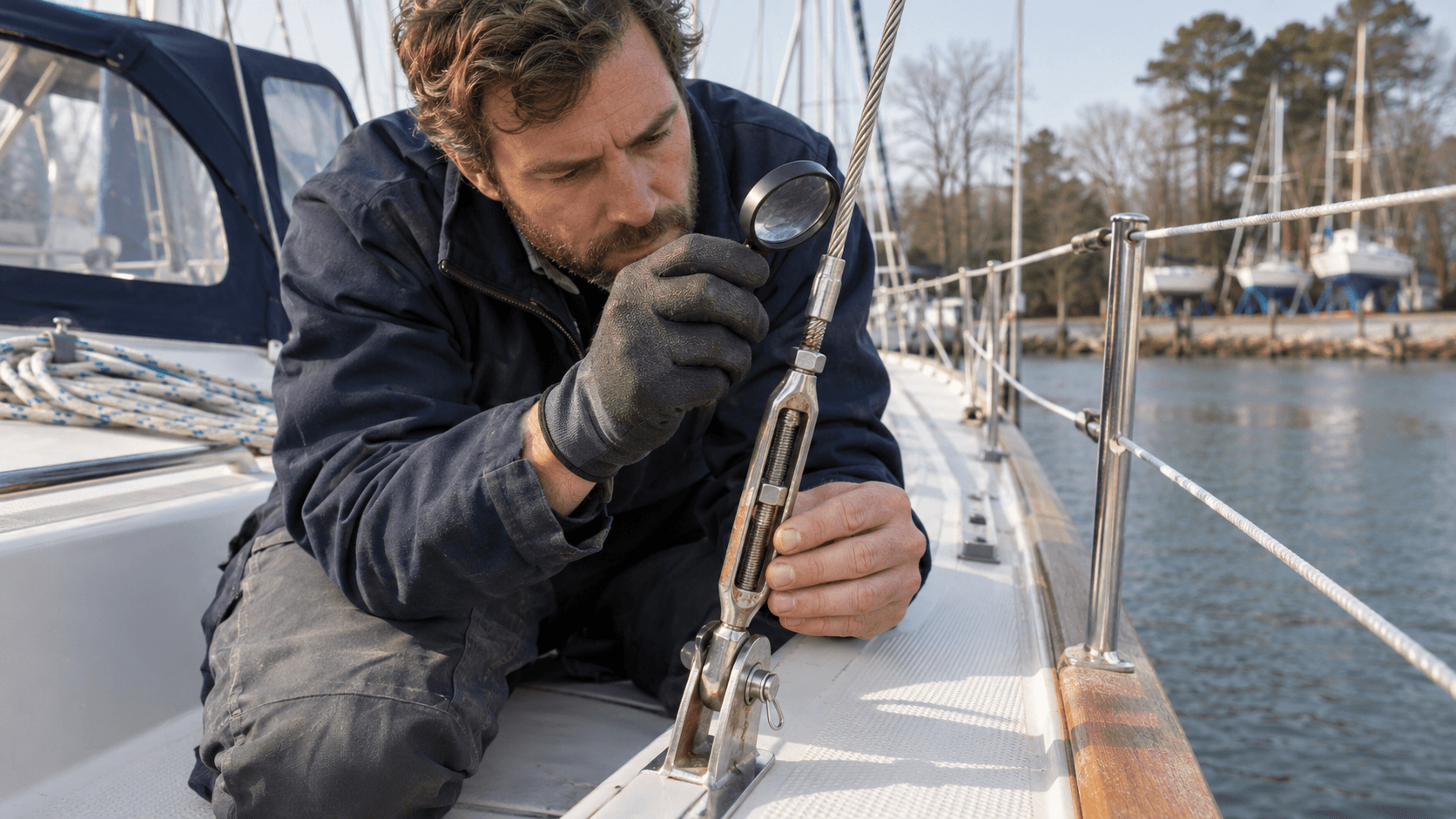
Bottom paint that went two cycles too long lets fouling take hold, which increases drag and fuel consumption and in some cases contributes to hull finish damage underneath. Standing rigging that skipped its annual inspection shows a cracked swage fitting only after a shroud has already started to fail under load. None of these begin as major repairs. They begin as a skipped line item on a maintenance schedule, and by the time they surface, the owner is choosing between an emergency haul-out mid-season and a problem that will not wait.
What Deferred Maintenance Actually Costs, With Real Numbers
It is easy to say deferred maintenance costs more. It is more useful to show it. Standing rigging is a clear example: a qualified rigger typically inspects it annually, and the wire itself is generally replaced on a ten to fifteen year cycle as a preventative measure, regardless of whether a specific failure has shown up yet.
A full rig replacement on a 30 to 50-foot boat, wire, fittings, and professional installation, generally runs in the range $5,000+. That is a known, budgetable number. A rigging failure at sea, by contrast, is not a budgetable number. It can mean a dismasting, a damaged deck, or in the worst cases a safety incident, on top of the same rig replacement cost you would have paid anyway.
The same logic holds on systems many owners do not think of as part of “maintenance” at all. Marine water heaters typically last eight to fifteen years, and quality marine refrigeration systems run a similar eight to fifteen year range, both shortened by Bay summer heat if they are not inspected annually.
A holding tank system, left unattended, develops serious problems around the ten to fifteen year mark through macerator pump failure or hose degradation that produces odor long before it produces a full failure. In every one of these cases, an annual inspection and a part replaced on a known schedule costs a fraction of what a full system failure costs once it takes out something connected to it, or once the problem has gone on long enough to need a full overhaul rather than a component fix.
The Off-Season Is Working Time, Not Downtime
The owners who get ahead of this pattern treat the off-season as working time rather than storage time. January, while most Bay boats sit in winter storage, is the right window for a thorough inspection while the boat is out of the water and fully accessible: new gelcoat cracks around through-hulls and chainplates, bottom paint thinning at the edges, visible wear on standing rigging (broken strands, kinks, stretching at the swages), and fluid levels and raw water strainer condition on the engine.
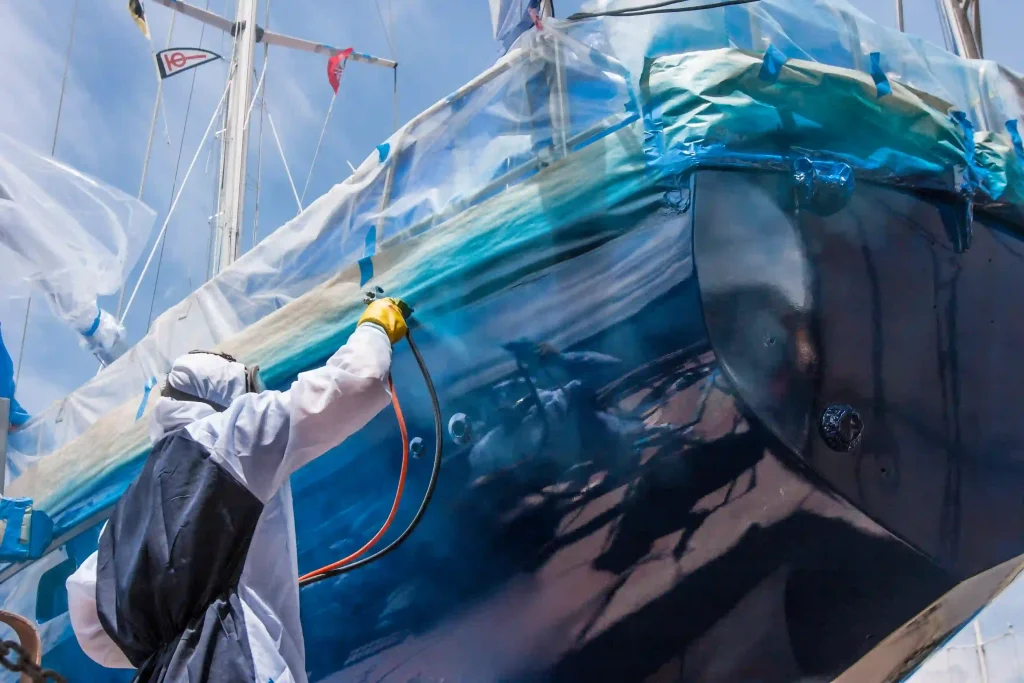
February is typically when the major off-season work itself happens at most Bay yards: bottom paint touch-up or a full repaint (a cycle that generally runs every one to three years depending on use), through-hull and cutless bearing inspection, anode replacement, rig inspection and any overdue rigging replacement, and major engine service at the 1,000 to 2,000 hour interval, including valve adjustment, injector inspection, and heat exchanger service.
For Norton’s winter storage customers, we coordinate this work during the off-season specifically so that by the time spring commissioning arrives, the major items are already done and the boat is ready for the season rather than still being caught up on.
The Three Pieces of This Argument, Tied Together
Engine care protects the most expensive system on the boat
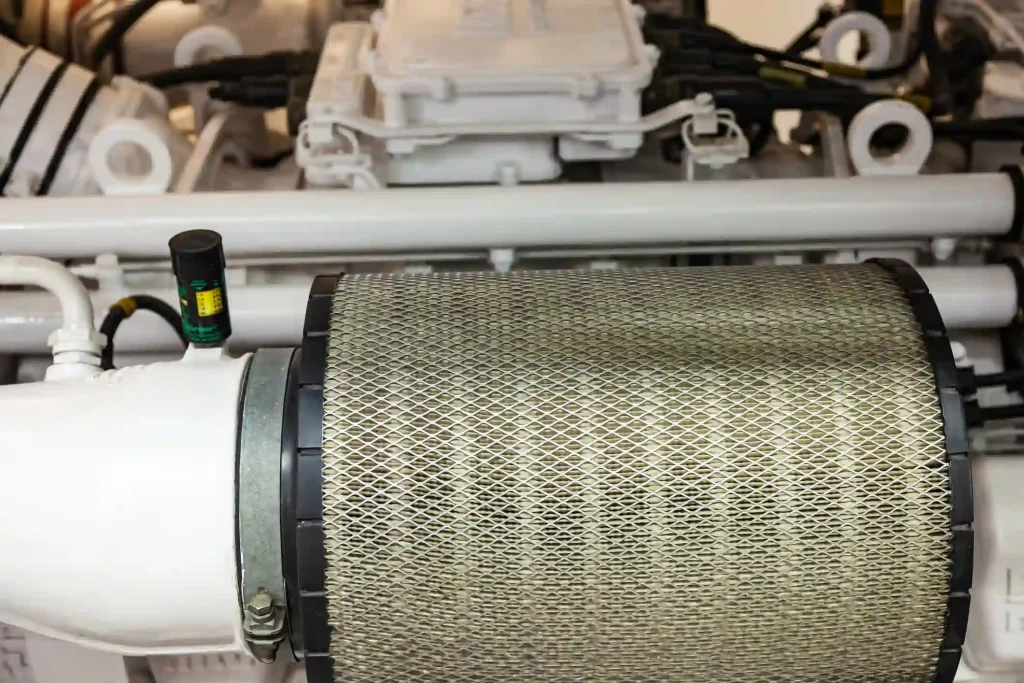
A Yanmar or Volvo diesel, or a Yamaha or Mercury outboard, maintained on its factory-specified schedule rarely fails catastrophically. The engines that do fail catastrophically are almost always ones where a routine service item, an impeller, a fuel filter, or zinc, was deferred.
Consistent maintenance protects what the boat is worth, whether or not you plan to sell
Documented, on-schedule maintenance is the difference between two otherwise identical boats commanding different prices, and it is also the difference between a boat that stays reliable and one that develops compounding problems. See How Regular Maintenance Protects Your Boat’s Value for the full breakdown.
Detailing prevents cosmetic damage from becoming structural damage
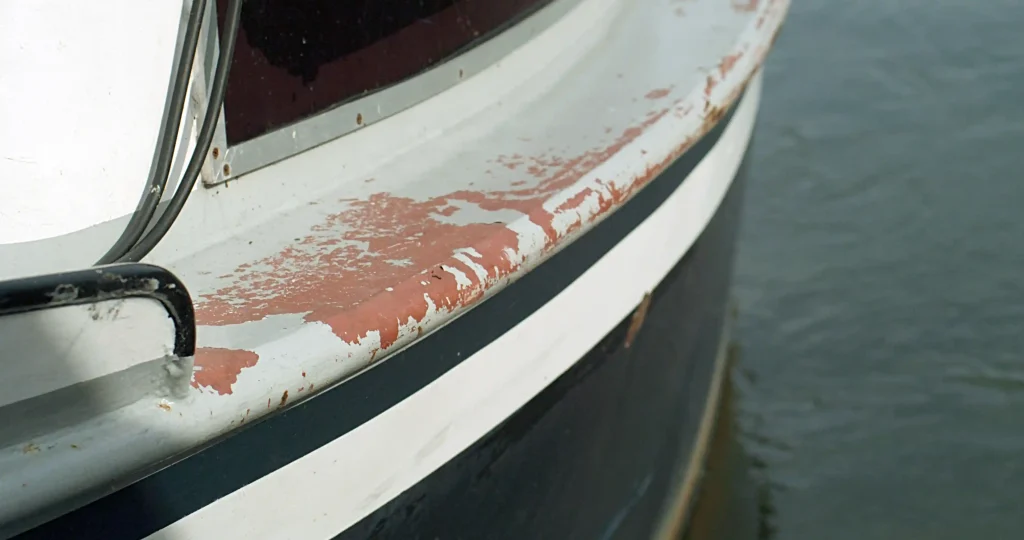
Oxidized gelcoat, salt-damaged canvas, and corroded hardware are all less expensive to prevent through regular care than they are to correct once the damage has set in. See Why Regular Boat Detailing Protects More Than Just Appearance.
Building the Habit
The owners who avoid the expensive version of this pattern are not spending more money overall. They are spending it on a schedule instead of in emergencies, which is both more predictable and less disruptive to an actual season of boating.
If you want to build a preventative maintenance plan around your specific boat, including engine, rigging, bottom paint, and detailing on one coordinated off-season schedule, our service team can put that together. You can also see our full range of service offerings in the Knowledge Center.
Frequently Asked Questions
Is preventative maintenance really cheaper, or does it just feel that way?
It is genuinely less expensive over the life of a boat in the overwhelming majority of cases. A rigging replacement on a known ten to fifteen year cycle costs a predictable $5,000 to $15,000 on a mid-size boat. A rigging failure caused by skipping that cycle costs the same replacement plus whatever damage the failure itself caused, and sometimes more.
What is the single most commonly deferred maintenance item that causes the biggest problems?
Raw water pump impellers and bottom paint cycles are two of the most common. Both are inexpensive and quick to address on schedule, and both can lead to significantly more expensive problems, overheated engines, hull fouling and finish damage, when deferred.
How do I know if my boat’s maintenance is already behind schedule?
A full inspection at your next haul-out is the most reliable way to find out. Our service team can walk through your boat’s current condition against what its engine type, rigging age, and systems should have had done by now.
Does this apply the same way to a sailboat and a powerboat?
The specific items differ, with rigging mattering more for sailboats and running gear mattering more for powerboats, but the underlying economics are the same for both: scheduled maintenance, done on known intervals, costs less than deferred repairs discovered by failure.
To put a preventative maintenance plan together for your boat, call Norton Yachts’ service team at (804) 776-9211.