A properly applied Awlgrip topcoat on a well-prepped hull typically holds full gloss for 10-15 years, with functional protection lasting well beyond that when the boat is maintained.
On the Chesapeake specifically: brackish water, heavy UV, and a real winter freeze-thaw cycle; that number holds up well compared to coastal boats further south, but only when the prep work and painter were right the first time.
Key Takeaways
- Awlgrip’s realistic lifespan is 10-15+ years when applied correctly: closer to 2-4 years when it isn’t.
- Prep quality, not the paint itself, is what determines longevity.
- A fresh-water rinse after use and covered off-season storage are the two highest-value, lowest-effort maintenance habits.
- Dock rash and dark colors will show wear faster; that’s cosmetic, not a coating defect.
The Honest Range: 10-15 Years, With Real Variables
Ask five different yards how long Awlgrip lasts and you’ll get five different numbers, because the finish itself isn’t the variable — the application is. A rushed or poorly prepped job can show orange peel, runs, or premature dulling within two or three seasons. A properly faired, correctly primed, professionally sprayed job on the same hull can look nearly new after a decade and remain fully functional (no chalking, no delamination) well past 15 years.
What Shortens Awlgrip’s Lifespan
Surface prep quality. This is the single biggest factor. Any moisture, contamination, or unfaired imperfection sealed under the topcoat becomes a failure point later — usually as blistering or peeling in that exact spot.
Sun exposure and slip location. A boat stored uncovered in full sun year-round will see gloss fade faster than one kept under a boat lift canopy or in covered storage during the off-season.
Hull color. Darker colors absorb more UV and heat, which accelerates gloss loss compared to whites and light colors on an otherwise identical hull.
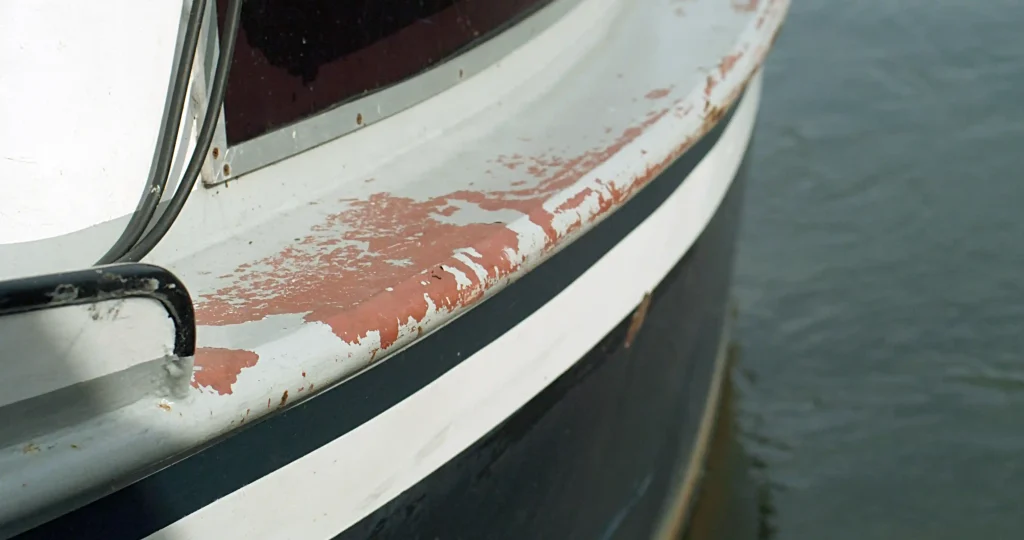
Dock rash and fender contact. Repeated rubbing against pilings, fenders, or other boats wears through the topcoat locally long before the rest of the hull shows age — this is cosmetic damage, not a coating failure, but it looks the same to an untrained eye.
Wash routine. Salt and brackish water left to dry on the hull accelerates dulling. A simple fresh-water rinse after use does more for longevity than most owners realize.
What Extends It
- Rinsing the hull with fresh water after each outing, especially below the waterline and around fittings
- An occasional wax or ceramic sealant pass — not required, but it reduces oxidation and makes washing easier
- Covered storage or a hull cover during winter layup
- Addressing small dock rash or chips quickly with matched touch-up paint before moisture gets underneath
- Choosing a yard that fairs and primes correctly the first time, so there’s nothing to “catch up on” years later
The Prep Mistakes That Cut a Job’s Life in Half
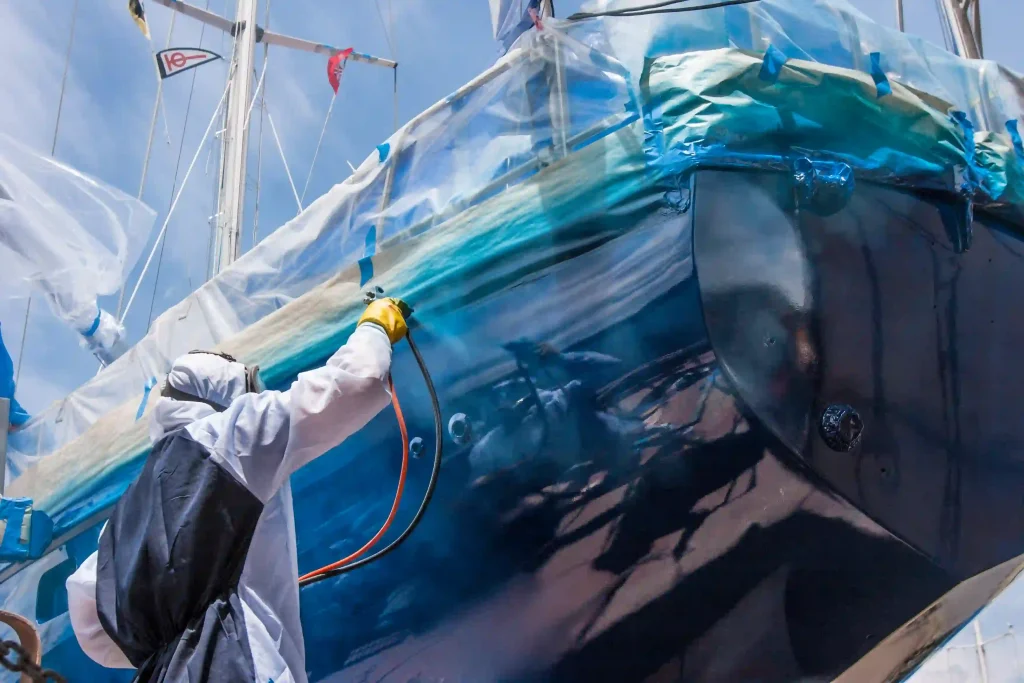
A rushed Awlgrip job usually fails in one of these ways: skipping or shortcutting the fairing step (so imperfections show through the topcoat and become moisture traps), spraying outside the correct temperature and humidity window (causing poor cure and orange peel texture), skipping a compatible primer coat, insufficient coat thickness, or masking so carelessly that overspray and bare spots show up around fittings within the first season. Every one of these is invisible on delivery day and obvious two years later.
Why the Painter Matters More Than the Product
Awlgrip as a product is engineered to last well over a decade in marine conditions. The variable that actually determines whether a given boat gets 6 years or 16 is the crew doing the spraying. Norton Yachts’ shop includes one of the top-ranked Awlgrip painters in the country — which is exactly the kind of variable that shows up on your hull ten years from now, long after the invoice is paid.
Frequently Asked Questions
Can you wax Awlgrip like gelcoat?
Yes. Awlgrip holds gloss without regular waxing, but an occasional wax or marine-grade sealant helps reduce oxidation and makes routine washing easier.
How often should you wash a boat with an Awlgrip finish?
A fresh-water rinse after every outing, plus a proper wash on a regular seasonal cadence, is the single best thing you can do to extend the finish’s life — salt and grime left to dry accelerate dulling.
Does Awlgrip need to be repainted on a set schedule?
No — unlike some maintenance items, Awlgrip doesn’t have a fixed repaint interval. Repainting is driven by visible wear (chalking, dock rash, chips) rather than a calendar.
Is a 3-year-old Awlgrip job that’s already dulling normal?
No. That timeline points to a prep or application issue, not normal wear. It’s worth having a yard inspect for underlying problems rather than just re-buffing the surface.