
Deltaville's Full-Service Boatyard Since 1948
Your Chesapeake Bay Boatyard In Deltaville, VA
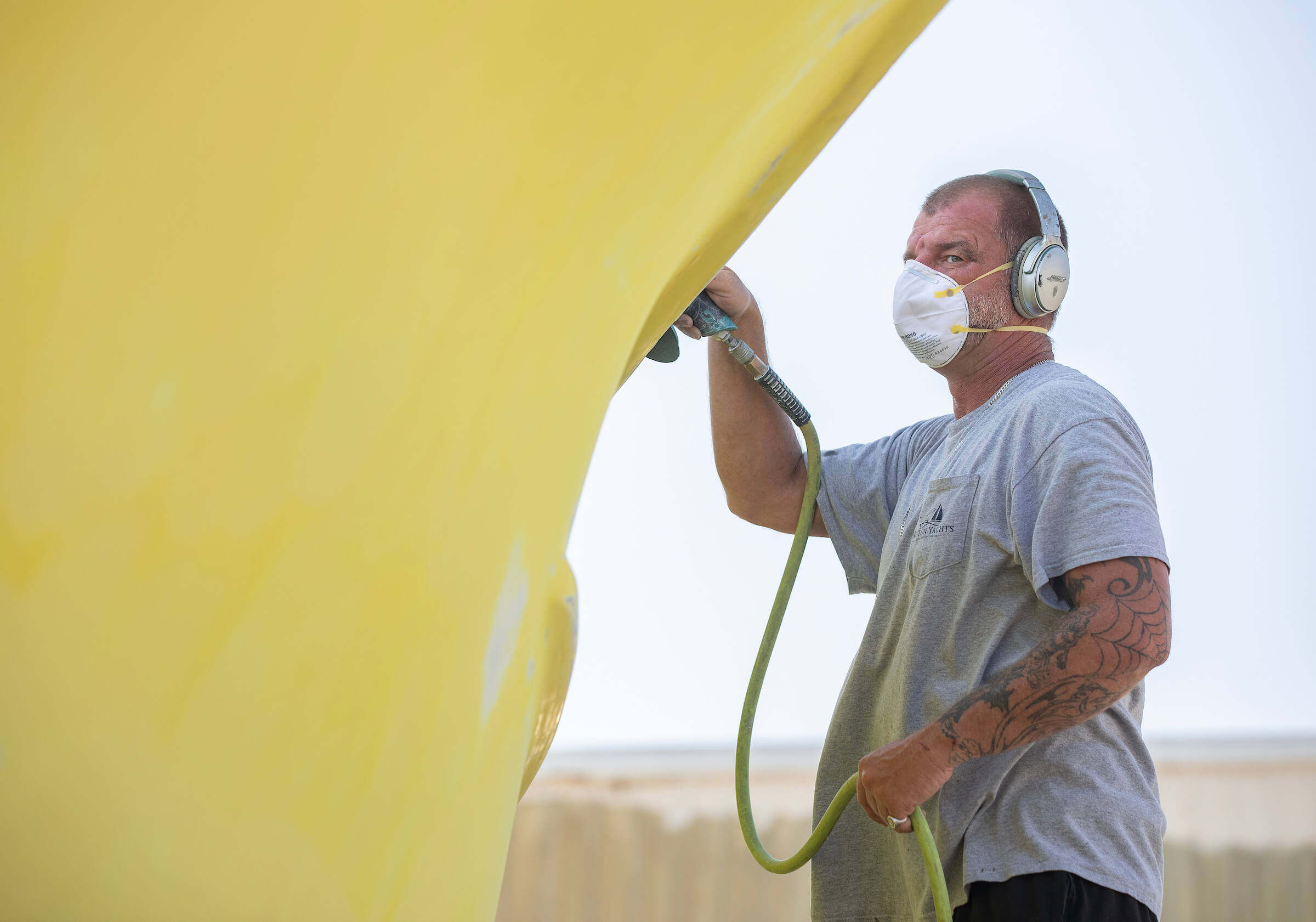
Norton Yachts applies antifouling bottom paint at 97 Marina Drive in Deltaville, Virginia, on the Chesapeake Bay, hauling the boat with a 35-ton Travel Lift so the hull can be properly prepped and painted. Bottom paint keeps barnacles and algae off the hull, which protects speed, fuel economy, and running gear, and we have painted Chesapeake Bay boats since 1948.
35-ton Travel Lift on site · Interlux antifouling systems · Certified painting crew · 78 seasons on the Chesapeake Bay
Boat Bottom Paint In Deltaville, Virginia
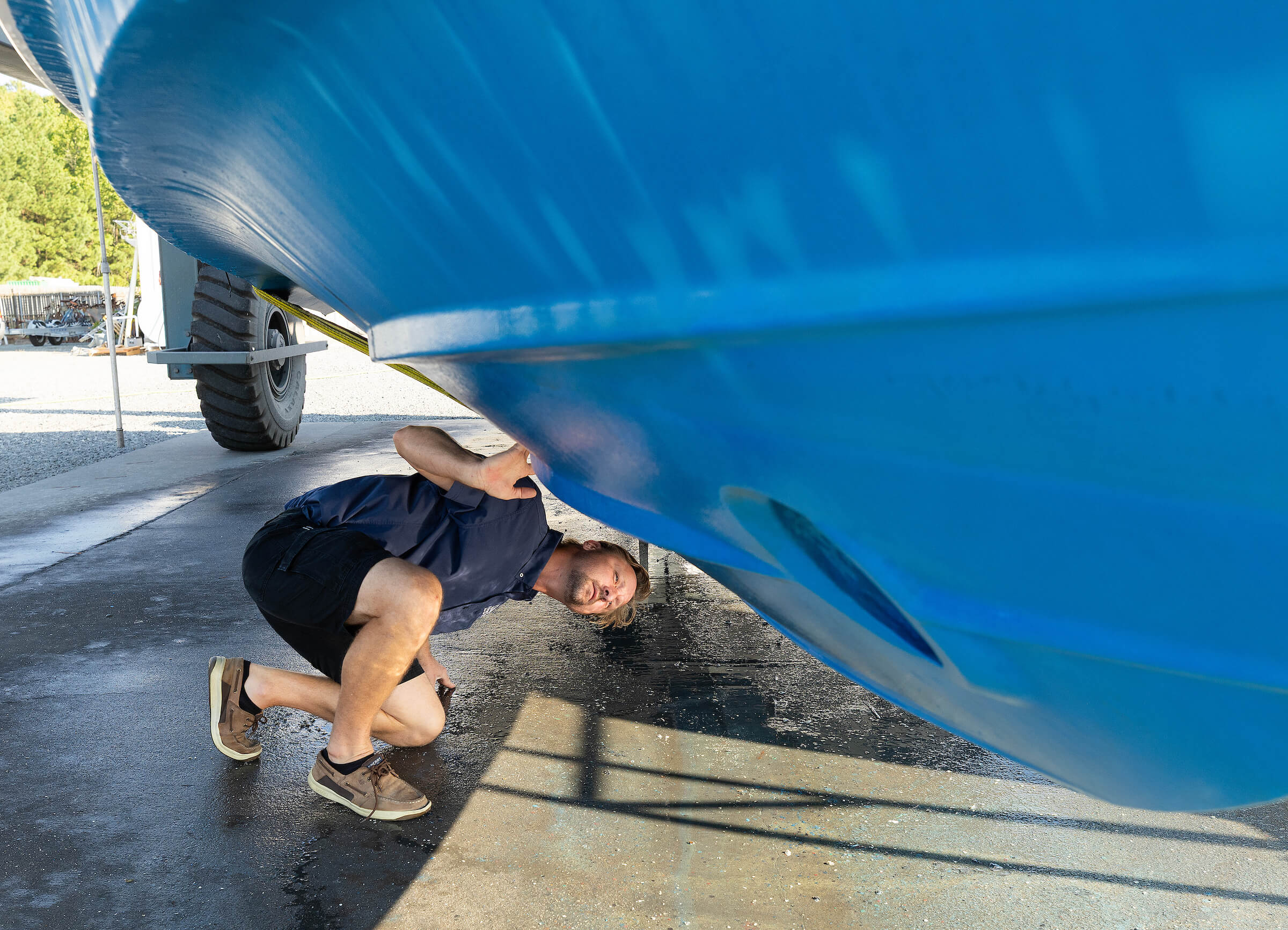
Norton Yachts paints boat bottoms at our Deltaville boatyard, on the Middle Peninsula on the western shore of the Chesapeake Bay. Bottom paint requires a haul, so it is done alongside our boat haul-out services, with the same 35-ton Travel Lift and yard crew.
The service department is open Monday through Friday, 8:00 a.m. to 4:30 p.m. Boat owners from Middlesex, Mathews, Gloucester, and Lancaster counties and the Northern Neck bring their boats to Deltaville for bottom paint rather than a yard further from the Bay.
Bottom Paint Service
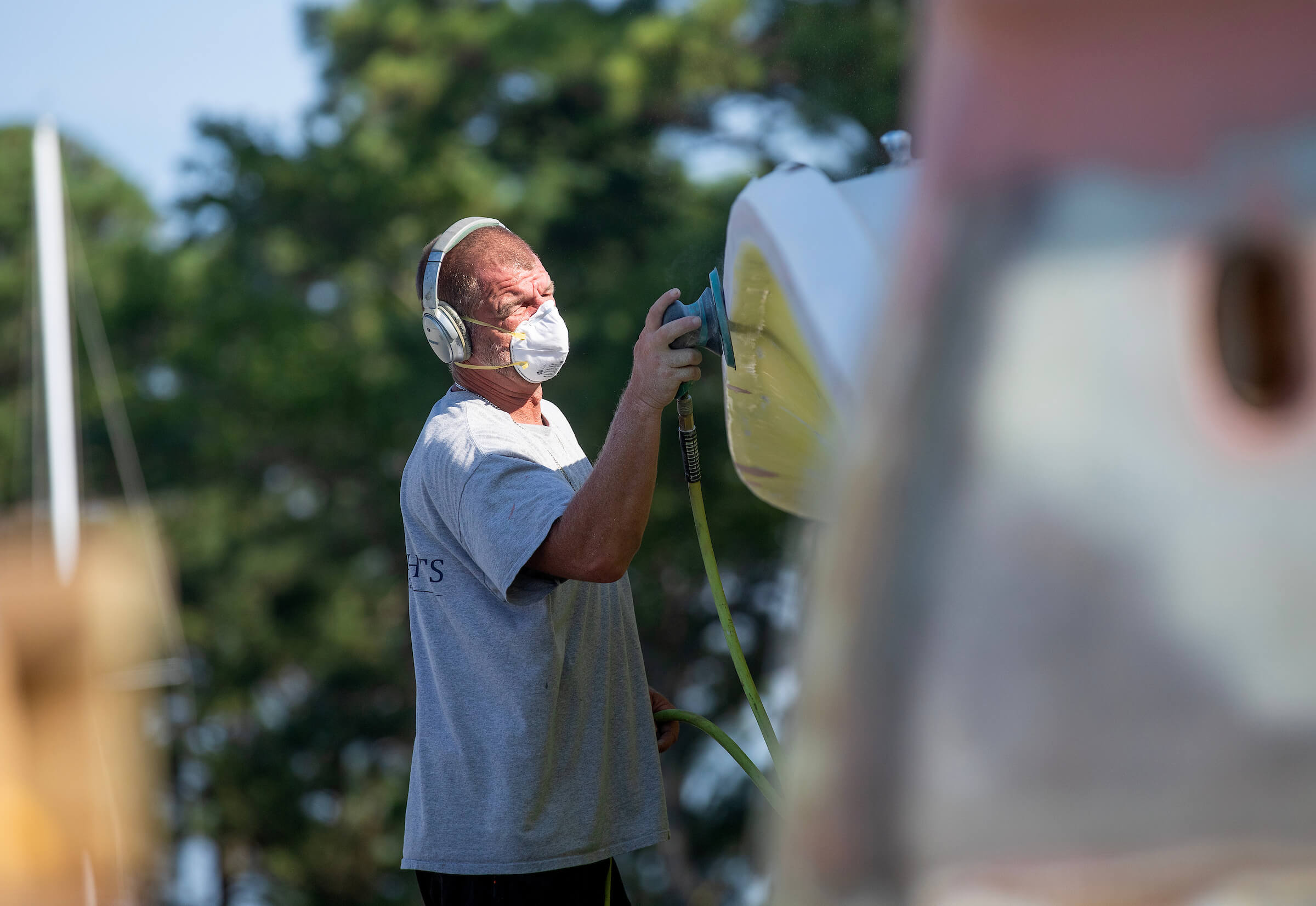
Boat bottom paint service at Norton Yachts covers the whole job, not just the paint itself. A standard bottom paint job includes:
Because bottom paint needs a haul anyway, most owners pair it with the inspection and repair work covered on our boat maintenance page.
Two Different Jobs
Boat paint hull work splits into two jobs that don't overlap. Bottom paint is antifouling: a functional coating below the waterline that keeps marine growth off the hull. It is not glossy, it is not meant to be seen, and it gets reapplied on a schedule.
Topside and hull finish work, the mirror-like color coat above the waterline, is a cosmetic system called Awlgrip, and it is a completely different product and process. See our Awlgrip painting services if that is the finish you are after; this page is about what protects the hull underwater.
What Drives The Price
Cost to bottom paint a boat depends on hull length, how much old paint has to come off, and whether bare gelcoat or aluminum needs a barrier coat first. A boat that only needs a fresh coat over sound old paint costs less than one that needs stripping and priming.
Because the exact number depends on your hull's condition, the fastest way to get a firm quote is to call (804) 776-9211 or schedule an appointment. Our service team will look at the hull once it's hauled and quote the job from there.
Pontoon And Aluminum Hulls
Bottom paint for a pontoon boat is not the same product as bottom paint for a fiberglass hull. Pontoon tubes are aluminum, and standard copper-based antifouling causes galvanic corrosion on aluminum, eating away at the metal instead of protecting it. Paint for the bottom of an aluminum boat has to be a copper-free antifouling formulated for aluminum, usually over a barrier coat that isolates the metal from the paint above it.
Norton Yachts is an authorized Bennington pontoon dealer, so we paint pontoon tubes with the correct aluminum-safe systems, not standard bottom paint.
How Antifouling Works
Antifouling bottom paint works by releasing a slow, steady dose of biocide at the paint surface, which keeps barnacles, algae, and other marine growth from attaching to the hull. Without it, growth builds up within weeks in the Chesapeake Bay's warm months, adding drag that slows the boat and burns more fuel.
Bottom paint comes in two basic types: hard paint, which is sanded smooth each season and holds up well for boats hauled often, and ablative paint, which wears away gradually as the boat moves and is a better fit for boats that stay in the water most of the season. Norton Yachts will recommend the type that fits how you actually use your boat.
Chesapeake Bay Seasons
Spring commissioning and fall haul-out are the two natural windows for bottom paint, since the boat is already out of the water for other work. Painting in fall, ahead of winter storage, means the boat is ready to launch as soon as spring commissioning starts.
Most Chesapeake Bay boats need a fresh coat every one to two seasons, depending on paint type and how much the boat sits in the water versus at the dock. Ask the service team to check your hull's condition at your next haul and tell you honestly whether it needs paint this season or can wait.
Four Steps
Boats must be fully pumped out before haul-out.
FAQs
Cost to bottom paint a boat depends on hull length, how much old paint has to come off, and whether bare gelcoat or aluminum needs a barrier coat first. A boat getting a fresh coat over sound old paint costs less than one that needs stripping and priming.
Call (804) 776-9211 for a firm quote once your hull's condition can be seen at haul-out.
Boat bottom paint, also called antifouling paint, is a coating applied below the waterline that keeps barnacles, algae, and other marine growth off the hull. Without it, growth builds up within weeks in the Chesapeake Bay's warm months.
Growth on an unpainted hull adds drag, which slows the boat and burns more fuel, and it can also foul running gear.
Bottom paint is antifouling: a functional coating below the waterline, not meant to be seen, that gets reapplied on a schedule. Hull paint above the waterline, the glossy topside finish, is a completely different cosmetic product and process, called Awlgrip.
See our Awlgrip painting services if you're after the topside finish; this page covers what protects the hull underwater.
Yes, but pontoon tubes are aluminum, so they need a copper-free antifouling formulated for aluminum, not standard bottom paint. Standard copper-based antifouling causes galvanic corrosion on aluminum.
Norton Yachts is an authorized Bennington pontoon dealer and paints pontoon tubes with the correct aluminum-safe systems.
Aluminum hulls and pontoon tubes need a copper-free antifouling paint, usually applied over a barrier coat that isolates the aluminum from the paint above it.
Standard copper-based bottom paint should never go directly on aluminum, since it causes galvanic corrosion that eats away at the metal.
Antifouling paint releases a slow, steady dose of biocide at the paint surface, which keeps marine growth from attaching to the hull.
Bottom paint comes in two basic types: hard paint, sanded smooth each season, and ablative paint, which wears away gradually as the boat moves. Norton Yachts recommends the type that fits how you use your boat.
Most Chesapeake Bay boats need a fresh coat every one to two seasons, depending on paint type and how much time the boat spends in the water versus at the dock.
A boat that stays in the water all season needs paint more often than one hauled and stored for the winter.
Norton Yachts paints boat bottoms at our Deltaville, Virginia boatyard, on the western shore of the Chesapeake Bay. Boat owners from Middlesex, Mathews, Gloucester, and Lancaster counties and the Northern Neck bring their boats here rather than a yard further from the Bay.
Bottom paint requires a haul, so it's done alongside our boat haul-out services with the same Travel Lift and crew.
Not always. If the existing paint is sound and compatible with the new coating, a fresh coat can often go directly over it. Paint that has failed, built up too thick, or is incompatible with the new system needs to be sanded or stripped first.
Our service team checks the existing paint at haul-out and tells you honestly whether stripping is needed.
Spring commissioning and fall haul-out are the two natural windows, since the boat is already out of the water for other work.
Painting in fall, ahead of winter storage, means the boat is ready to launch as soon as spring commissioning starts.
Norton Yachts applies Interlux antifouling systems, and our painting crew works on the same boats and hulls our service department services and repairs.
We're also an authorized Bennington pontoon dealer, which is why we carry the correct aluminum-safe systems for pontoon tubes.
A standard bottom paint job includes the haul and pressure wash, sanding or stripping old paint where needed, a barrier coat or primer on bare gelcoat or aluminum, the antifouling coats themselves, and a zinc anode inspection while the hull is already exposed.
Anything else the crew finds, like a cracked strut or a worn cutlass bearing, goes straight into our boat maintenance for repair.
Get In Touch
Call (804) 776-9211, Monday through Friday, 8:00 a.m. to 4:30 p.m., or visit the Boat Service Center.