Black smoke from a marine diesel almost always means the engine is burning a fuel/air mixture that’s too rich — more fuel than the engine can fully combust with the air available.
The most common causes, in rough order of likelihood, are a clogged or dirty air filter/intake, a fouled or misfiring injector, an overloaded engine (excess load from a fouled prop or hull, or running at higher RPM than the boat’s condition supports), or a failing turbocharger. It shouldn’t be ignored — sustained black smoke accelerates carbon buildup and can glaze cylinder walls over time.
Key Takeaways
- Black smoke = too much fuel relative to available air. Blue is oil; white is coolant/unburned fuel.
- Start diagnosis with the air filter and intake — it’s the cheapest, most common cause.
- Occasional smoke on a cold start isn’t alarming; sustained smoke at cruise RPM needs attention.
- A fouled prop or bottom can cause “engine” symptoms that are actually a hull problem.
What the Smoke Color Actually Tells You
Diesel exhaust color is one of the most reliable diagnostic signals you have without opening the engine, and it pays to know the difference:
| Smoke Color | What It Usually Means |
| Black | Too much fuel, not enough air — rich mixture |
| Blue/gray | Burning oil — worn rings, valve seals, or turbo seals |
| White (persistent) | Coolant entering the combustion chamber, or unburned fuel from a cold start / injector timing issue |
If you’re seeing black smoke specifically, especially when you throttle up, the problem lives on the fuel/air side of the engine, not the oil or cooling system.
The Most Common Causes, in Order
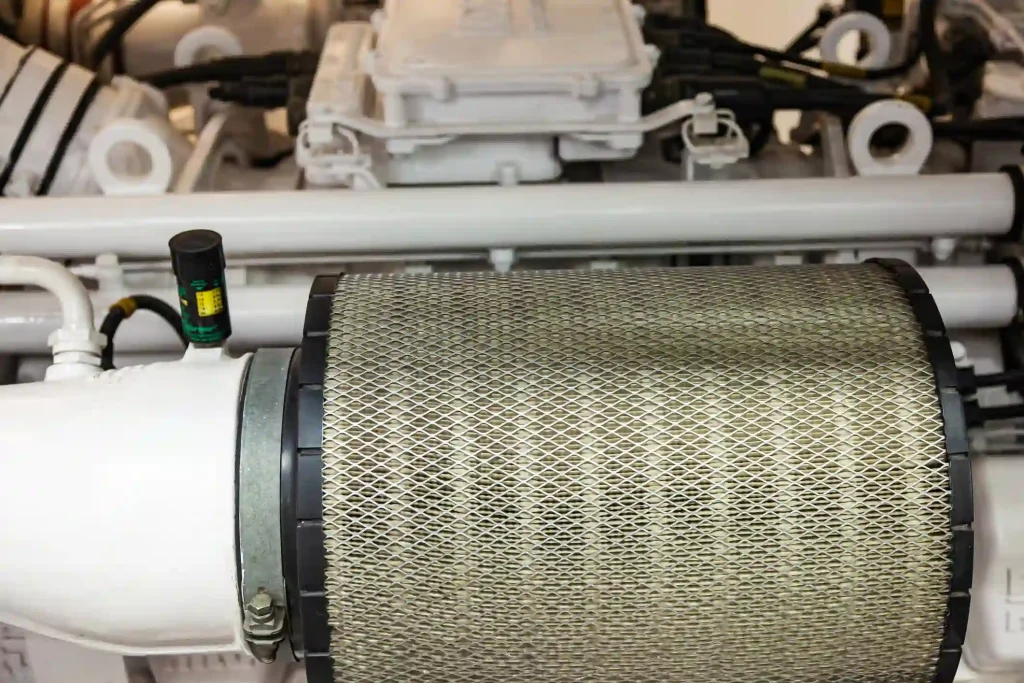
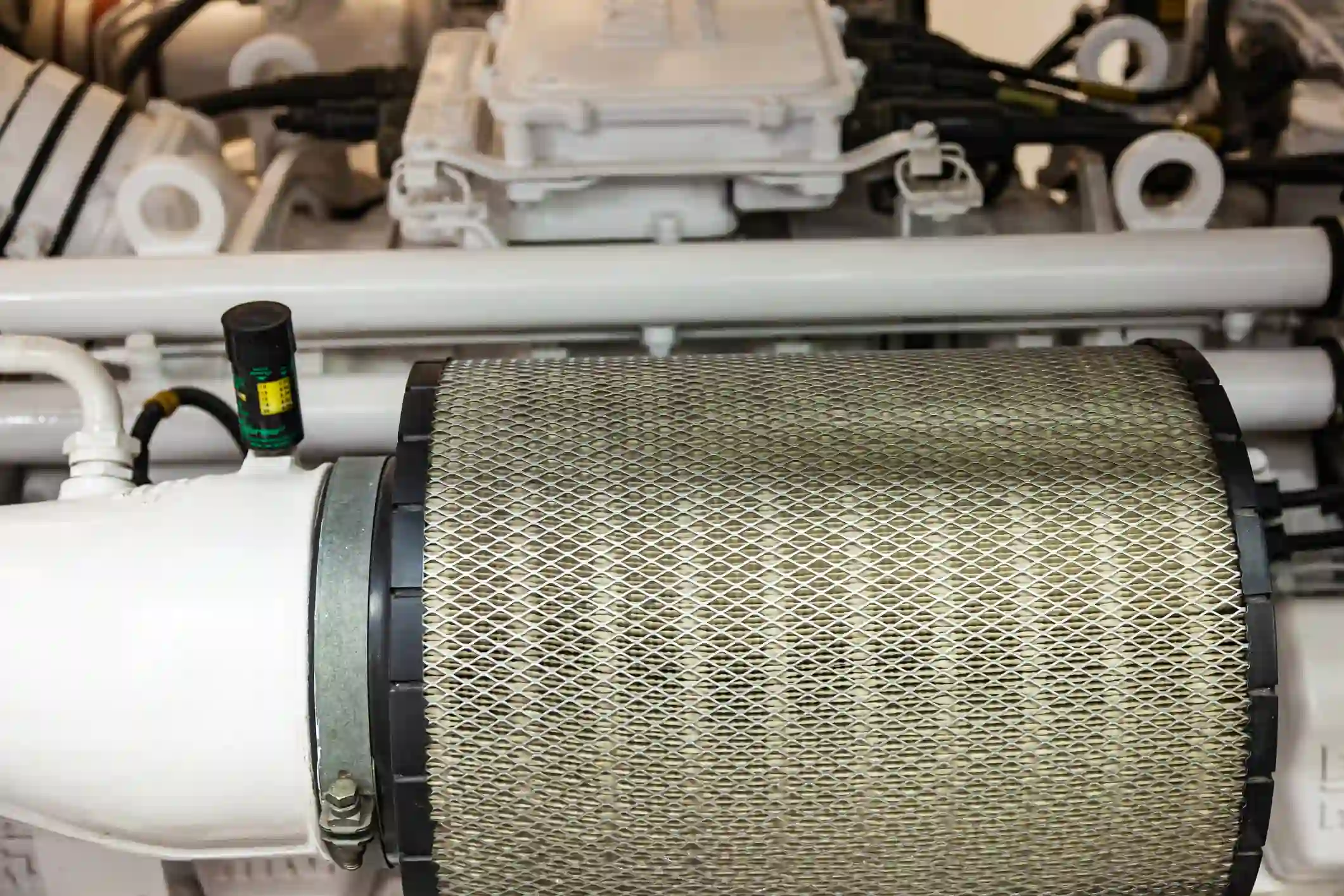
1. Restricted air intake. A clogged or dirty air filter — or a blocked intake, which is more common on boats than cars — starves the engine of air relative to the fuel being injected. This is the easiest and cheapest cause to rule out first.
2. Injector problems. A fouled, worn, or misaligned injector can dump too much fuel into a cylinder or spray it in a poor pattern that doesn’t burn cleanly. This tends to show up gradually and often gets worse under load.
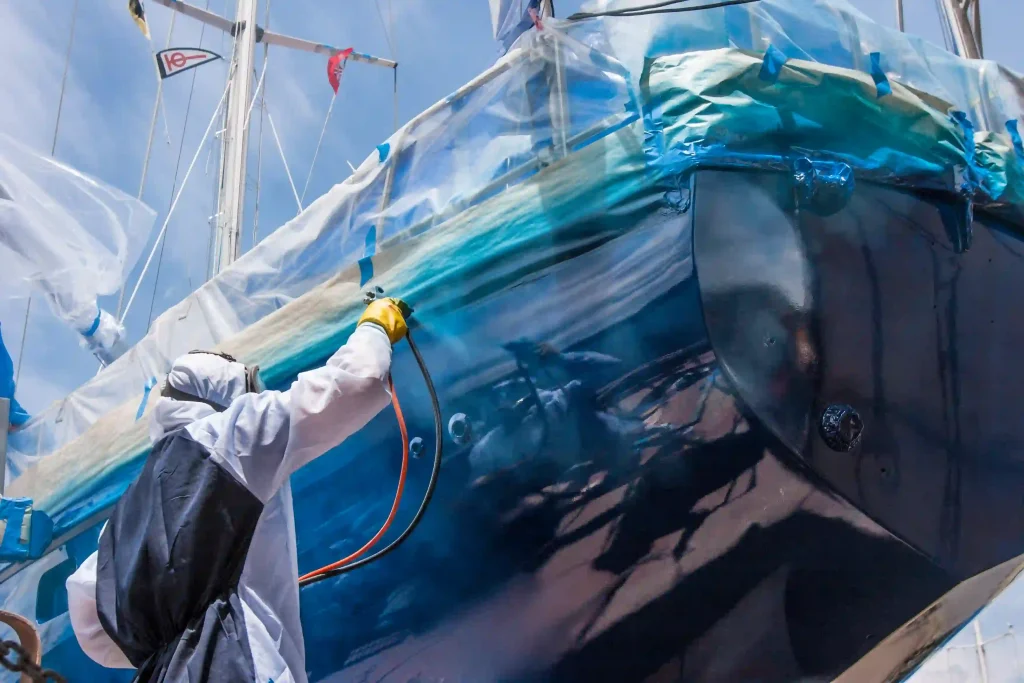
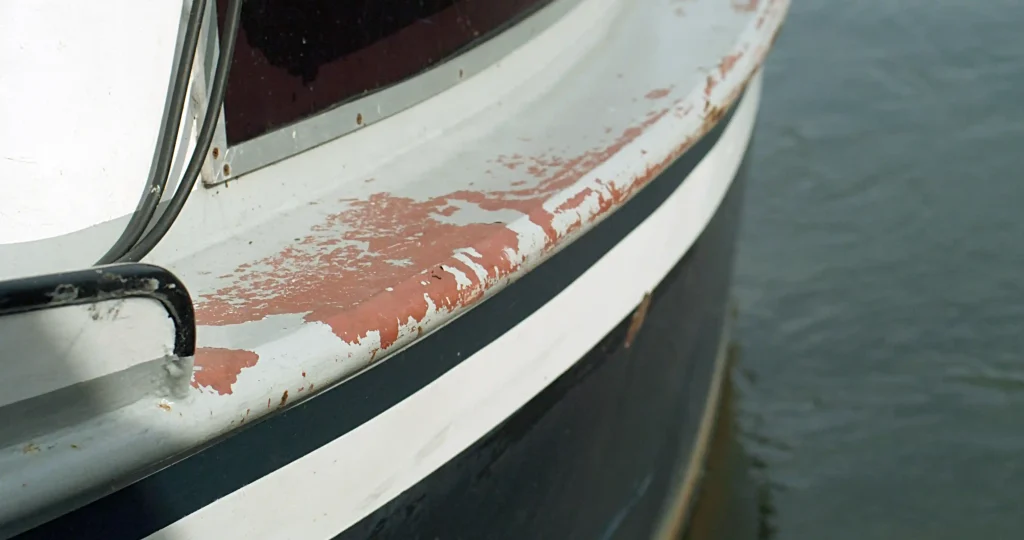
3. Engine overloading. If the boat is working harder than it should at a given RPM — a fouled bottom, a damaged or wrong-pitch prop, or an overloaded boat — the engine ends up injecting more fuel to maintain speed than it can efficiently burn.
4. Turbocharger issues. On turbocharged diesels, a failing turbo reduces the boost pressure that supplies compressed air to the cylinders. Less air, same fuel delivery, same result: black smoke, usually most noticeable under acceleration.
5. Timing or fuel delivery issues. Less common on well-maintained recreational diesels, but incorrect injection timing can also produce a rich-burning, smoky exhaust.
Should You Keep Running the Engine?
Occasional, brief black smoke on hard acceleration from a cold engine is often normal and not a red flag by itself. Sustained black smoke at cruise RPM, or smoke that’s getting worse trip over trip, is not something to keep running through — continuing to operate under those conditions accelerates carbon buildup, can glaze cylinder walls, and turns what might be a filter or injector service into a more involved repair.
If the smoke is heavy and constant, treat it as a “get it looked at soon” issue rather than an emergency shutdown, unless it’s paired with unusual noise, loss of power, or high temperature readings — in which case, throttle back and head in.
What a Technician Will Check First
A proper diagnostic starts with the cheapest, most likely causes and works up: air filter and intake path, then a visual and pattern check on the injectors, then a look at the prop and running gear for fouling or damage, and finally boost pressure if the engine is turbocharged.
This order matters — it’s the difference between a $50-100 filter fix and an unnecessary injector overhaul.
Preventing It From Recurring
Most black-smoke calls trace back to a maintenance interval that slipped — an air filter that went a season too long, fuel filters that weren’t changed on schedule, or a bottom that hadn’t been cleaned in a while. Staying on top of your engine’s service intervals is the single best way to avoid this call altogether.
Frequently Asked Questions
Is black smoke from a diesel engine bad?
If it’s brief and only on hard acceleration, it’s usually not urgent. If it’s sustained or worsening, yes — it accelerates internal wear and should be diagnosed before it turns into a bigger repair.
Can I keep running my boat if the engine is smoking black?
For a short trip home, generally yes, provided there’s no accompanying power loss, unusual noise, or high temperature. Don’t keep running it trip after trip without having it looked at.
How much does it cost to fix black smoke on a marine diesel?
It ranges widely — from the cost of an air filter and a cleaning, to an injector service, to more involved turbo work. That’s exactly why a proper diagnostic matters before assuming the worst.
Can a dirty bottom or bad prop really cause black smoke?
Yes. If the engine has to work harder to push the boat through the water, it injects more fuel to hold the same RPM — which can produce the same rich-mixture smoke as a fuel-system problem.