Gelcoat is the pigmented resin molded directly into a boat’s hull at the factory: easy and cheap to touch up, but it chalks, fades, and loses gloss within 8-10 years of sun exposure. Awlgrip is a two-part polyurethane topcoat sprayed on after the boat is built. It holds color and gloss roughly two to three times longer than gelcoat, can be applied in almost any color, and costs significantly more up front.
Most owners move to Awlgrip specifically when gelcoat has faded past the point of buffing or when they want a finish that will outlast the boat’s next decade of use, not just its next season.
Key Takeaways
- Gelcoat is built into the hull; Awlgrip is a sprayed topcoat applied afterward.
- Awlgrip lasts roughly 2-3x longer than gelcoat but costs significantly more.
- Gelcoat repairs are simpler; Awlgrip repairs require matched touch-up work.
- The quality of the painter matters more than the paint itself — poor prep is the #1 reason Awlgrip jobs fail early.
What Gelcoat Actually Is
Every fiberglass boat leaves the factory with a gelcoat finish. It’s the outermost layer of resin, tinted with pigment, sprayed into the mold before the fiberglass laminate is built up behind it. That’s the origin of both its biggest strength and its biggest weakness: gelcoat is part of the hull itself, which makes small repairs relatively simple, but it’s also a soft, porous material that was never designed to survive decades of UV exposure without fading.
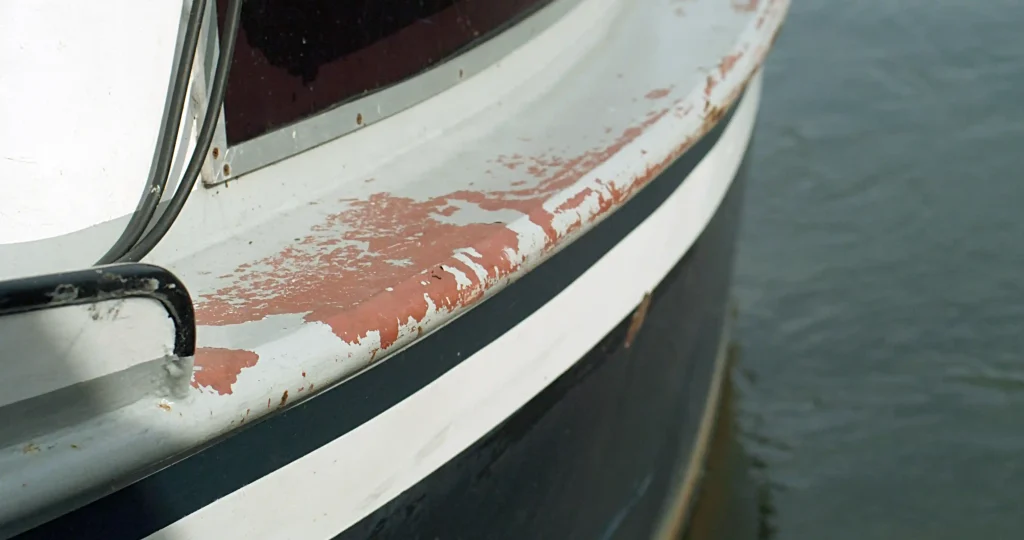
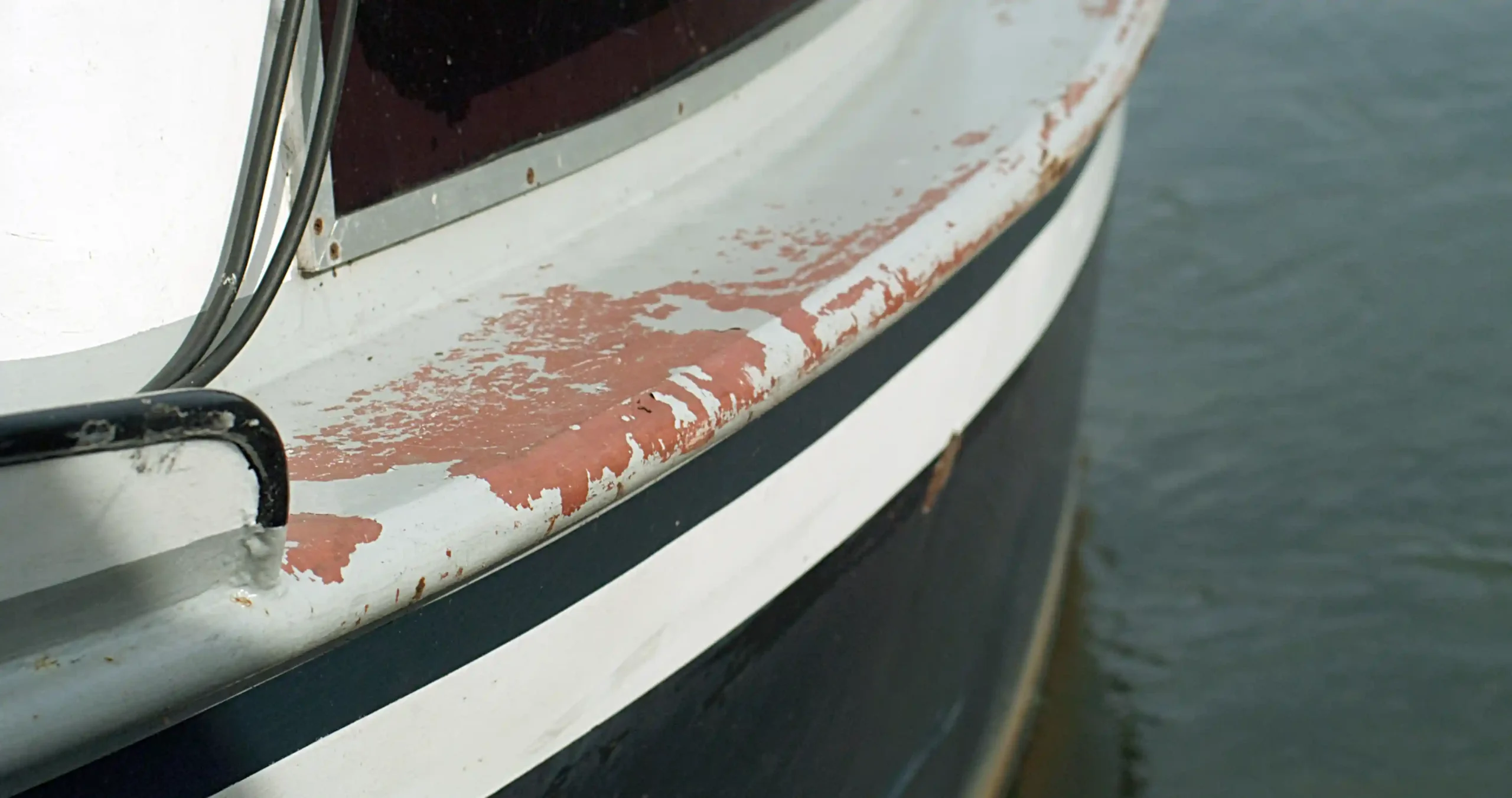
On a well-maintained boat, gelcoat can look good for 6-10 years with regular waxing and compounding. Past that point, most owners start seeing chalking (a dull, powdery surface), color fade — especially on darker hulls — and hairline surface cracking called “crazing.” Buffing and compounding can extend gelcoat’s life for a while, but each pass removes a thin layer of material, and eventually there isn’t enough gelcoat left to work with.
What Awlgrip Actually Is
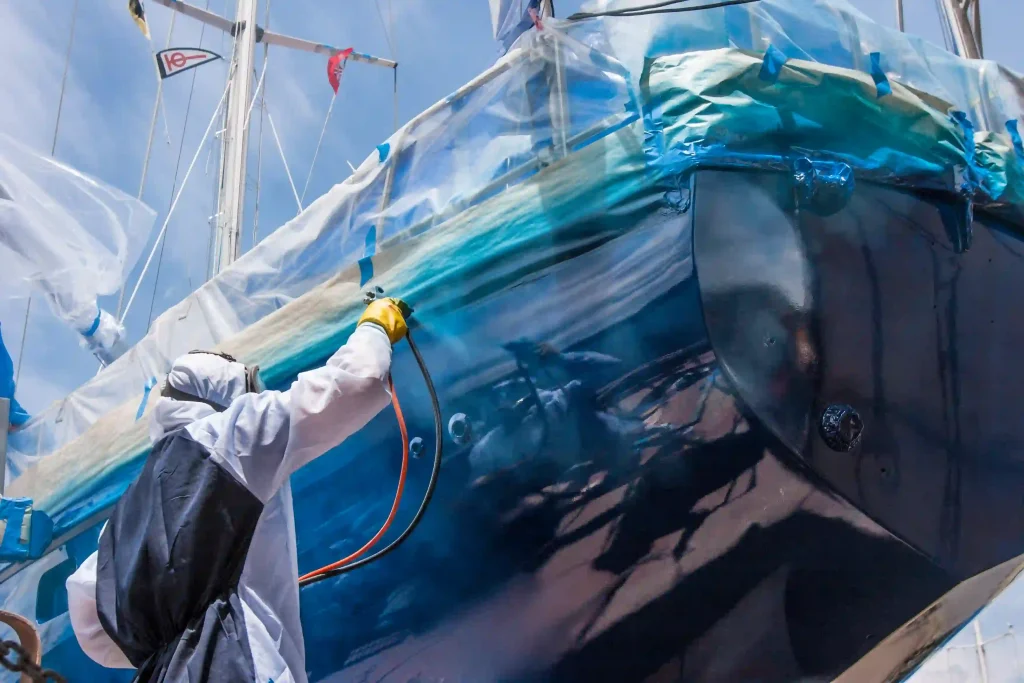
Awlgrip is a linear polyurethane (LP) topcoat system, the same category of coating used on commercial aircraft and superyachts. It’s sprayed on in a controlled environment over a prepped substrate — usually after the old gelcoat or paint has been sanded, faired, and primed. Because it’s a chemically cured coating rather than a molded resin, Awlgrip holds a mirror-like gloss and true color depth for far longer than gelcoat, and it’s available in essentially any color, including metallics and custom matches that gelcoat manufacturers simply don’t offer.
The tradeoff is process and cost. A proper Awlgrip job means stripping or sanding the existing surface, fairing out imperfections, masking every fitting and through-hull, and spraying multiple coats in controlled conditions — work that takes a trained crew days, not hours.
Awlgrip vs. Gelcoat: Side-by-Side
| Factor | Gelcoat | Awlgrip |
| Typical lifespan (full gloss) | 6-10 years | 10-15+ years |
| Upfront cost | Low (touch-ups); moderate (full re-gelcoat) | High — full surface prep + spray |
| Color/gloss options | Limited to manufacturer colors | Nearly unlimited, including metallics |
| Repairability | Easy — sand, buff, patch | Requires matched touch-up or re-spray of the panel |
| Best for | Boats staying original color, minor fading | Faded hulls, color changes, resale-focused owners |
| Maintenance | Regular wax/compound | Wash + occasional wax; holds gloss with less effort |
When Gelcoat Is the Right Call
If your hull’s gelcoat is still structurally sound and the fading is mild, a compound-and-buff service (or a gelcoat repair on isolated spots) is almost always the more cost-effective move. It’s also the right call if you’re keeping the boat’s original color and don’t need a cosmetic overhaul — there’s no reason to pay for a full Awlgrip job when a detailing pass will get you another few seasons.
When Awlgrip Makes Sense
Awlgrip earns its price tag in a few specific situations: when gelcoat has faded or chalked past what buffing can fix, when you want to change the boat’s color entirely, when you’re preparing a boat for resale and want it to present like new, or when you simply want a finish that requires less ongoing maintenance to hold its shine. Owners who plan to keep a boat for the long haul, or who are restoring an older hull, are the most common Awlgrip customers.
Why Who Sprays It Matters as Much as What You Spray
Awlgrip is unforgiving of shortcuts. Poor surface prep, rushed fairing, spraying outside the right temperature and humidity window, or skipping a primer coat will show up as orange peel texture, runs, or premature failure within a couple of seasons — and by then the fix means stripping the job and starting over. Norton Yachts’ paint shop includes one of the top-ranked Awlgrip painters in the country, which is the difference between a job that looks great for one season and one that still looks factory-fresh a decade in.
Frequently Asked Questions
How much does an Awlgrip paint job cost?
Pricing depends on hull length, condition of the existing surface, and how much fairing is needed before spraying, since prep work — not the paint itself — drives most of the labor cost. Get an estimate specific to your boat rather than relying on a per-foot rule of thumb.
Can you Awlgrip over gelcoat?
Yes, with proper preparation. The existing gelcoat needs to be sanded, any imperfections faired out, and a compatible primer applied before Awlgrip goes on. Spraying over an unprepped or contaminated surface is the fastest way to a failed job.
Is Awlgrip worth it for resale value?
A fresh, well-applied Awlgrip finish makes a boat present dramatically better in listing photos and in person, which matters for a high-ticket purchase decision. Whether it’s “worth it” financially depends on how long you plan to own the boat versus how soon you plan to sell.
Does Awlgrip need to be waxed like gelcoat?
Less often. Awlgrip holds gloss with a simple wash routine, though an occasional wax or sealant will extend its life and make it easier to keep clean.