Bottom paint is supposed to buy you a season, sometimes two, of protection against marine growth before it needs attention again. So when it starts flaking, chalking, or losing effectiveness well before you expected, something in the process went wrong. Knowing what helps you fix the current problem and avoid paying for the same mistake twice.
If your bottom paint is failing early and you want it looked at before the problem gets worse or affects the hull underneath, Norton Yachts’ bottom paint team can take a look. Call (804) 776-9211 or visit nortonyachts.com/boat-service-center.
Here are the causes we see most often on Chesapeake Bay boats.
1. Inadequate Surface Preparation
Why it causes early failure: Bottom paint only bonds as well as the surface it’s applied to. If the old paint wasn’t properly sanded, if there was wax, grease, or mold release residue left on the surface, or if the hull wasn’t fully dry before application, the new coat won’t adhere properly.
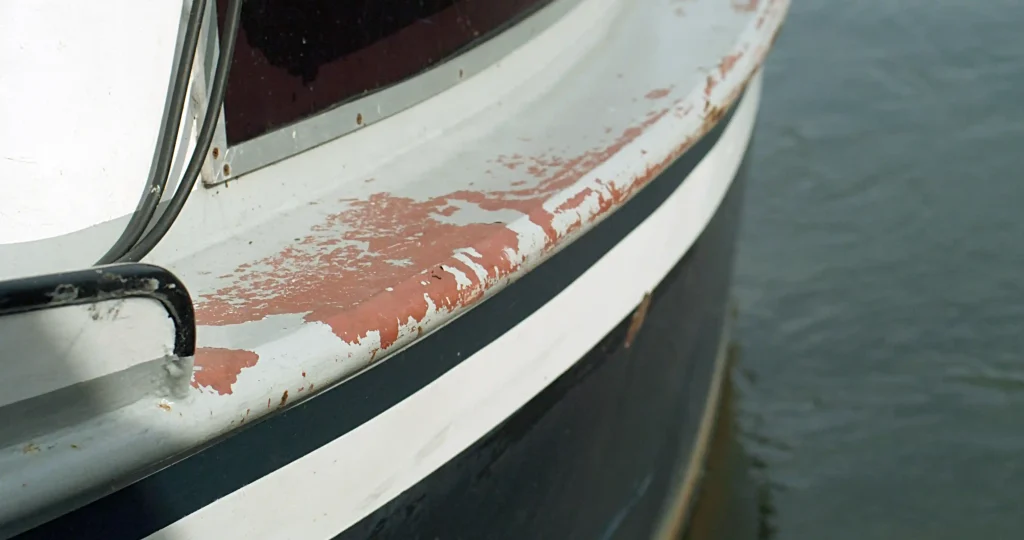
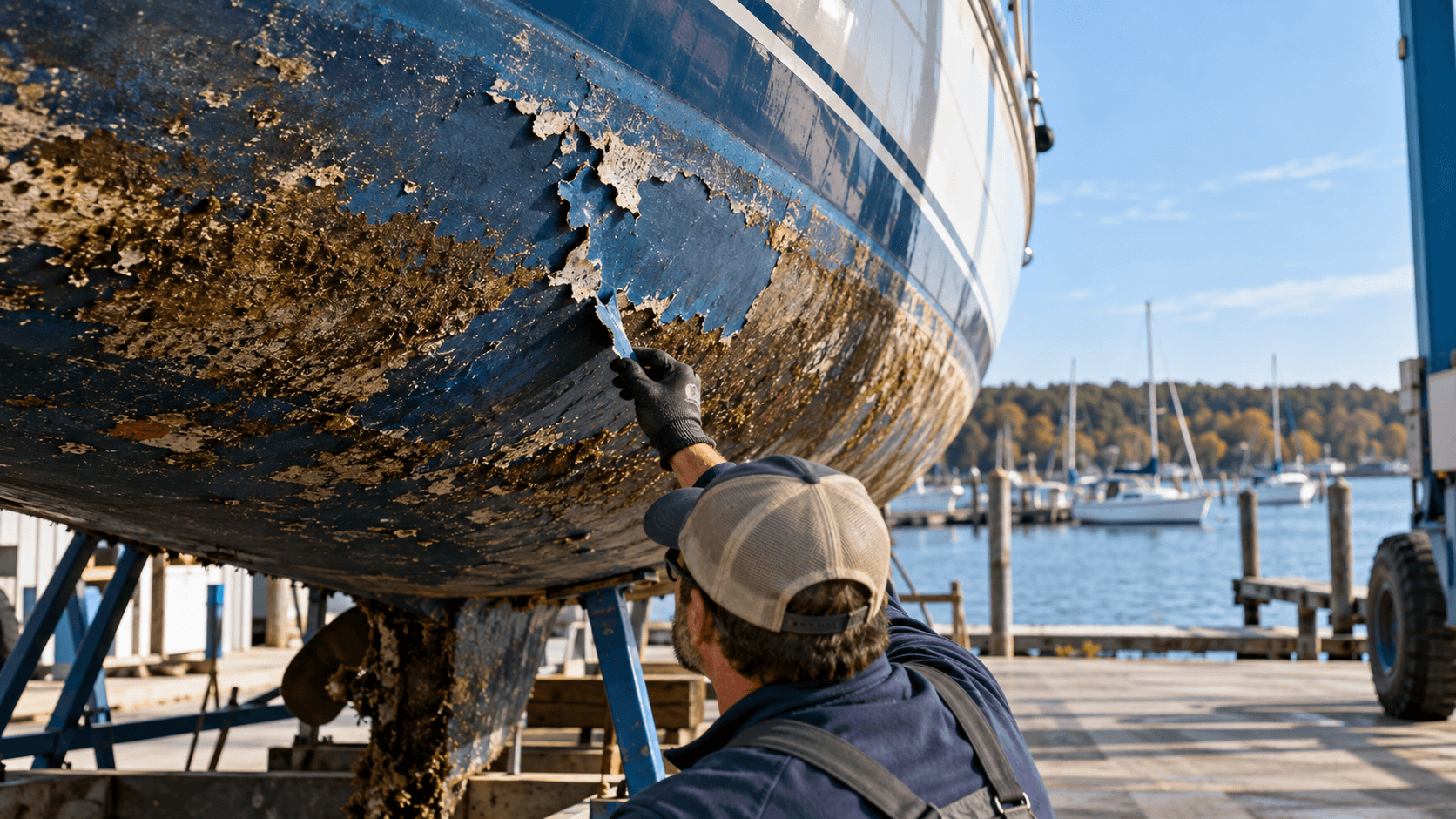
How to diagnose: Paint peeling or flaking in sheets, rather than wearing thin evenly, usually points to an adhesion problem from the start, not gradual wear.
DIY check: Look at how the paint is failing. Even wear across the hull is normal aging. Peeling in patches or sheets, especially in the first season, points back to prep.
Professional fix: Proper bottom jobs strip back to bare substrate when there’s a history of adhesion problems, rather than painting over an already-compromised surface.
2. Wrong Paint Chemistry for Brackish Bay Water
Why it causes early failure: The Chesapeake Bay’s brackish water (a mix of fresh and salt) creates a different fouling environment than open ocean or freshwater lakes. A paint formulated and biocide-loaded for one environment can underperform in another, wearing out its protective ability faster than its rated lifespan.
How to diagnose: If growth is establishing on the bottom well before the paint’s expected service life is up, even on a properly prepped and applied job, chemistry mismatch is worth considering.
Chesapeake Bay note: Our Deltaville location on the Piankatank River means we work with paint systems day in and day out under exactly these brackish conditions, which is part of why we can tell owners which formulations actually hold up here versus which ones are better suited elsewhere.
3. Coverage Applied Too Thin
Why it causes early failure: Bottom paint has a minimum mil thickness for a reason. Ablative paints wear away gradually as the boat moves through the water, releasing biocide as they go. Applied too thin, there’s less material to wear through before the paint is gone entirely.
How to diagnose: Paint that looks worn through to primer or gelcoat in high-wear areas (leading edges, waterline) well ahead of schedule often points to thin application rather than an unusually aggressive season.
DIY check: Compare wear at the waterline and leading edges (typically the first to go) against the rest of the hull. Uniform premature wear across the whole bottom suggests an application issue rather than localized damage.
4. Moisture Trapped Beneath the Paint (Early Blistering)
Why it causes early failure: When moisture gets into the gelcoat or laminate beneath the bottom paint, it can create pressure that causes the paint above it to bubble, crack, or release entirely, independent of how well the paint itself was applied.
How to diagnose: Isolated bubbles or soft spots, rather than paint failure across the whole bottom, point toward blistering underneath rather than a paint problem on the surface.
Professional fix: This requires drying out the hull (sometimes for weeks) and addressing the underlying moisture before any new bottom paint will hold properly. Painting over active blistering is one of the most common ways we see owners pay for the same bottom job twice.
5. Galvanic Activity and Stray Current
Why it causes early failure: Improperly bonded underwater metal, a failing zinc anode system, or stray electrical current in the water around the boat can accelerate paint breakdown, particularly around through-hulls, props, and shafts.
How to diagnose: Paint failure that’s concentrated around metal fittings, rather than spread evenly across the hull, is a signal worth investigating as an electrical or bonding issue rather than a straightforward paint problem.
Professional fix: A bonding and galvanic system check, which is a standard part of a thorough haul-out inspection, can identify this before it does more damage than a failed paint job.
6. Launching Before Proper Cure Time
Why it causes early failure: Most bottom paints need a minimum dry time before launch, and some need to avoid water contact for a specific window after application. Launching early, whether due to a tight haul-out schedule or a rushed job, compromises the paint’s bond before it’s fully set.
How to diagnose: Early, widespread softness or lifting shortly after launch, rather than wear developing over a season, points toward a cure-time issue.
Chesapeake Bay note: Spring is the busiest time of year for Bay boatyards, and a yard under schedule pressure cutting cure time short is a real risk worth asking about directly when you book a bottom job.
7. Fouling Pressure Outweighing the Paint’s Rated Strength
Why it causes early failure: Some marina locations, depending on water flow, depth, and sun exposure, have heavier fouling pressure than others. A paint rated for a typical season in a lighter-fouling marina may underperform in a slip known for aggressive growth.
How to diagnose: If other boats in your marina with similar paint are also seeing early failure, the issue may be location-specific fouling conditions rather than anything particular to your boat.
What a Proper Bottom Job Should Include
A bottom job worth paying for starts with real surface assessment, not an assumption that last year’s paint is a sound base. That means checking for existing blistering, sanding to the right profile, confirming the hull is fully dry, and applying a paint matched to Bay conditions at the specified mil thickness, with full cure time respected before relaunch. Skipping any one of these steps is usually the real reason behind an early failure, not bad luck or an unusually tough season.
Frequently Asked Questions
How long should bottom paint actually last on the Chesapeake Bay?
Most ablative bottom paints are rated for one season of protection in Bay conditions, with some premium formulations extending into a second season depending on usage and location. Paint failing well before that window closes is worth investigating.
Can bottom paint be applied over an existing coat, or does it need to be stripped?
It depends on the condition of the existing paint and any history of adhesion or blistering problems. A boatyard assessment at haul-out is the right time to make that call.
Does ablative or hard bottom paint perform better in brackish Bay water?
Both can perform well when matched correctly to usage. Ablative paints suit boats that move frequently and wear the paint down gradually. Hard paints suit boats that sit more and can be burnished periodically. The right choice depends on how you actually use the boat.
Is early bottom paint failure usually a paint problem or an application problem?
In our experience, it’s an application or surface-prep problem far more often than a paint quality problem. That’s why we walk owners through exactly what we did and why before the paint ever goes on.
If your bottom paint isn’t holding up the way it should, Norton Yachts’ bottom paint and hull care team in Deltaville, Virginia can diagnose what went wrong and get it corrected properly. Call (804) 776-9211 or visit nortonyachts.com/boat-service-center.