
Why Is My Diesel Engine Smoking Black? Causes & Fixes
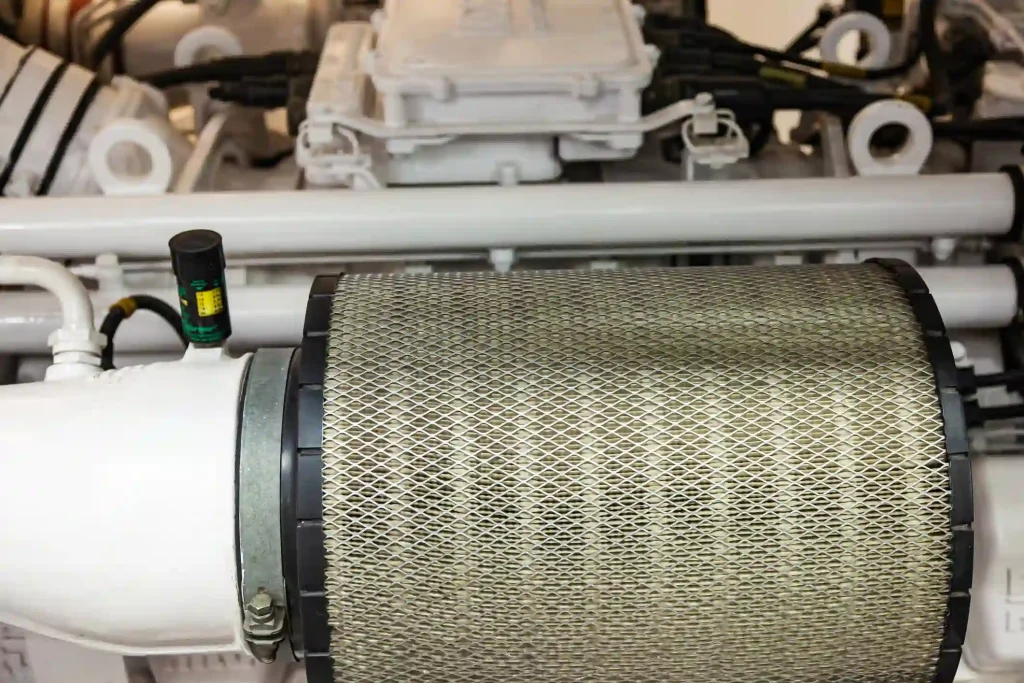
Black smoke from a marine diesel almost always means the engine is burning a fuel/air mixture that’s too rich — more fuel than the engine can fully combust with the air available. The most common causes, in rough order of likelihood, are a clogged or dirty air filter/intake, a fouled or misfiring injector, an overloaded engine (excess load from a fouled prop or hull, or running at higher RPM than the boat’s condition supports), or a failing turbocharger. It shouldn’t be ignored — sustained black smoke accelerates carbon buildup and can glaze cylinder walls over time. Key Takeaways What the Smoke Color Actually Tells You Diesel exhaust color is one of the most reliable diagnostic signals you have without opening the engine, and it pays to know the difference: Smoke Color What It Usually Means Black Too much fuel, not enough air — rich mixture Blue/gray Burning oil — worn rings, valve seals, or turbo seals White (persistent) Coolant entering the combustion chamber, or unburned fuel from a cold start / injector timing issue If you’re seeing black smoke specifically, especially when you throttle up, the problem lives on the fuel/air side of the engine, not the oil or cooling system. The Most Common Causes, in Order 1. Restricted air intake. A clogged or dirty air filter — or a blocked intake, which is more common on boats than cars — starves the engine of air relative to the fuel being injected. This is the easiest and cheapest cause to rule out first. 2. Injector problems. A fouled, worn, or misaligned injector can dump too much fuel into a cylinder or spray it in a poor pattern that doesn’t burn cleanly. This tends to show up gradually and often gets worse under load. 3. Engine overloading. If the boat is working harder than it should at a given RPM — a fouled bottom, a damaged or wrong-pitch prop, or an overloaded boat — the engine ends up injecting more fuel to maintain speed than it can efficiently burn. 4. Turbocharger issues. On turbocharged diesels, a failing turbo reduces the boost pressure that supplies compressed air to the cylinders. Less air, same fuel delivery, same result: black smoke, usually most noticeable under acceleration. 5. Timing or fuel delivery issues. Less common on well-maintained recreational diesels, but incorrect injection timing can also produce a rich-burning, smoky exhaust. Should You Keep Running the Engine? Occasional, brief black smoke on hard acceleration from a cold engine is often normal and not a red flag by itself. Sustained black smoke at cruise RPM, or smoke that’s getting worse trip over trip, is not something to keep running through — continuing to operate under those conditions accelerates carbon buildup, can glaze cylinder walls, and turns what might be a filter or injector service into a more involved repair. If the smoke is heavy and constant, treat it as a “get it looked at soon” issue rather than an emergency shutdown, unless it’s paired with unusual noise, loss of power, or high temperature readings — in which case, throttle back and head in. What a Technician Will Check First A proper diagnostic starts with the cheapest, most likely causes and works up: air filter and intake path, then a visual and pattern check on the injectors, then a look at the prop and running gear for fouling or damage, and finally boost pressure if the engine is turbocharged. This order matters — it’s the difference between a $50-100 filter fix and an unnecessary injector overhaul. Preventing It From Recurring Most black-smoke calls trace back to a maintenance interval that slipped — an air filter that went a season too long, fuel filters that weren’t changed on schedule, or a bottom that hadn’t been cleaned in a while. Staying on top of your engine’s service intervals is the single best way to avoid this call altogether. Frequently Asked Questions Is black smoke from a diesel engine bad? If it’s brief and only on hard acceleration, it’s usually not urgent. If it’s sustained or worsening, yes — it accelerates internal wear and should be diagnosed before it turns into a bigger repair. Can I keep running my boat if the engine is smoking black? For a short trip home, generally yes, provided there’s no accompanying power loss, unusual noise, or high temperature. Don’t keep running it trip after trip without having it looked at. How much does it cost to fix black smoke on a marine diesel? It ranges widely — from the cost of an air filter and a cleaning, to an injector service, to more involved turbo work. That’s exactly why a proper diagnostic matters before assuming the worst. Can a dirty bottom or bad prop really cause black smoke? Yes. If the engine has to work harder to push the boat through the water, it injects more fuel to hold the same RPM — which can produce the same rich-mixture smoke as a fuel-system problem.

How Long Does Awlgrip Last on the Chesapeake Bay?
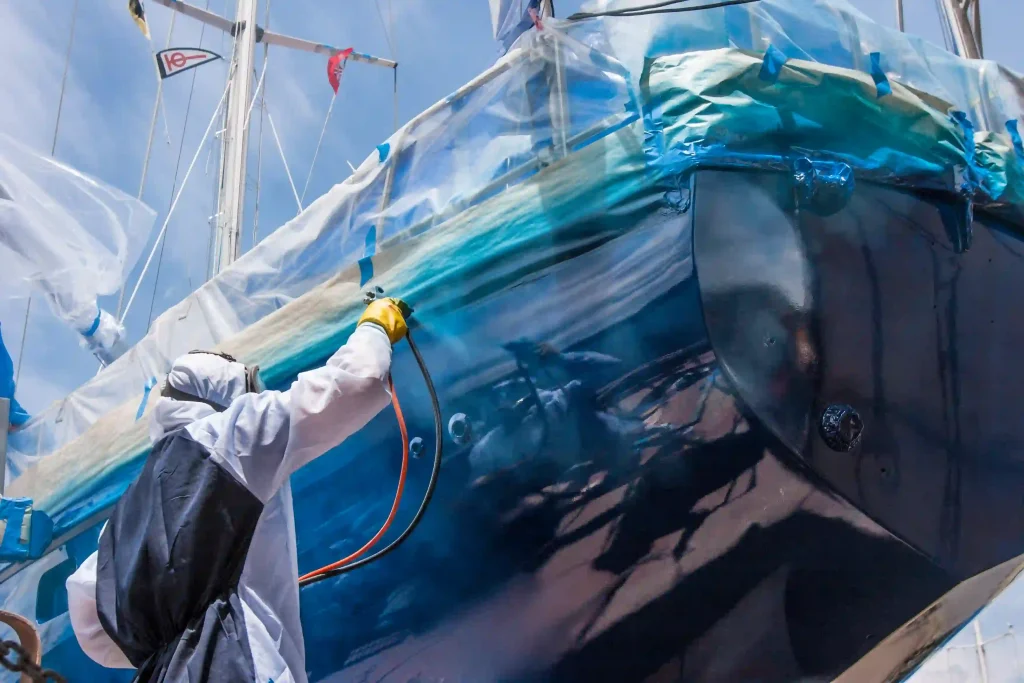
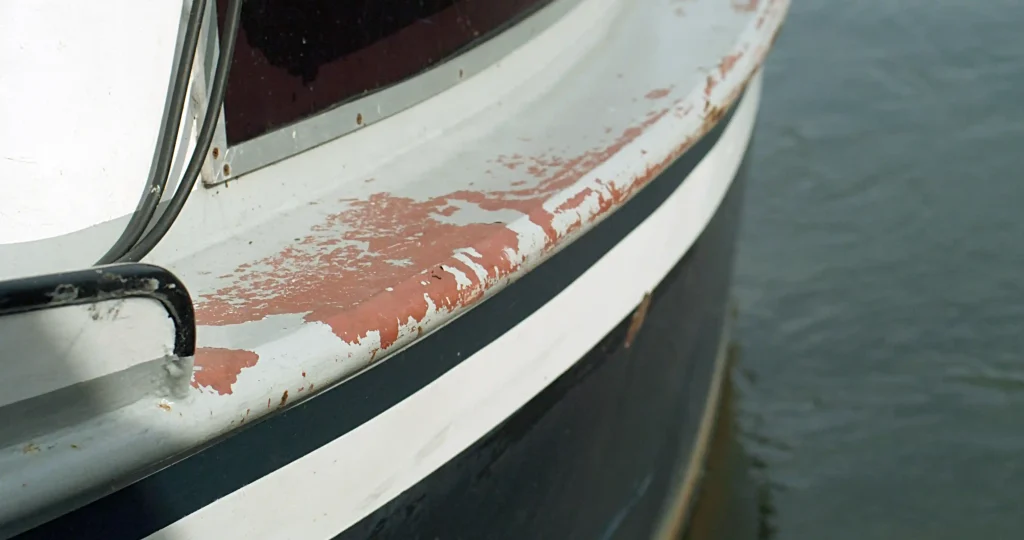
A properly applied Awlgrip topcoat on a well-prepped hull typically holds full gloss for 10-15 years, with functional protection lasting well beyond that when the boat is maintained. On the Chesapeake specifically: brackish water, heavy UV, and a real winter freeze-thaw cycle; that number holds up well compared to coastal boats further south, but only when the prep work and painter were right the first time. Key Takeaways The Honest Range: 10-15 Years, With Real Variables Ask five different yards how long Awlgrip lasts and you’ll get five different numbers, because the finish itself isn’t the variable — the application is. A rushed or poorly prepped job can show orange peel, runs, or premature dulling within two or three seasons. A properly faired, correctly primed, professionally sprayed job on the same hull can look nearly new after a decade and remain fully functional (no chalking, no delamination) well past 15 years. What Shortens Awlgrip’s Lifespan Surface prep quality. This is the single biggest factor. Any moisture, contamination, or unfaired imperfection sealed under the topcoat becomes a failure point later — usually as blistering or peeling in that exact spot. Sun exposure and slip location. A boat stored uncovered in full sun year-round will see gloss fade faster than one kept under a boat lift canopy or in covered storage during the off-season. Hull color. Darker colors absorb more UV and heat, which accelerates gloss loss compared to whites and light colors on an otherwise identical hull. Dock rash and fender contact. Repeated rubbing against pilings, fenders, or other boats wears through the topcoat locally long before the rest of the hull shows age — this is cosmetic damage, not a coating failure, but it looks the same to an untrained eye. Wash routine. Salt and brackish water left to dry on the hull accelerates dulling. A simple fresh-water rinse after use does more for longevity than most owners realize. What Extends It The Prep Mistakes That Cut a Job’s Life in Half A rushed Awlgrip job usually fails in one of these ways: skipping or shortcutting the fairing step (so imperfections show through the topcoat and become moisture traps), spraying outside the correct temperature and humidity window (causing poor cure and orange peel texture), skipping a compatible primer coat, insufficient coat thickness, or masking so carelessly that overspray and bare spots show up around fittings within the first season. Every one of these is invisible on delivery day and obvious two years later. Why the Painter Matters More Than the Product Awlgrip as a product is engineered to last well over a decade in marine conditions. The variable that actually determines whether a given boat gets 6 years or 16 is the crew doing the spraying. Norton Yachts’ shop includes one of the top-ranked Awlgrip painters in the country — which is exactly the kind of variable that shows up on your hull ten years from now, long after the invoice is paid. Frequently Asked Questions Can you wax Awlgrip like gelcoat? Yes. Awlgrip holds gloss without regular waxing, but an occasional wax or marine-grade sealant helps reduce oxidation and makes routine washing easier. How often should you wash a boat with an Awlgrip finish? A fresh-water rinse after every outing, plus a proper wash on a regular seasonal cadence, is the single best thing you can do to extend the finish’s life — salt and grime left to dry accelerate dulling. Does Awlgrip need to be repainted on a set schedule? No — unlike some maintenance items, Awlgrip doesn’t have a fixed repaint interval. Repainting is driven by visible wear (chalking, dock rash, chips) rather than a calendar. Is a 3-year-old Awlgrip job that’s already dulling normal? No. That timeline points to a prep or application issue, not normal wear. It’s worth having a yard inspect for underlying problems rather than just re-buffing the surface.

Awlgrip vs. Gelcoat: Which Hull Finish Is Right for You?
Gelcoat is the pigmented resin molded directly into a boat’s hull at the factory: easy and cheap to touch up, but it chalks, fades, and loses gloss within 8-10 years of sun exposure. Awlgrip is a two-part polyurethane topcoat sprayed on after the boat is built. It holds color and gloss roughly two to three times longer than gelcoat, can be applied in almost any color, and costs significantly more up front. Most owners move to Awlgrip specifically when gelcoat has faded past the point of buffing or when they want a finish that will outlast the boat’s next decade of use, not just its next season. Key Takeaways What Gelcoat Actually Is Every fiberglass boat leaves the factory with a gelcoat finish. It’s the outermost layer of resin, tinted with pigment, sprayed into the mold before the fiberglass laminate is built up behind it. That’s the origin of both its biggest strength and its biggest weakness: gelcoat is part of the hull itself, which makes small repairs relatively simple, but it’s also a soft, porous material that was never designed to survive decades of UV exposure without fading. On a well-maintained boat, gelcoat can look good for 6-10 years with regular waxing and compounding. Past that point, most owners start seeing chalking (a dull, powdery surface), color fade — especially on darker hulls — and hairline surface cracking called “crazing.” Buffing and compounding can extend gelcoat’s life for a while, but each pass removes a thin layer of material, and eventually there isn’t enough gelcoat left to work with. What Awlgrip Actually Is Awlgrip is a linear polyurethane (LP) topcoat system, the same category of coating used on commercial aircraft and superyachts. It’s sprayed on in a controlled environment over a prepped substrate — usually after the old gelcoat or paint has been sanded, faired, and primed. Because it’s a chemically cured coating rather than a molded resin, Awlgrip holds a mirror-like gloss and true color depth for far longer than gelcoat, and it’s available in essentially any color, including metallics and custom matches that gelcoat manufacturers simply don’t offer. The tradeoff is process and cost. A proper Awlgrip job means stripping or sanding the existing surface, fairing out imperfections, masking every fitting and through-hull, and spraying multiple coats in controlled conditions — work that takes a trained crew days, not hours. Awlgrip vs. Gelcoat: Side-by-Side Factor Gelcoat Awlgrip Typical lifespan (full gloss) 6-10 years 10-15+ years Upfront cost Low (touch-ups); moderate (full re-gelcoat) High — full surface prep + spray Color/gloss options Limited to manufacturer colors Nearly unlimited, including metallics Repairability Easy — sand, buff, patch Requires matched touch-up or re-spray of the panel Best for Boats staying original color, minor fading Faded hulls, color changes, resale-focused owners Maintenance Regular wax/compound Wash + occasional wax; holds gloss with less effort When Gelcoat Is the Right Call If your hull’s gelcoat is still structurally sound and the fading is mild, a compound-and-buff service (or a gelcoat repair on isolated spots) is almost always the more cost-effective move. It’s also the right call if you’re keeping the boat’s original color and don’t need a cosmetic overhaul — there’s no reason to pay for a full Awlgrip job when a detailing pass will get you another few seasons. When Awlgrip Makes Sense Awlgrip earns its price tag in a few specific situations: when gelcoat has faded or chalked past what buffing can fix, when you want to change the boat’s color entirely, when you’re preparing a boat for resale and want it to present like new, or when you simply want a finish that requires less ongoing maintenance to hold its shine. Owners who plan to keep a boat for the long haul, or who are restoring an older hull, are the most common Awlgrip customers. Why Who Sprays It Matters as Much as What You Spray Awlgrip is unforgiving of shortcuts. Poor surface prep, rushed fairing, spraying outside the right temperature and humidity window, or skipping a primer coat will show up as orange peel texture, runs, or premature failure within a couple of seasons — and by then the fix means stripping the job and starting over. Norton Yachts’ paint shop includes one of the top-ranked Awlgrip painters in the country, which is the difference between a job that looks great for one season and one that still looks factory-fresh a decade in. Frequently Asked Questions How much does an Awlgrip paint job cost? Pricing depends on hull length, condition of the existing surface, and how much fairing is needed before spraying, since prep work — not the paint itself — drives most of the labor cost. Get an estimate specific to your boat rather than relying on a per-foot rule of thumb. Can you Awlgrip over gelcoat? Yes, with proper preparation. The existing gelcoat needs to be sanded, any imperfections faired out, and a compatible primer applied before Awlgrip goes on. Spraying over an unprepped or contaminated surface is the fastest way to a failed job. Is Awlgrip worth it for resale value? A fresh, well-applied Awlgrip finish makes a boat present dramatically better in listing photos and in person, which matters for a high-ticket purchase decision. Whether it’s “worth it” financially depends on how long you plan to own the boat versus how soon you plan to sell. Does Awlgrip need to be waxed like gelcoat? Less often. Awlgrip holds gloss with a simple wash routine, though an occasional wax or sealant will extend its life and make it easier to keep clean.

ASA Certified Sailing School: What It Means & Why It Matters
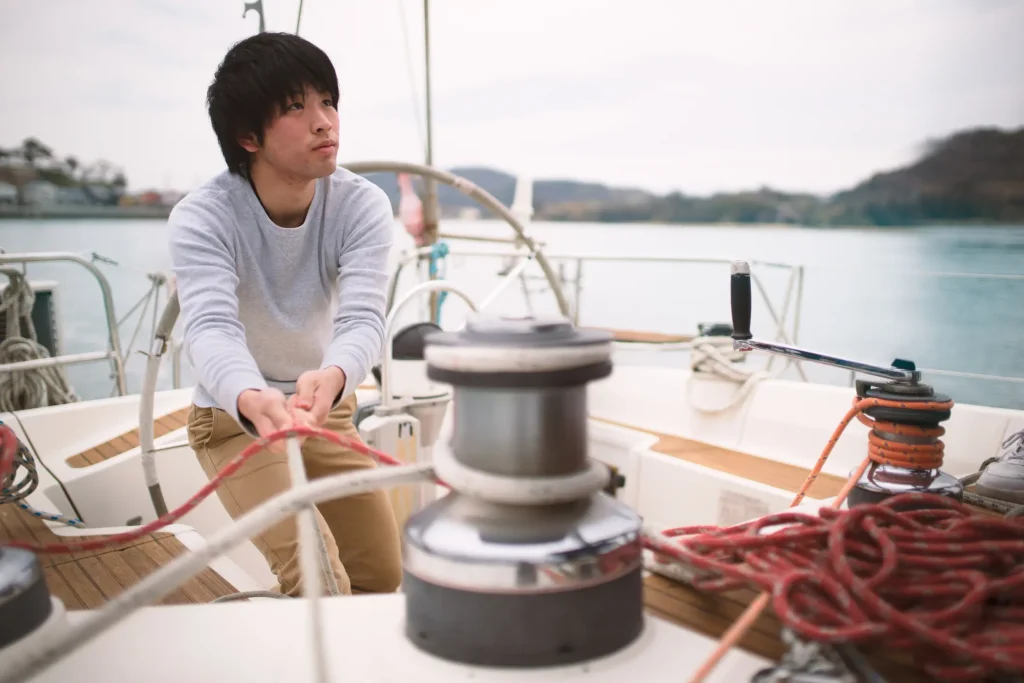
a man learning how to sail in a sailing school

If you’re seriously researching sailing schools, you’ve probably noticed that not all of them are the same. Some offer weekend experiences. Some are informal programs run by a local club. Some teach to a defined standard with certified instructors, structured curriculum, and credentials that actually mean something once you leave the dock. That difference matters more than most beginners realize — and it shows up fast, the first time you try to rent a charter boat, take an advanced course somewhere new, or simply want to know whether what you learned will hold up offshore. ASA certification is the clearest signal that a sailing school operates to a national standard. Here’s what it actually means, what it gives you as a student, and what to look for when evaluating a school. What Is the American Sailing Association? The American Sailing Association (ASA) is a national nonprofit organization founded in 1983. Its job is straightforward: establish a standardized sailing education curriculum and certify the instructors and schools qualified to teach it. ASA certifications are recognized across more than 130 countries, which makes them genuinely portable. An ASA 101 certification earned in Florida carries the same weight in the British Virgin Islands, the Mediterranean, or the Pacific Northwest. Charter companies around the world use ASA credentials as a standard reference point when evaluating whether a sailor is qualified to take out one of their boats. The ASA curriculum is built around a logbook system. Every course you complete is logged and recorded — creating a verifiable sailing résumé that follows you from entry-level basics all the way through advanced offshore sailing and beyond. That logbook becomes your credential, and it’s something charter companies and advanced programs can actually review. What ASA Certification Means for You as a Student When you enroll in an ASA course at an affiliated school, several things are true from the start: What ASA Affiliation Means for a School ASA affiliation isn’t automatic — schools earn it and maintain it. To operate as an ASA member school, a sailing program must meet specific organizational requirements, use ASA-approved curriculum, and employ instructors who hold current ASA instructor certifications. That means when you enroll in a course at an ASA-affiliated school, you can expect: For a first-time sailing student, this is meaningful peace of mind. You’re not hoping the person teaching you knows what they’re doing — you know they’ve been independently certified. Norton Yachts’ ASA Sailing Program Norton Yachts is an ASA-affiliated sailing school with a full roster of certified instructors and a course lineup that takes students from absolute beginner through advanced coastal cruising. One thing worth noting before you even step aboard: you’ll learn to sail on the water with an ASA-certified instructor in your very first course. There’s no extended classroom phase before you’re given time on the boat. The hands-on component starts from the beginning. The Instructors Norton Yachts’ teaching staff are all ASA-certified captains, collectively covering courses from 101 Basic Sailing through advanced and offshore certifications: That depth of certified coverage across the roster means you’re not working around a single instructor’s availability — and it means the teaching approach, while personal to each captain, is grounded in the same national ASA framework. The Course Lineup Norton Yachts offers the following ASA courses, from entry-level through advanced coastal: How to Choose Your Starting Point If you’re not sure which course makes sense, here’s a simple guide based on where you’re starting: A Note on What to Look For When you’re evaluating a sailing school, ASA affiliation is one of the clearest signals of a structured, accountable program. It means the curriculum was written by people who actually set standards for the sport, the instructors have been independently certified, and the credential you earn at the end means something beyond the school’s own reputation. It also means the school has ongoing accountability. They don’t just earn ASA affiliation once — they maintain it. At Norton Yachts, that standard is built into every course we offer — starting from the first time you’re behind the helm with one of our certified captains.

Buying a Yacht on the Chesapeake Bay | Complete Guide
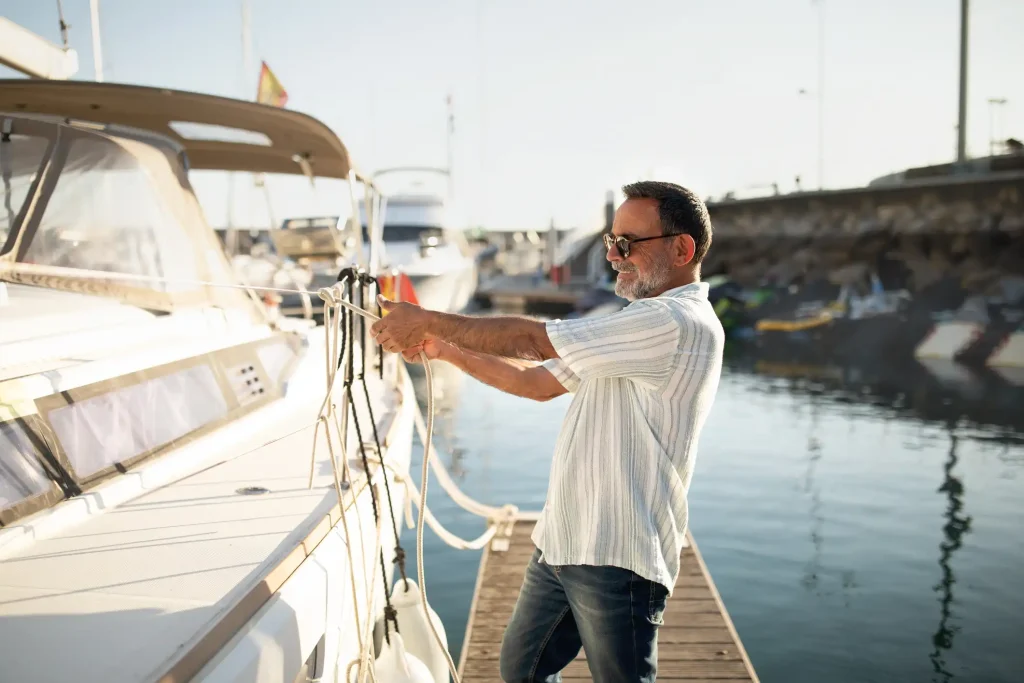
man with his new yacht

Purchasing a yacht on the Chesapeake Bay is a thrilling venture, offering a blend of adventure, relaxation, and the promise of countless unforgettable experiences. However, navigating the yacht buying process can be daunting without comprehensive guidance. In this complete 2023 guide, we will explore the types of yachts best suited for Chesapeake Bay and the essential steps for a successful purchase, ensuring that prospective buyers are equipped with vital knowledge. From understanding local marine services to navigating financing options, this article aims to address every facet a yacht buyer needs, especially those curious about particular nuances relevant to boats in this region. By the end, you will have a clearer understanding of how to approach buying a yacht and the role of designated experts like Norton Yachts throughout this journey. For more boating insights, explore additional Chesapeake Bay boating guides. Which Types of Yachts Are Best Suited for Chesapeake Bay? Choosing the right type of yacht is critical for maximizing your experience on the Chesapeake Bay. The area’s unique conditions make certain types of vessels more advantageous than others. Generally, the two main categories of yachts suitable for Chesapeake Bay enthusiasts are sailboats and powerboats, including pontoons. Understanding their individual merits provides buyers with the insight needed for informed decisions. You can browse the full range of new and used boats for sale to compare your options. What Are the Advantages of Sailboats on Chesapeake Bay Waters? Sailboats provide several advantages when navigating the Chesapeake Bay’s diverse waterways. Their maneuverability makes them particularly suited for tight passages and shallow areas, which are common throughout the region. Additionally, sailboats generally offer a more economical mode of operation compared to their power counterparts, making them appealing for long periods on the water. The sailing experience also allows enthusiasts to engage deeply with the maritime environment, showcasing the skill of wind navigation. How Do Powerboats and Pontoons Compare for Chesapeake Bay Boating? Powerboats and pontoons serve different functions and appeal to various boating experiences on the Chesapeake Bay. Powerboats provide speed and comfort, often valued for recreational activities such as waterskiing or fishing. On the other hand, pontoons excel in offering spaciousness and stability for family outings or leisure cruising. When considering costs, fuel efficiency becomes a pivotal factor; pontoons are generally more economical due to their larger surface area, allowing for easier navigation in calmer waters. If you would like to try one before committing to a purchase, consider exploring pontoon rentals. What Steps Should You Follow in the Chesapeake Bay Yacht Buying Process? Embarking on the yacht buying journey entails several essential steps that can significantly influence the outcome. Buyers should begin with comprehensive research, focusing on types of vessels that fit their needs and then moving to the next stages such as inspections and legal documentation. Understanding the process helps streamline your yacht purchase and ensure you are making a wise investment. Which Inspections and Evaluations Are Critical Before Purchase? When considering the purchase of a yacht, securing a marine survey is a critical step to evaluate the vessel’s condition. A thorough inspection should include assessments of the boat’s hull, engine performance, and onboard systems to identify any potential repairs required. Additionally, evaluating maintenance records and previous inspections ensures transparency regarding the yacht’s history, allowing buyers to make well-informed decisions. How Can Buyers Navigate Broker Services and Legal Requirements? Navigating broker services and legal requirements in yacht purchasing can be complex. Buyers should understand broker fees, which can vary significantly based on the services offered. Legalities include reviewing contracts, comprehending state regulations, and ensuring proper documentation is in order. Being proactive in these aspects averts potential pitfalls and misunderstandings during the process, safeguarding the buyer’s investment. How Can You Secure Financing and Insurance for Your Chesapeake Bay Yacht? Financing and insurance play crucial roles in yacht ownership. Buyers need a clear understanding of their financial options, from traditional loans to specialized yacht financing. Furthermore, having the right insurance coverage protects the investment against unforeseen circumstances. What Financing Solutions Are Available for Yacht Buyers? For prospective yacht buyers, various financing solutions exist, including marine loans and personal loans catered to boat purchases. Different lenders may offer varied terms, including interest rates and repayment periods. Being aware of credit requirements is essential, as a higher credit score often avails better financing opportunities. Prospective buyers should explore all options to secure the best rates that meet their financial capabilities. Which Insurance Policies Best Protect Chesapeake Bay Vessels? When it comes to protecting your investment, understanding marine insurance is vital. Yacht insurance typically includes two types of coverage: liability and comprehensive. Liability coverage protects against damage to others or their property, while comprehensive insurance offers protection for damage to the vessel itself. Learning how to compare policies based on coverage and premium costs ensures that buyers choose the options that best meet their needs. What Specialized Marine Services Does Norton Yachts Offer to Chesapeake Bay Buyers? When navigating yacht ownership, specialized support from marine services enhances the experience significantly. Norton Yachts specializes in yacht sales, marine services, and sailing education primarily around the Chesapeake Bay area, ensuring a comprehensive approach to yacht management. How Do Winterization and Maintenance Services Support Yacht Longevity? Proper maintenance is pivotal for a yacht’s longevity. Routine checks and seasonal winterization can prevent deterioration during periods of non-use. Essential practices include flushing the engine, tarring, and covering the boat to safeguard it from environmental elements during winter months. Understanding these services is crucial for preserving vessel integrity over time. What Repair and Emergency Services Are Available from Norton Yachts? In addition to routine maintenance, yacht owners might encounter repairs that require immediate attention. The boat service center at Norton Yachts offers various repair and emergency services to support buyers’ needs, ensuring vessels remain in safe and operable conditions. Their expertise equips owners to tackle unforeseen issues promptly and efficiently, safeguarding their investment. Why Should You Consider Sailing School and Training Programs When Buying a Yacht? Investing in sailing education

Bennington vs Barletta: Which Premium Tritoon Actually Wins?
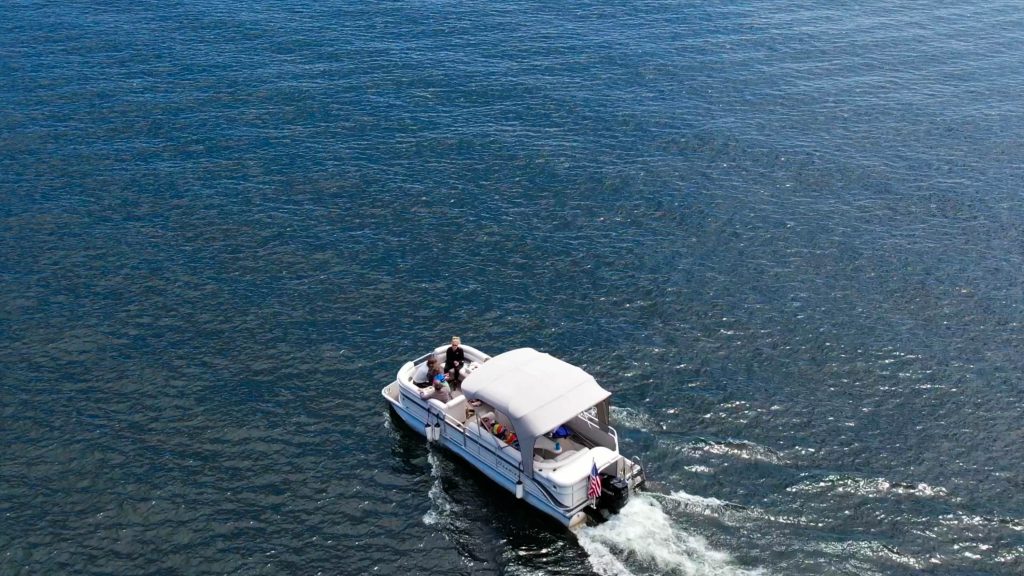
Bennington vs Barletta comparison guide

Barletta is the challenger brand that the premium pontoon market has been talking about for the past several years. Their positioning is direct: build a boat that competes with Bennington on quality and feature specification, price it aggressively to gain market share, and back it with the kind of warranty that forces the comparison. If you are cross-shopping Bennington and Barletta, you have already done enough research to know both brands are serious. This comparison — from Norton Yachts, an authorized Bennington dealer — goes deeper than the spec sheet to tell you where the real differences are. The Brand Positioning Bennington is the incumbent. They have built the premium pontoon segment in the US market over 30+ years, and their quality reputation is backed by production volume and dealer network depth. When you buy a Bennington, you are buying from the brand that effectively defined what a premium pontoon should look like. Barletta launched in 2017 out of Syracuse, Indiana with a specific ambition: enter the premium pontoon market with a product that matched or exceeded Bennington’s specification at a competitive price. Their Corsa, Cabrio, and Aria lines have attracted meaningful attention, and their 10-year structural warranty on tubes is the most aggressive warranty claim in the segment. Tube Construction and Structural Comparison Barletta’s 10-year tube warranty is the company’s most visible differentiator. The tubes are constructed with heavier gauge aluminum — Barletta advertises this aggressively — and the warranty covers structural tube failure for a decade, which exceeds Bennington’s standard warranty coverage. Bennington’s response is their legacy: millions of pontoon tube hours in the water across 30 years, with very few structural failures on record in normal use. Their standard warranty is shorter on paper, but the brand’s track record provides a form of warranty that a relatively young brand cannot replicate. Honest assessment: both brands build structurally sound tubes. Barletta’s heavier gauge specification on their performance models is a genuine quality difference on paper. Whether that translates to meaningfully longer real-world service life is a question that will take another decade to answer empirically. Feature Specification and Value Comparison Barletta has been aggressive about standard equipment — including features that Bennington charges as options on comparable models. The Barletta Corsa LE, for example, includes premium upholstery grades, an upgraded sound system, and a performance lighting package as standard equipment at a price point that undercuts comparable Bennington configurations. Bennington’s response is depth of customization. Through the Bennington configurator, buyers can build a boat matching their exact specification in ways that Barletta’s more limited option structure does not fully accommodate. For buyers with specific requirements, the Bennington configurator is a meaningful advantage. For buyers who want a well-specified boat without spending hours on a configuration tool, Barletta’s all-inclusive approach is appealing. Performance: Tritoon vs Tritoon On comparable horsepower and comparable hull lengths, Bennington and Barletta perform similarly in the 35 to 40 MPH range. Bennington’s QX Sport package with performance tubes pushes past 45 MPH in a class that Barletta does not currently match with a production boat. For buyers whose performance requirement tops out at 40 MPH — which covers the vast majority of pontoon buyers — the on-water performance difference is not the deciding factor. Dealer Network and Service Bennington has one of the strongest dealer networks in the pontoon market, with dealers concentrated in areas with high recreational boating density. Norton Yachts’ position as an authorized Bennington dealer in the mid-Atlantic region means service support, warranty claims processing, and parts availability are straightforward. Barletta is growing its dealer network but remains thinner in coverage, particularly in the mid-Atlantic and Northeast markets. For buyers in Virginia, Maryland, and surrounding states, the practical service accessibility of a Bennington versus a Barletta is a real consideration that does not show up in the spec sheet comparison. Price Comparison In entry to mid-range configurations (22- to 25-foot tritoon, 150 to 200HP), Barletta runs $5,000 to $12,000 less than a comparably specified Bennington. In premium configurations with full option packages, the gap compresses — sometimes to near parity. Barletta’s value proposition is strongest in the mid-range segment where all-inclusive standard equipment creates a genuine price-to-feature advantage. At the top of the premium market — configurations above $100,000 — Bennington’s depth of customization and brand premium often justify the remaining price gap. The Verdict: Bennington or Barletta? Choose Bennington if: brand heritage and track record matter to you, you want the deepest customization options, you want a boat with strong resale value backed by 30+ years of premium market presence, or you are in a region where Bennington dealer service is more accessible. Choose Barletta if: the 10-year tube warranty is a meaningful differentiator for your decision, you want premium all-inclusive specification without configuration complexity, and you are in a market with solid Barletta dealer coverage. Do not let brand loyalty or online forum consensus make this decision for you. Sea trial both. Inspect the welds and hardware fit in person. The right boat is the one that performs, holds up, and is backed by a dealer you trust. Norton Yachts is an authorized Bennington dealer in Deltaville, Virginia. If you are comparing Bennington to Barletta or any other premium pontoon brand, our team welcomes an honest conversation. Contact us at nortonyachts.com to discuss current inventory and find the right boat for the Chesapeake Bay. Frequently Asked Questions Is Barletta a reliable pontoon brand? Barletta has built a strong initial quality reputation in a short period. The 10-year tube warranty is a genuine structural commitment. As a relatively new brand, long-term reliability data is still accumulating — buyers who value brand longevity and proven track records will find Bennington’s history more reassuring. Which pontoon brand has better resale value? Bennington currently holds stronger resale values in the used market, primarily due to brand recognition and market penetration. Barletta’s resale trajectory is positive but lacks the long-term data to assess with confidence. Does Norton Yachts sell Barletta pontoons? Norton Yachts is

Bennington vs Harris Pontoon: An Honest Comparison for Mid-Atlantic Buyers
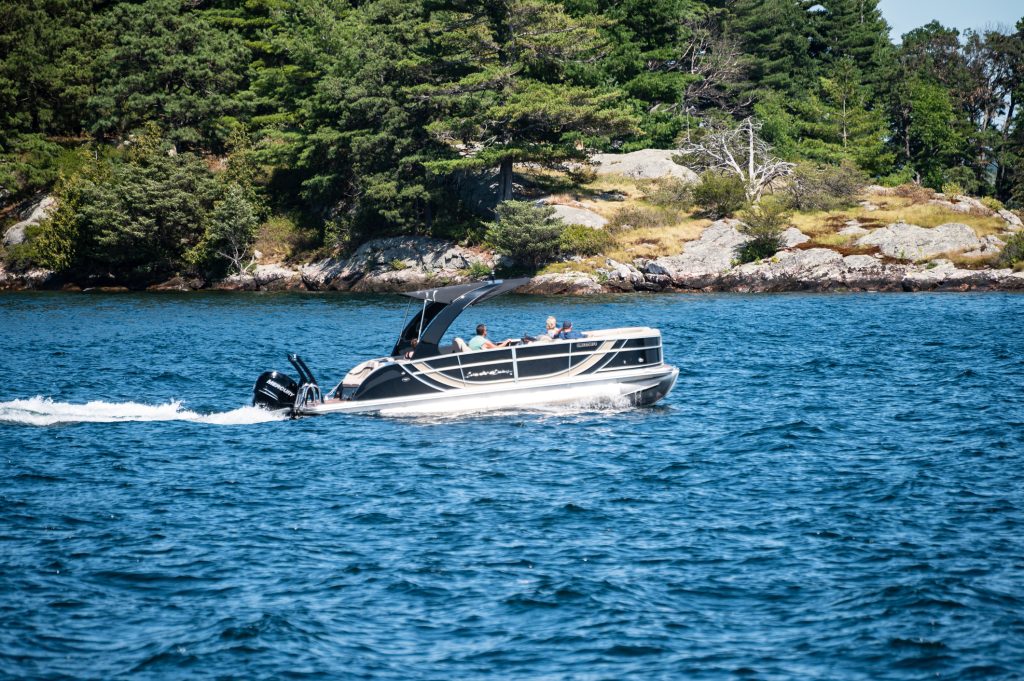
Bennington vs Harris Pontoon comparison guide

Bennington and Harris are both legitimate pontoon brands with real followings and real differences. If you are shopping for a pontoon boat in the $50,000 to $120,000 range and these two brands keep coming up in your research, this comparison will give you a clearer picture of what separates them. Norton Yachts is an authorized Bennington dealer. We sell Bennington. We are going to tell you exactly why — and where Harris competes with them — rather than pretend the comparison only has one side. Brand Overview Bennington Marine is based in Elkhart, Indiana, and is the highest-volume premium pontoon builder in the United States. Their strategy has been consistent for decades: build a better-quality pontoon than the competition, charge a premium for it, and capture the buyer who wants a performance or luxury platform rather than a value-priced family floater. Harris Boats (formerly Harris FloteBote) is also US-based with a strong following particularly in the Midwest and Appalachian lake markets. Harris has historically positioned against Bennington with a quality-focused build and more competitive pricing — the argument being that you get comparable quality at a lower price point. Build Quality: The Honest Assessment Bennington’s aluminum pontoon tube construction is a genuine differentiator. The wall thickness on Bennington tubes — particularly on the QX and upper LX Series — is above industry standard, and the welds are finished to a standard you can see without measuring. The deck frame construction uses heavier gauge aluminum than entry-level brands, and the cross-beam connection points are reinforced in ways that matter for performance applications. Harris builds quality boats. Their tube construction is solid, their welds are clean, and deck hardware is appropriate for the price point. Where Harris falls relative to Bennington is primarily in finish quality details and hardware specification at equivalent price points — the furniture-grade vinyl, the quality of helm electronics integration, the fit of upholstery panels. These are details that compound over time and show up in resale. The practical test: take a Bennington SX22 and a Harris Solstice 220 out to the same wake at the same speed. Both handle well. Then look at the upholstery stitching, the helm console fit, and the chrome-to-stainless ratio on the hardware. The Bennington shows the premium. Whether that premium is worth the price difference is the buyer’s question to answer. Performance Comparison Bennington’s tritoon performance packages — the QX Sport and the triple-log configurations on upper S and L Series models — are industry benchmarks for pontoon performance. If top-end speed and wake quality for water sports are priorities, Bennington’s patent-protected lifting strake technology is a genuine advantage, not marketing language. Harris’s performance pontoons — the Cruiser and Solstice lines with tritoon configurations — are capable boats that perform well for their price point. At 28 to 32 MPH, a Harris tritoon with appropriate power is a fun and stable boat. At 42 to 50 MPH, which is where the Bennington QX Sport operates, there is no Harris equivalent. For buyers who cruise at 20 to 25 MPH and are not interested in performance boating, this distinction is less relevant. Both brands deliver adequate performance for casual pontoon use at moderate speeds. Check our comparison guides from our experts: Jeanneau Sun Odyssey 40 vs 40.3 Saffier SE 27 vs SE 33 vs SE 37 Leader 9 vs NC 895 vs Merry Fisher Pricing Comparison A comparably specified Harris pontoon runs $5,000 to $15,000 less than a Bennington in most configurations. That is a real difference, and for buyers where budget is a meaningful constraint, the Harris value proposition is legitimate. The question is what you give up for that savings: some finish quality and detailing, some performance capability at the upper end, and some resale value retention over time. Bennington’s brand premium holds in the used market — a five-year-old Bennington and a five-year-old Harris in comparable condition will not trade at the same price. Which Brand Is Right for Mid-Atlantic Buyers? The Chesapeake Bay and its tributaries are a different environment from a Midwestern lake. Bay chop, variable winds, and longer runs between anchorages and marinas place different demands on a pontoon than calm lake conditions. For mid-Atlantic buyers, these factors tilt toward Bennington’s heavier tube construction and more robust structural specification. Buyers on the Bay who primarily day trip in calm weather and are price-sensitive should evaluate Harris seriously — particularly the Solstice and Cruiser models with tritoon packages. Buyers who run the Bay regularly, entertain in larger groups, or want a boat that holds up over years of consistent Chesapeake use should look at Bennington. The Verdict Choose Bennington if: you prioritize build quality and finish, you want performance capability at the top of the range, you care about resale value, or you are buying the boat you want to own for 10 to 15 years. Choose Harris if: budget matters more than ultimate quality, you use the boat at moderate speeds in protected water, and you are comfortable with slightly lower finish standards in exchange for meaningful savings. Norton Yachts is an authorized Bennington dealer serving the mid-Atlantic region from Deltaville, Virginia. Contact our team to discuss current Bennington inventory and which model fits your Chesapeake Bay use case. Visit nortonyachts.com. Frequently Asked Questions Does Harris make tritoon pontoons? Yes. Harris offers tritoon configurations in several model lines. The performance gap versus Bennington’s tritoon packages is most apparent at higher engine configurations — at moderate horsepower, both brands’ tritoons perform comparably. Which pontoon brand holds its value better? Bennington consistently holds stronger resale values in the used market, particularly in the premium and performance segments. The brand premium buyers pay new tends to persist in the used market. Can I see Bennington pontoons at Norton Yachts? Norton Yachts is an authorized Bennington dealer in Deltaville, Virginia. Contact us to discuss current inventory and available models. Visit nortonyachts.com.

Jeanneau Sun Odyssey 40 vs 40.3: What Changed and Which One to Buy Used
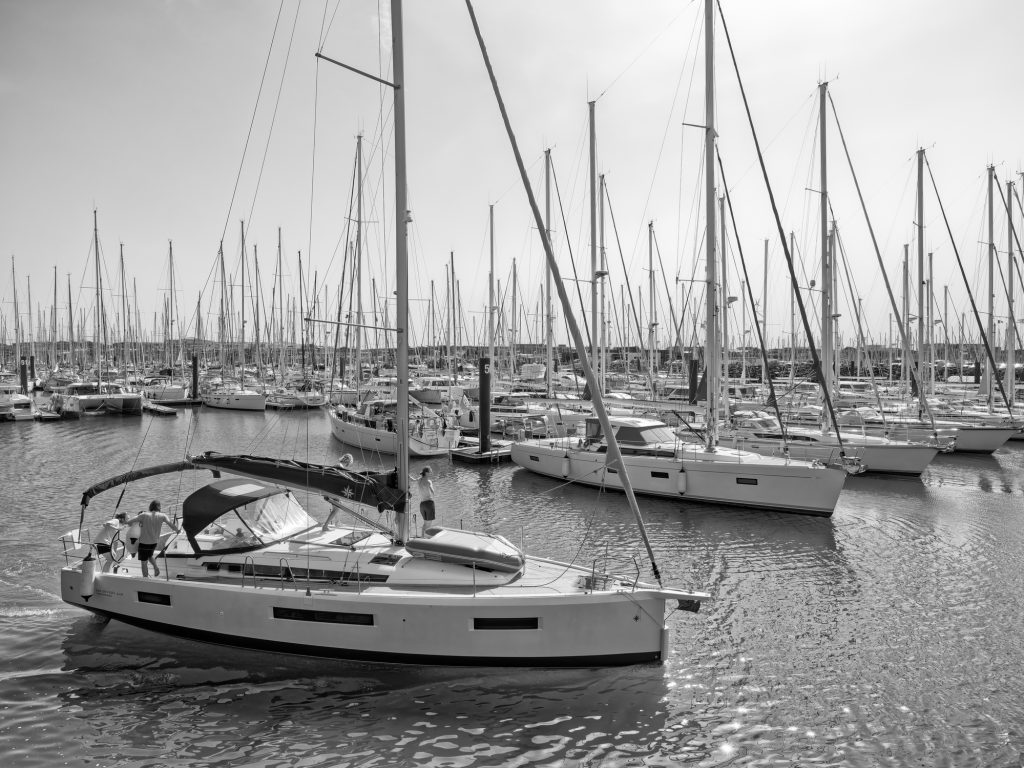
Jeanneau Sun Odyssey 40 vs 40.3 comparison guide

The Jeanneau Sun Odyssey 40 and Sun Odyssey 40.3 are different boats that share a name, a heritage, and — unfortunately for used buyers — a fair amount of confusion in the market. If you are shopping for a used Jeanneau in the 40-foot range and you have seen both models in your search, this comparison will help you understand what you are actually looking at and which one is worth pursuing. Brief History: The 40 and the 40.3 Are Not the Same Boat The Sun Odyssey 40 was produced from approximately 1999 to 2002. It was designed by Daniela Messina — a capable if conventional production cruiser for its era with an IOR-influenced hull form, twin-cabin layout options, and solid overall performance for a family cruiser. The Sun Odyssey 40.3 replaced it from approximately 2002 to 2006. The design changed meaningfully: the hull form was updated, beam was carried further aft (a shift Jeanneau was making across the entire Sun Odyssey range during this period), and the interior layout was revised for improved volume and flexibility. Both boats are approximately 40 feet, but they are separate hull designs with different characteristics. A survey that covers one does not substitute for surveying the other. Sun Odyssey 40: What You Are Getting The Sun Odyssey 40 is a product of its era in both positive and challenging ways. The narrower beam aft compared to the 40.3 means a more traditional sailing hull — slightly more alive underway, slightly less volume below decks. The Marconi ketch rig option available in some build years makes it interesting to buyers who want offshore capability with a manageable sail plan. Below decks, the standard layout provides two double cabins, a center saloon, and a single head with shower. The nav station is proper and well positioned. Headroom in the main saloon is typically around 6.0 to 6.2 feet depending on variant. Structural concerns to prioritize when surveying a Sun Odyssey 40: osmotic blistering in the hull gelcoat (common in boats from this era kept in warm water), the chainplate area (the deck fitting arrangement from this period has a known history of water ingress if not maintained), and the keel-hull joint on any example with a grounding history. These are not disqualifying issues in a well-maintained boat — they are inspection priorities. Sun Odyssey 40.3: The Upgrade The 40.3 is the better boat for most buyers evaluating used Jeanneaus in this size range. The revised hull form provides better stability at large heel angles, more interior volume through the aft sections, and improved ergonomics at the twin helm stations that became standard during this production run. The 40.3’s cockpit is a direct improvement over the 40’s. The twin helm stations provide better visibility on either tack, the cockpit volume is generous for four to six people at anchor, and the storage compartments are better organized. Common survey findings on the 40.3: the mast boot seal around the keel-stepped mast deserves close inspection — water ingress through the boot has been reported in boats without regular maintenance. The genoa track adjustment mechanism on early 40.3s can corrode in salt-water environments. The battery installation location under the nav station berth tends to collect water — inspect the battery boxes and bilge pump operation carefully on any example. Pricing in Today’s Used Market The Sun Odyssey 40 in good condition trades between $50,000 and $80,000 depending on year, equipment level, and geographic market. The Sun Odyssey 40.3 in comparable condition runs $70,000 to $105,000. The 40.3 premium is justified for most buyers. The improved hull form, better cockpit ergonomics, and more recent manufacture make it the stronger choice. The gap has also compressed over time — both model years are now 20 to 25 years old, and condition matters more than model designation at this stage. Which One Should You Buy? For most buyers: buy the 40.3 if you can find a well-maintained example in your price range. The improved hull and cockpit are meaningful, and the additional years of production mean more parts availability and better survey experience with common failure modes. The Sun Odyssey 40 is a legitimate choice for buyers on a tighter budget who find a well-surveyed example, or specifically for buyers who want the ketch rig option for offshore use. For both models: do not skip the marine survey. These are 20+ year old boats and the difference between a well-maintained example and a deferred-maintenance boat in cosmetically acceptable condition can be $30,000 to $50,000 in undiscovered work. Norton Yachts can recommend qualified marine surveyors in the mid-Atlantic region. Norton Yachts handles Jeanneau new boat sales and brokerage in Deltaville, Virginia. If you are searching for a used Sun Odyssey or want guidance on what to look for in the current market, contact our brokerage team at nortonyachts.com. Frequently Asked Questions Is the Jeanneau Sun Odyssey 40.3 a capable bluewater boat? With appropriate preparation — storm sails, jacklines, upgraded life raft stowage, and a properly serviced rig — a well-maintained 40.3 is a capable bluewater boat. Many 40.3s have completed Atlantic crossings and Caribbean circuits. The Jeanneau build quality from this era is solid. Where can I find used Jeanneau Sun Odyssey sailboats for sale? Norton Yachts handles Jeanneau brokerage in the mid-Atlantic region. Contact us to discuss current listings and incoming inventory. We can also advise on what to look for when evaluating privately listed examples. What survey items should I prioritize on a used Sun Odyssey 40 or 40.3? Hull blisters, chainplate condition and deck integrity at the chainplate penetration, keel-hull junction, mast boot seal, battery box and bilge condition, and standing rigging age. Both models should also have their fuel tanks inspected — aluminum tanks from this era can develop internal corrosion that is not visible externally.

Jeanneau vs Beneteau Sailboats: An Authorized Dealer’s Honest Take
Jeanneau vs Beneteau Sailboat comparison guide

Full disclosure: Norton Yachts is an authorized Jeanneau dealer. We sell Jeanneau sailboats. That makes this comparison either more credible or less trustworthy depending on your level of skepticism, and you are right to have some. Here is why we are writing it anyway: buyers come into our showroom with this question constantly — Jeanneau or Beneteau? — and they deserve a real answer, not a sales pitch. If Beneteau is the better fit for your sailing life, you should know that before you spend $300,000 or $400,000 on a boat. Sending you to the wrong boat does not serve anyone. The Corporate Reality: Same Parent Company, Different Brands Jeanneau and Beneteau are both owned by the Beneteau Group — a French publicly traded company and the largest recreational boat manufacturer in the world. This creates confusion: why would two brands from the same parent serve different buyers? Because they do, and the group has maintained separate design and engineering teams for each brand for decades. The Sun Odyssey line is not a rebadged Oceanis. The design philosophies genuinely differ in ways that matter to serious sailors. Design Philosophy: Where the Brands Diverge Beneteau’s Oceanis line has moved consistently toward maximum interior volume and family liveaboard comfort. Beam is held wide for the full length of the boat, cabin headroom is generous, and deck and cockpit configurations prioritize accessibility for crew with varying experience levels. Jeanneau’s Sun Odyssey line, under Marc Lombard’s design influence, places more emphasis on sailing performance alongside comfort. The Sun Odyssey 410, 440, and 490 carry wide stern sections for interior volume, but the hull sections and keel designs show a sharper emphasis on upwind performance and light-air efficiency than equivalent Oceanis models. In practical terms: in 8 knots of apparent wind on a 44-foot boat, the Sun Odyssey 440 will outperform a Beneteau Oceanis 45 by a measurable margin. Both will have comfortable interiors. But if performance matters to the way you sail, the Jeanneau is the better choice at this length. Build Quality and Interior Finish Both brands build quality production boats. The honest assessment: neither brand has a clear quality advantage at equivalent price points. Both use similar laminate schedules, similar hardware specifications, and similar finishing standards for their mass-market models. Where differences appear is in specific model execution. Some Jeanneau Sun Odyssey models in the 44- to 50-foot range have better joinery and hardware specification than their Beneteau Oceanis counterparts. Some Beneteau models in the 35- to 40-foot range offer a cleaner interior design aesthetic than Jeanneau equivalents. The bottom line: do not choose between these brands based on an assumption that one builds significantly better boats than the other. They do not. Choose based on design philosophy, layout preference, and performance priorities. Check our comparison guides from experts: Saffier SE 27 vs SE 33 vs SE 37 Bennington QX vs LX vs R Series Leader 9 vs NC 895 vs Merry Fisher Sailing Performance: The Practical Test For racing sailors or performance-oriented coastal cruisers, the Sun Odyssey line is generally the stronger performer, particularly in the 40- to 50-foot range. The keel designs are more aggressive, the sail plans are larger relative to displacement, and the hull forms shed water better upwind. For cruising sailors who primarily reach and run, reef early, and sail conservatively — for whom the boat’s job is to get from A to B comfortably rather than efficiently — the performance difference is largely academic. In these conditions, the Beneteau Oceanis is a comfortable and manageable boat that does the job. Resale Value Both brands hold residual value well relative to the broader production sailboat market. Jeanneau Sun Odyssey models have historically held slightly stronger residuals on the US East Coast, partly due to the Sun Odyssey’s stronger reputation among performance-minded buyers who tend to maintain their boats well. This is not a rule — individual boat condition matters far more than brand — but it is a consistent pattern in this region. What About Dufour? Buyers who have done serious research frequently ask about Dufour, the third major French production builder. Dufour is an excellent brand — arguably the most performance-oriented of the three for their mid-range cruiser-racer models. For buyers whose sailing is primarily racing or offshore passage making, a Dufour comparison belongs in this conversation. For buyers focused on coastal cruising and liveaboard sailing in the mid-Atlantic, Jeanneau and Beneteau are the more natural reference points. The Verdict: Jeanneau vs Beneteau Choose Jeanneau if: sailing performance and upwind efficiency matter to the way you sail, you want a boat that rewards active sail trimming, or you sail competitive club racing alongside cruising. Choose Beneteau if: interior volume and liveaboard comfort take clear priority over performance, you sail conservatively with mixed crew experience levels, or a specific Beneteau Oceanis layout matches your needs better than the available Jeanneau configurations. Do not choose either brand based on badge loyalty or online forum consensus. Sea trial both. Walk through both interiors. Sit at both helms. The boat that fits how you actually sail is the right boat. Norton Yachts is your authorized Jeanneau dealer in Deltaville, Virginia. We welcome honest conversations about both brands — and if Beneteau turns out to be the right choice for your sailing life, we will tell you so. Contact us at nortonyachts.com. Frequently Asked Questions Which is more expensive — Jeanneau or Beneteau? At comparable size and specification, pricing is broadly similar. Specific models within each range vary significantly. Neither brand consistently underprices the other at comparable specification levels. Which brand has better dealer support in the US? Both Jeanneau and Beneteau have US operations with service networks. Dealer quality varies significantly more than brand support quality — the quality of your local dealer’s service team matters more than national support structure. Does Norton Yachts handle used Beneteau sailboats in brokerage? Norton Yachts handles brokerage sales including Beneteau models. Contact us if you are looking for a specific model in

Saffier SE 27 vs SE 33 vs SE 37: Which Is the Best Sailboat for Single-Handed Sailing?
Saffier SE 27 vs SE 33 vs SE 37 comparison guide

Single-handed sailing demands something from a boat that most production cruisers were never designed to deliver: complete control from one position. Sail controls that require a crew to trim properly, headstays that need two people to gybe safely, and cockpit layouts that put essential lines out of the helmsman’s reach are workable with a full crew and unworkable alone. Saffier Yachts has been building boats specifically for short-handed sailing since 1983. The SE 27, SE 33 Life, and SE 37 are the three mid-range models in their current lineup, and they represent a coherent design philosophy: how do you build a sailboat that a solo sailor can manage completely from the helm? Norton Yachts is one of the few authorized Saffier dealers in the United States. This comparison is what we tell buyers who come to us specifically for single-handed or short-handed coastal sailing. Saffier Design Philosophy: What Sets These Boats Apart Every Saffier in the SE line shares three fundamental design decisions: all running rigging led aft to a central helm position, a cockpit configured for single-point control rather than crew distribution, and a hull form that balances ease of handling with meaningful upwind performance. The result is boats that are genuinely manageable solo — not theoretically manageable with modifications, but designed from the keel up to work that way. Saffier SE 27: The Entry Point LOA: 8.30m (27.2 ft)  |  Beam: 2.73m  |  Displacement: 2,200 kg  |  Draft: 1.35m fixed / 0.55m to 1.20m lifting keel The SE 27 is the most accessible boat in the Saffier range — in price, in size, and in the demands it makes of its skipper. At 27 feet and 2,200 kg, it is genuinely light. In 12 to 15 knots of breeze it is fast — faster than its modest appearance suggests — and it rewards attentive helming. For single-handed sailors building skill, or those who primarily sail protected coastal waters, the SE 27 provides everything needed. The cockpit is large relative to the boat’s size, sail handling from the helm is straightforward, and the lifting keel option makes it viable for areas where deeper-draft boats cannot go. The limitation is interior volume. Below decks, the SE 27 has a functional V-berth, a small galley, and a compact head. For day sailing and overnight stops at marina facilities, it is adequate. For multi-week passages, it will feel small. Saffier SE 33 Life: The Middle Ground LOA: 10.10m (33.1 ft)  |  Beam: 3.30m  |  Displacement: 4,600 kg  |  Draft: 1.75m fixed / 0.80m to 1.70m lifting keel The SE 33 Life is the most popular Saffier model in the US for good reason: it hits the volume-to-handling balance better than any other boat in the range. Below decks it offers genuinely livable accommodation — a forward double cabin, a full galley, a nav station, and a private aft cabin. You can spend a week aboard without feeling like you are camping. At the helm, the SE 33 Life manages with the same single-point control philosophy as the SE 27, but scaled for coastal and offshore passages. In Chesapeake Bay conditions — summer afternoon sea breezes, Bay chop, confined anchorages — the SE 33 Life is not a challenging boat. It behaves predictably and rewards good sail trim with improved performance. The “Life” designation indicates the cruising-oriented variant with enhanced interior finish and the additional aft cabin that makes it appropriate for couples or small families. Saffier SE 37: For Serious Offshore Solo Sailors LOA: 11.35m (37.2 ft)  |  Beam: 3.60m  |  Displacement: 6,800 kg  |  Draft: 2.00m fixed / 1.00m to 2.00m lifting keel The SE 37 is a serious offshore boat. At 6,800 kg displacement it carries more sea-kindly motion in a seaway than the lighter SE 33, and its larger sail plan pushes it confidently through conditions that would make the SE 27 work hard. The interior provides accommodation comparable to a 40-foot production cruiser — genuinely livable for extended passages. The trade-off is handling demand. The SE 37 requires a more attentive single-handed sailor than the SE 27 or SE 33. It is not difficult, but it is not a platform for developing solo sailing skills. The SE 37 rewards experience. For buyers with serious offshore aspirations — the Bermuda race, extended coastal cruising, or blue-water passages — the SE 37 is the right choice in the Saffier range. Check our Saffier SE 33 Life review guide from our experts. Which Saffier Is Right for You? Buy the SE 27 if: you are developing solo sailing skills, you primarily sail protected coastal and bay waters, budget is a meaningful constraint, or you want a light fast boat for day sailing with occasional overnights. Buy the SE 33 Life if: you are an experienced coastal sailor who wants a boat you can live aboard for a week, you need a lifting keel for shoal-draft areas, or you want the most balanced boat in the Saffier range for the widest range of coastal conditions. Buy the SE 37 if: you have serious offshore sailing plans, you need a boat that handles extended passages in open water, and you want the full liveaboard capability that the larger platform delivers. Norton Yachts is an authorized Saffier dealer in Deltaville, Virginia. If single-handed sailing is your goal, contact us to discuss which Saffier model matches your sailing area, skill level, and long-term plans. Visit nortonyachts.com. Frequently Asked Questions Are Saffier boats available in the United States? Norton Yachts in Deltaville, Virginia is one of the authorized Saffier dealers in the US. We can discuss build specifications, current availability, and import logistics for new Saffier orders. How does the SE 33 compare to a Beneteau Oceanis 34 for single-handed sailing? The Saffier SE 33 Life was specifically designed for short-handed sailing — all controls led aft, cockpit configured for solo operation. The Beneteau Oceanis 34 is an excellent cruising sailboat but designed for crew. Both can be sailed single-handed, but the Saffier requires fewer