The First 50 Hours: A New Boat Owner’s Break-In & Care Checklist
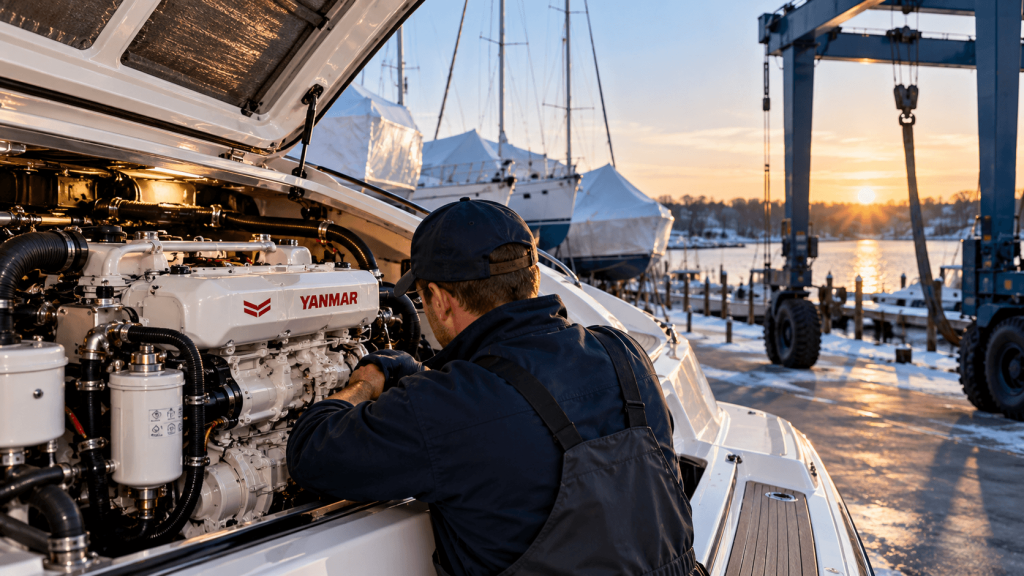
The first 50 engine hours on a new boat are a genuine break-in period — vary engine RPM rather than running at a constant speed, avoid extended full-throttle runs, and schedule your first oil change at the manufacturer’s specified interval (often around 20–25 hours). This period also sets the pattern for good long-term maintenance habits. New boat ownership starts with a specific, time-limited break-in window that meaningfully affects the engine’s long-term performance and reliability. Key Takeaways What actually happens during engine break-in? New engine components (rings, bearings, cylinder surfaces) need a period of varied-load operation to seat properly — running at one constant RPM, especially wide-open throttle, during this window can cause uneven wear that affects long-term performance. Varying your speed and load during the first 20 or so hours helps components seat correctly. First 50 Hours Checklist Hour range What to focus on 0–10 Vary RPM frequently, avoid full throttle, monitor gauges closely 10–20 Continue varied operation, note any unusual noises or vibration ~20–25 First oil change (confirm exact interval with your engine’s manual) 25–50 Normal operation begins, but stay attentive to any developing issues 50 Full manufacturer-recommended service check What if something feels off during break-in? Don’t dismiss unusual vibration, noise, or gauge readings as “normal for a new boat” — our guide to boat vibration at cruising RPM covers when vibration is expected versus when it signals a real issue worth addressing early. Does break-in matter for a used boat too? No — break-in specifically applies to a new engine’s internal components seating for the first time; a used boat with hours already on the engine doesn’t need this process, though it’s still worth confirming maintenance history at purchase. Our buying a used sailboat guide covers what to check instead. What else should new owners do in the first 50 hours besides the engine? Use this window to learn where safety equipment is stored, how all onboard systems work (electronics, bilge pump, water systems), and to establish your own maintenance log — habits started in the first 50 hours tend to stick for the life of boat ownership. Bottom line Vary your RPM, avoid full throttle, get that first oil change on schedule, and use the window to genuinely learn your new boat — it’s a small time investment that protects a large one. Contact our service team with break-in questions specific to your engine or review our full engine maintenance schedule. FAQ A question we often hear from new owners: “Do I really need to worry about ‘breaking in’ a new boat engine?” Yes — the first 20 or so hours matter for how internal engine components seat, and varying your RPM rather than running at one constant speed during this window protects long-term engine performance. How many hours is considered the break-in period for a new boat engine? Typically the first 20-25 hours, though your engine’s specific manual is the authoritative source for your exact model. When should I get my first oil change on a new boat? Often around 20-25 hours, but always confirm the exact interval specified by your engine’s manufacturer. Should I avoid full throttle during break-in? Yes — extended full-throttle operation during the break-in window can cause uneven wear on internal components that are still seating. Does a used boat need an engine break-in period too? No — break-in applies specifically to a new engine’s components seating for the first time; a used boat’s engine has already completed that process.

Winterizing Your Boat: A Step-by-Step DIY Checklist
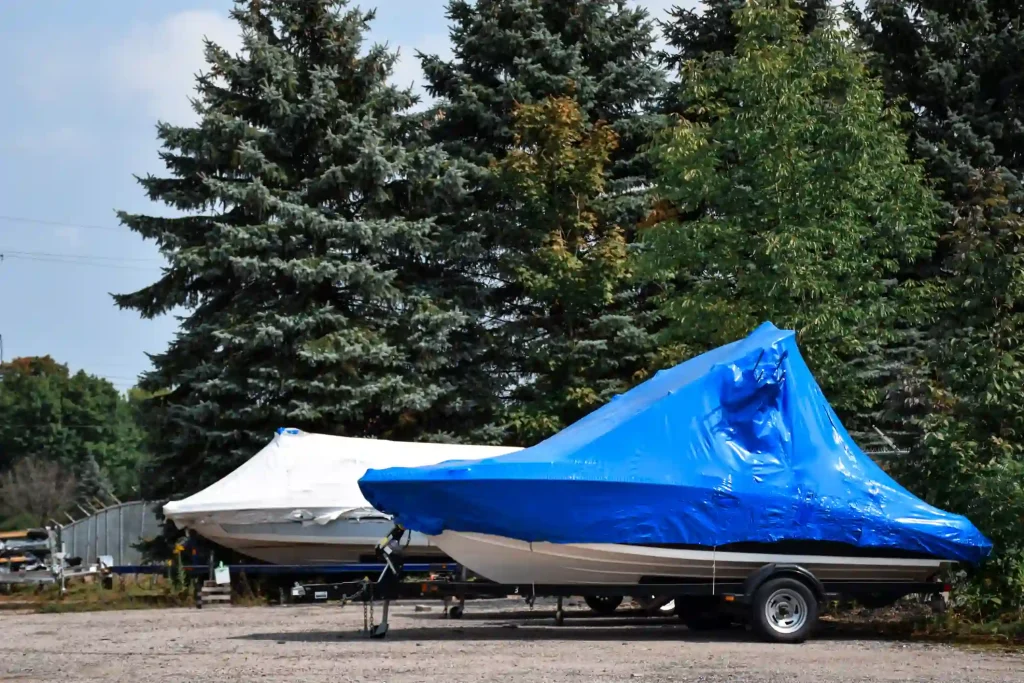
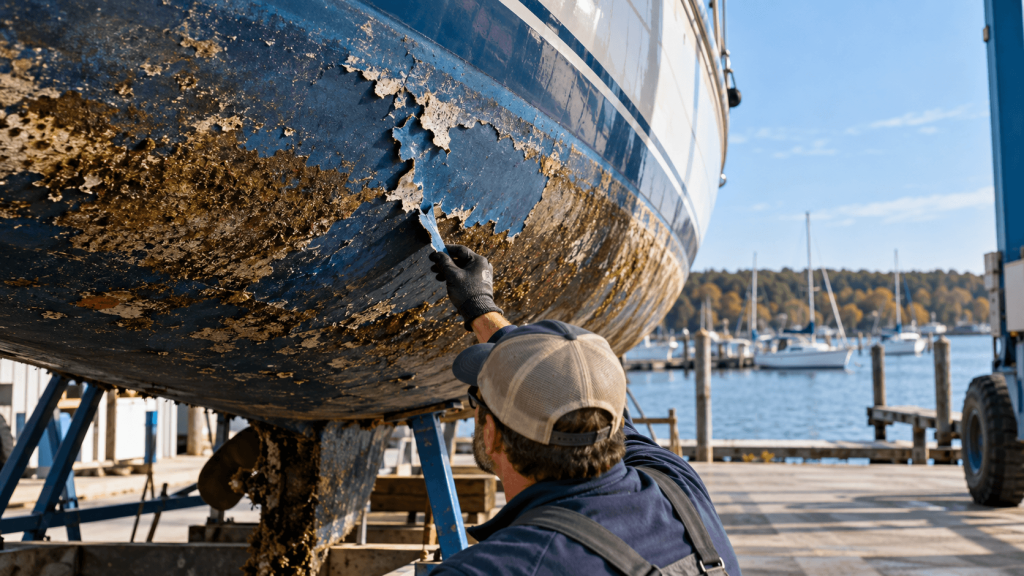
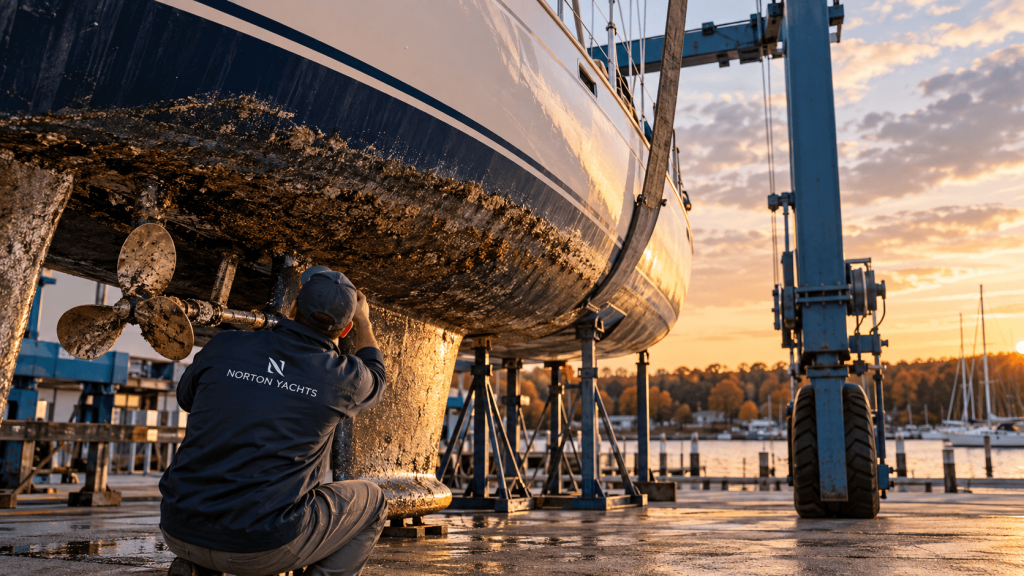
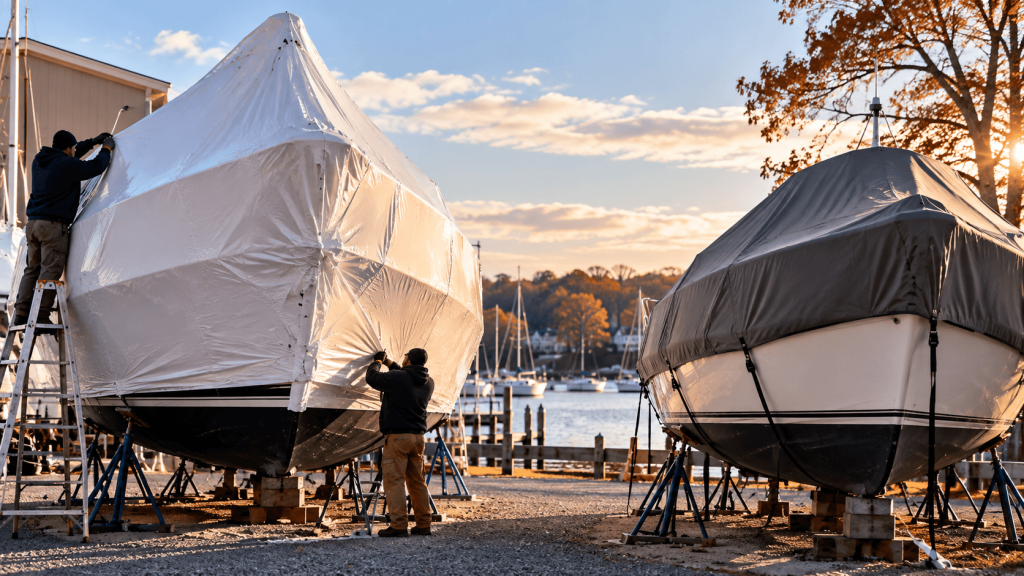
Winterizing a boat involves flushing and stabilizing the engine, changing fluids, draining or protecting water systems from freezing, cleaning and protecting the hull, and covering or shrink-wrapping the boat — ideally completed before the first hard freeze of the season. Owners comfortable with basic mechanical tasks can DIY most of this; others may prefer professional winterization or storage service. Skipping or rushing winterization is one of the most common causes of expensive spring repairs — here’s what the full process actually involves. Key Takeaways What does a full winterization checklist look like? Step What it involves Fuel system Add fuel stabilizer, run the engine to circulate it Engine flush Flush with fresh water to remove salt/debris Oil change Change oil and filter before storage, not after Fogging (if applicable) Fog cylinders per manufacturer guidance to prevent internal corrosion Water systems Drain or add non-toxic antifreeze to all water lines and the head Battery Remove or maintain with a trickle charger through winter Hull cleaning Clean and wax before covering to protect the gelcoat Cover/shrink-wrap Full cover or shrink-wrap to protect from snow, ice, and debris Can I do this myself, or should I use a professional service? Owners comfortable with basic mechanical maintenance can complete most winterization steps themselves — the process is well-documented and doesn’t require specialized tools for most steps. That said, engine-specific steps (like fogging cylinders correctly) benefit from manufacturer-specific guidance, and our engine maintenance schedule guide breaks that down by engine type. What happens if you skip winterization or do it late? Freeze damage to water systems and engine blocks is the most common and most expensive consequence — cracked engine blocks and burst water lines from freezing are largely preventable but can be very costly to repair come spring. Is DIY winterizing the same as professional storage service? Not exactly — winterizing is the mechanical prep process itself, while professional storage service (like our winter storage program) additionally covers where and how the boat is physically stored through the off-season. Many owners winterize themselves and still use a storage service, or have the storage service handle winterization as part of the package. When should winterization be completed by? Before the first hard freeze in your area — in the Chesapeake Bay region, this typically means having winterization complete well before late fall, not waiting until the first cold snap catches you off guard. Bottom line A complete winterization covers the engine, fluids, water systems, hull, and cover — done before the first freeze, it’s the single best way to avoid expensive spring repairs. Ask our service team for winterization support or scheduling or explore winter storage options. FAQ A question we often hear from new owners: “Can I winterize my own boat, or do I need a professional?” Most owners comfortable with basic mechanical maintenance can DIY most of the process — engine-specific steps benefit from manufacturer guidance, but a full professional service isn’t strictly required. What happens if I don’t winterize my boat properly? Freeze damage to water systems and the engine block is the most common and most expensive consequence of skipped or incomplete winterization. When should I winterize my boat? Before the first hard freeze of the season in your area — don’t wait until a cold snap catches you off guard. Is winterizing the same as using a winter storage service? Not exactly — winterizing is the mechanical prep process itself, while storage service covers where and how the boat is physically stored through the off-season. Do I need to remove the battery for winter storage? It’s commonly recommended — either remove it for storage or maintain it with a trickle charger through the winter months.

Boat Insurance 101: What Coverage Do You Actually Need?

Most boat owners need at minimum liability coverage (required by most marinas and lenders) and hull/physical damage coverage, with uninsured boater and towing/emergency assistance as commonly recommended add-ons. Financed boats typically require full coverage as a loan condition, while owned-outright boats have more flexibility, though liability coverage is still strongly recommended regardless. Boat insurance isn’t legally mandated the way auto insurance often is, but most marinas, lenders, and prudent owners treat core coverage as non-negotiable. Key Takeaways What types of boat insurance coverage exist? Coverage type What it covers Liability Damage or injury you cause to others or their property Hull/physical damage Damage to your own boat from collision, weather, etc. Uninsured boater Protects you if an at-fault party lacks adequate insurance Towing/emergency assistance On-water breakdown assistance, similar to roadside assistance Personal effects Coverage for gear/equipment aboard, sometimes a separate rider Is boat insurance legally required? Not universally by law the way auto insurance is in most states, but it’s frequently required in practice — marinas commonly require liability coverage for a slip, and lenders require full coverage as a condition of financing. If you’re financing your purchase, our boat financing guide covers how that requirement typically works. How much coverage do you actually need? At minimum, liability coverage sufficient to meet marina and lender requirements, plus hull coverage matched to your boat’s actual replacement value — beyond that, uninsured boater and towing coverage are widely recommended add-ons that cost relatively little relative to the protection they provide. Does the type of boat affect your insurance needs? Yes — higher-performance boats and boats used for towing watersports can carry different liability considerations than a slower cruising boat, and sailboats vs. powerboats can have different risk profiles insurers price differently. Worth discussing your specific boat and usage directly with an insurer. Does insurance cover storage and winterization damage? Typically, yes, if damage occurs during covered storage, but proper winterization is usually still your responsibility to prevent avoidable damage in the first place. Our DIY winterizing checklist covers what that involves. Bottom line Liability and hull coverage are the essential baseline; uninsured boater and towing assistance are worthwhile, low-cost additions most owners are glad they have. Contact our team for guidance on insurance for a specific boat. FAQ A question we often hear from new owners: “Is boat insurance actually required, or is it optional?” It’s not universally required by law, but it’s required in practice — most marinas require liability coverage for a slip, and lenders require full coverage if you’re financing. What’s the difference between liability and hull coverage? Liability covers damage or injury you cause to others; hull coverage covers damage to your own boat. Do I need uninsured boater coverage? It’s not always required, but it’s widely recommended — it protects you if another at-fault party doesn’t have adequate insurance of their own. Is towing/emergency assistance coverage worth adding? Most owners find it worthwhile — it’s a relatively low-cost add-on that covers on-water breakdown assistance, similar to roadside assistance for a car. Does my boat type affect how much insurance I need? Yes — higher-performance boats and different usage types (like towing watersports) can carry different risk considerations that affect coverage recommendations.

How Much Is My Boat Worth? Trade-In & Consignment Value Explained

Trade-in value is typically lower than consignment/private-sale value, but it’s faster and requires no ongoing effort on your part — consignment usually nets a higher price but takes longer to sell and involves a commission. Which is better depends on whether speed and convenience or maximum sale price matters more to you. If you’re upgrading boats or exiting boating altogether, understanding both paths helps you choose based on your actual priorities rather than assumption. Key Takeaways What actually determines a boat’s value? Factor Impact on value Age and model year Newer generally holds value better Engine hours / usage Lower hours typically means higher value Maintenance history Documented, regular maintenance supports a higher valuation Cosmetic condition Gelcoat, upholstery, and overall presentation matter more than buyers expect Current market demand Some makes/models hold value better due to demand, independent of condition Is trade-in or consignment worth more? Consignment typically nets a higher final sale price since it targets a retail buyer directly, but it takes longer to sell and involves a commission paid on the final sale. Trade-in is faster and involves no ongoing effort, but the value offered reflects the dealer’s need to resell it profitably, which is usually a lower number than consignment would net. Does preparing the boat actually change its value? Yes, meaningfully — a well-presented boat (clean, documented maintenance, minor cosmetic issues addressed) can command a noticeably higher valuation either way. Our guide to preparing your boat for sale covers exactly what to do before a valuation or listing. How do you get an accurate valuation? The most reliable approach is a professional appraisal that accounts for your specific boat’s condition, maintenance history, and current market comps — rather than relying solely on generic online valuation tools, which often miss condition-specific factors that meaningfully move the number. Should I trade in or consign if I’m buying another boat from the same dealer? Trade-in is often the more convenient option if you’re simultaneously purchasing another boat, since it can be applied directly to the new purchase — worth discussing both options with our team to see which nets you the better overall outcome for your specific situation. Bottom line Trade-in favors speed and convenience; consignment favors maximum sale price. Either way, proper preparation and a professional valuation make the biggest difference in what you actually walk away with. Get a valuation for your boat from our team. FAQ A question we often hear from owners looking to sell: “Will I get more money trading in my boat or selling it myself?” Consignment typically nets a higher final price than trade-in, but trade-in is faster and requires no ongoing effort — the right choice depends on whether speed or maximum price matters more to you. What determines how much my boat is worth? Age, model year, engine hours, maintenance history, cosmetic condition, and current market demand for that specific make and model. Is trade-in value always lower than consignment? Generally, yes — trade-in value reflects the dealer’s need to resell profitably, while consignment targets a retail buyer directly and typically nets more, minus a commission. Does preparing my boat before selling actually increase its value? Yes — a clean, well-documented, well-presented boat can command a noticeably higher valuation than an identical boat that hasn’t been prepared. Should I get a professional appraisal instead of using an online valuation tool? Yes — a professional appraisal accounts for your boat’s specific condition and maintenance history, which generic online tools often miss.

What to Ask Your Boat Dealer Before You Buy: A Buyer’s Checklist

Before buying, ask your dealer about warranty coverage and what voids it, what’s included in the purchase price versus sold as an add-on, service and maintenance availability after the sale, and delivery/commissioning timeline. These four categories cover most of what separates a smooth ownership experience from a frustrating one. A good dealer relationship extends well past the purchase — these are the questions that reveal how that relationship will actually work. Key Takeaways What should you ask about warranty? Confirm exactly what’s covered (hull, engine, electronics may have separate warranty terms from different manufacturers), how long each component’s coverage lasts, and what actions — like DIY maintenance or non-dealer service — could void it. Manufacturer and dealer warranties aren’t always the same thing, so it’s worth having both explained clearly. What should you confirm is actually included? Item Often assumed included, but confirm Trailer Sometimes sold separately from the boat Electronics (GPS, fishfinder) Packages vary widely by model and trim Safety gear Life jackets, fire extinguisher — confirm what’s provided vs. required to source yourself Bimini top/covers Frequently an add-on, not standard First service/commissioning Confirm if it’s included or billed separately Why does post-sale service availability matter so much? A boat you can’t get serviced promptly is a boat that sits unused — ask directly whether the dealer services what they sell, what their typical scheduling lead time looks like in-season, and whether loaner or expedited options exist for common issues. This matters more than most buyers expect until they actually need it. Our engine maintenance schedule guide is a useful reference once you own the boat. What should you ask about delivery and commissioning? Get a clear, specific timeline from signed purchase to being on the water, including who handles commissioning (rigging, systems checks, initial setup) and whether that’s included in your purchase price or billed separately. Should you ask about total ownership cost too? Yes — a good dealer should be able to speak candidly about realistic ongoing costs, not just the purchase price. Our true cost of ownership guide gives you a baseline to compare their answer against. Bottom line Warranty terms, what’s actually included, post-sale service availability, and a clear delivery timeline are the four questions that matter most — ask them before you sign, not after. Talk to our team — we’re happy to walk through all of this before you buy. FAQ A question we often hear from first-time buyers: “What’s the most important question I should ask before buying a boat?” Whether post-sale service is readily available and how far out scheduling typically runs — a boat you can’t get serviced promptly is a boat that sits unused, and this matters more than most buyers expect. What should I ask about boat warranty before buying? Ask exactly what’s covered, for how long, and what actions (like non-dealer service) could void it — manufacturer and dealer warranties aren’t always identical. Is a trailer usually included with a boat purchase? Not always — confirm directly, since trailers are sometimes sold separately from the boat itself. Why does it matter whether my dealer services what they sell? Because ongoing service availability directly affects how much you actually get to use the boat — confirm typical scheduling lead times before you buy, not after something breaks. Should I ask my dealer about total ownership costs, not just price? Yes — a good dealer should speak candidly about realistic ongoing costs like insurance, maintenance, and storage, not just the purchase price.

How Long Does It Really Take to Learn to Sail?

Most beginners reach basic sailing competency — enough to confidently handle a small boat in moderate conditions — within a structured course spanning a few weekends, typically 20–30 hours of instruction. Reaching a comfortable, independent skill level for coastal cruising generally takes a full season or two of regular practice beyond that initial course. If you’re considering sailing lessons but unsure whether it fits your schedule, here’s a realistic breakdown of the actual time commitment. Key Takeaways What’s a realistic timeline for a total beginner? Most total beginners can reach basic sailing competency — understanding points of sail, tacking, docking, and basic safety — within a structured course spanning a long weekend or a few sessions, roughly 20–30 hours of combined instruction and practice. This is the level covered by an ASA 101-equivalent course. Timeline at a Glance Skill level Typical time investment Basic competency (small boat, moderate conditions) 20–30 hours, a few weekends Comfortable, independent sailing A full season or two of regular practice Coastal cruising / bareboat chartering readiness Multiple structured courses over several months Confident in varied conditions Ongoing — most sailors keep building skill for years Does age or fitness level matter? Not significantly for basic competency — sailing is far more about technique and situational awareness than physical strength, which is part of why it’s approachable for a wide range of ages and fitness levels. Our ASA certified sailing school guide covers the specific course structure and prerequisites. Do you need to own a boat to start learning? No — most people start with a certified sailing school using instructional boats, and only consider buying once they’ve confirmed they enjoy it and have a feel for what size/type of boat fits them. If you’re at that stage, our family boat size guide is a useful next step. What’s the fastest path if I want to charter a boat on vacation? The ASA 101-103 track (or equivalent combo course) is specifically designed to get you to bareboat-charter-ready competency in a condensed timeframe — our ASA 101/103 combo course is built exactly for that goal. Bottom line Basic sailing competency is achievable in a few weekends; true independence takes a season or two of practice beyond that — either way, it’s far more approachable than most beginners expect. Learn more about our sailing school programs or contact us with questions. FAQ A question we often hear from prospective students: “I have almost no free time — is it realistic for me to learn to sail?” Yes — basic competency is achievable in roughly 20-30 hours of instruction, often condensed into a few weekends, which is a smaller time commitment than most people expect. How many hours does it take to learn basic sailing? Roughly 20-30 hours of combined instruction and practice, typically structured across a few weekends. How long until I can sail confidently on my own? Most sailors reach comfortable, independent skill after a full season or two of regular practice beyond their initial course. Do I need to be in good physical shape to learn to sail? Not significantly — sailing relies far more on technique and situational awareness than physical strength, making it approachable for a wide range of fitness levels. Do I need to own a boat before I start learning to sail? No — most people start at a certified sailing school using instructional boats and only consider buying once they know they enjoy it.

Buying a Boat Sight-Unseen: What Out-of-State Buyers Should Know

Yes, buying a boat sight-unseen is common and manageable when handled correctly — the key steps are a detailed video walkthrough or virtual tour, a professional marine survey conducted on your behalf, and a clear delivery or transport plan agreed on before you commit to the purchase. Buyers from outside the immediate Chesapeake Bay area regularly purchase boats without visiting in person first — here’s how that process actually works. Key Takeaways How do you inspect a boat you can’t see in person? Through a combination of a detailed video walkthrough (often done live via video call so you can direct what’s shown) and an independent marine survey conducted by a professional surveyor on your behalf — the survey is your actual quality-assurance step, not the video call, which is mainly for getting a feel for the boat. What does the remote-buying process typically look like? Step What happens Initial research Review listing details, photos, and specs remotely Video walkthrough Live or recorded video tour, often with the ability to request specific angles/close-ups Marine survey Independent surveyor inspects the boat and provides a written report Sea trial (if possible) Ideally conducted by the surveyor or a trusted local contact if you can’t attend Delivery/transport Boat delivered by water, trailered, or shipped, depending on distance and size Do you still need a marine survey if you can’t attend? Yes — if anything, it matters more, since the survey is effectively standing in for your own eyes and hands-on inspection. A qualified surveyor’s written report is the single most important document in a remote purchase. How does delivery actually work? Depending on distance and boat size, delivery is typically handled by water delivery (a licensed captain relocates the boat), overland trailering, or, for larger yachts, professional shipping — this should be quoted and agreed upon as part of the purchase, not figured out afterward. Is financing different for a remote purchase? Not fundamentally — the same marine financing basics apply regardless of whether you’re local or buying remotely; lenders care about the boat and your financials, not your location. Bottom line A video walkthrough, an independent marine survey, and a clear delivery plan are what actually make a sight-unseen purchase safe — not being physically present at the dock. Ask our team about remote purchase logistics for a specific boat or browse inventory. FAQ A question we often hear from out-of-state buyers: “Is it safe to buy a boat without seeing it in person first?” Yes, when it’s done right — a detailed video walkthrough plus an independent marine survey conducted on your behalf gives you the same quality assurance as an in-person inspection. Do I need a marine survey if I’m buying a boat remotely? Yes, arguably more so — the survey stands in for your own hands-on inspection and is the most important document in a remote purchase. How does boat delivery work for an out-of-state purchase? Depending on distance and size, delivery is typically handled by water delivery with a licensed captain, overland trailering, or professional shipping for larger yachts. Can I do a video walkthrough before committing to a remote boat purchase? Yes — most dealers can provide a live or recorded video walkthrough, often letting you request specific angles or close-ups before you commit. Is financing different if I’m buying a boat from out of state? No — the same marine financing basics apply regardless of your location; lenders evaluate the boat and your financial profile, not where you live.

Trailerable Boat vs. Marina-Kept Boat: Which Fits Your Lifestyle?

A trailerable boat (typically under 26 feet) gives you flexibility to launch anywhere and avoid monthly slip fees, but requires tow-capable vehicle access and launch/retrieve time on every trip. A marina-kept boat trades that flexibility for convenience — the boat’s always in the water, ready to go, at the cost of a monthly slip fee and being tied to one location. This decision affects your total cost of ownership and how often you’ll actually use the boat, so it’s worth thinking through before you buy, not after. Key Takeaways When does trailering make more sense? Trailering makes the most sense if you plan to boat occasionally, want the flexibility to visit different launch points, or want to avoid a recurring monthly slip fee — the tradeoff is added time (launching and retrieving) on every outing and needing a vehicle capable of towing your boat’s weight. When does keeping a boat at a marina make more sense? A marina slip makes sense if you boat frequently, want to be able to leave on short notice without any launch prep, or own a boat too large to practically trailer. The tradeoff is a recurring monthly cost, which our true cost of ownership guide factors into the bigger annual budget picture. Comparison at a Glance Factor Trailerable Marina-kept Ongoing cost Lower (no slip fee) Higher (monthly slip fee) Per-trip prep time Launch/retrieve every time Ready to go Location flexibility High — boat anywhere with a ramp Fixed to one marina Practical size limit Typically under ~26 ft No practical limit Best for Occasional, varied-location boaters Frequent boaters, larger boats Does boat size decide this for you? Mostly, yes — boats over roughly 26 feet become impractical to trailer regularly for most owners and tow vehicles, which naturally pushes larger-boat owners toward marina slips regardless of preference. If you’re still narrowing down size, our family boat size guide can help. Can you switch between the two later? Yes — many owners start trailering a smaller boat and move to a marina slip if they upgrade to a larger boat or start boating more frequently. This isn’t usually a permanent, one-time decision. Bottom line Choose based on how often you’ll actually boat and what size boat fits your needs — occasional, flexible use favors trailering; frequent use or a larger boat favors a marina slip. Ask our team which setup fits your plans or explore marina services here. FAQ A question we often hear from new buyers: “Should I trailer my boat or keep it at a marina?” It depends mostly on how often you’ll boat — occasional or varied-location use favors trailering, while frequent use or a larger boat favors a marina slip. What size boat is practical to trailer? Most owners find boats under roughly 26 feet practical to trailer regularly, depending on their tow vehicle’s capacity. Is trailering cheaper than keeping a boat at a marina? Generally, yes — trailering avoids the recurring monthly slip fee that comes with marina storage, though it adds launch/retrieve time to every trip. Can I switch from trailering to a marina slip later? Yes — it’s common for owners to start trailering and move to a marina slip later, especially after upgrading to a larger boat or boating more frequently. Does boat size limit whether I can trailer it? Yes — boats over roughly 26 feet become impractical for most tow vehicles, which typically pushes owners of larger boats toward marina storage.

Do You Need a Boating License to Operate a Boat in Virginia?

Virginia doesn’t issue a traditional “boating license,” but state law requires a Boating Safety Education Certificate for most motorboat operators, phased in by age — anyone born on or after January 1, 1988 must complete an approved boating safety course before operating a motorboat with a 10 HP+ engine. If you’re buying your first boat in Virginia, understanding this requirement upfront avoids a surprise right before your first trip on the water. Key Takeaways What does Virginia actually require? Virginia’s Boating Safety Education requirement phases in by age rather than applying to everyone — if you were born on or after January 1, 1988, you’re required to complete an approved boating safety course and carry the certificate when operating a motorboat with an engine of 10 horsepower or more. Who is exempt from the requirement? Situation Requirement Born before January 1, 1988 Currently exempt under the phase-in schedule Born on/after January 1, 1988, operating 10+ HP motorboat Certificate required Operating under 10 HP Generally exempt regardless of age Sailboat under auxiliary power only Rules can vary — confirm based on your specific setup Does this apply to sailboats too? The certificate requirement is tied to engine horsepower, so a sailboat’s auxiliary engine can trigger the same requirement if it meets the threshold — worth confirming your specific boat’s engine spec rather than assuming sailboats are automatically exempt. How do you actually get the certificate? Virginia accepts several NASBLA-approved boating safety courses, many of which can be completed online in a few hours — worth doing before your boat arrives rather than the week of your first trip out. Does this affect out-of-state buyers? No — Virginia’s requirement is based on where you’re operating the boat, not your state of residency, so out-of-state buyers taking delivery in Virginia are subject to the same rule. If you’re buying remotely, our guide to buying a boat sight-unseen covers the rest of that process. Bottom line If you were born on or after January 1, 1988 and plan to operate a motorboat over 10 HP in Virginia, complete an approved boating safety course before your first trip — it’s a straightforward online requirement, not a barrier to buying. Contact our team with questions about your specific boat or browse inventory. FAQ A question we often hear from first-time Virginia boat buyers: “Do I need a special license to operate the boat I’m about to buy?” Not a traditional license — but if you were born on or after January 1, 1988, Virginia requires a Boating Safety Education Certificate before operating a motorboat with a 10 HP+ engine. Does Virginia require a boating license? Not a standalone license — Virginia requires a Boating Safety Education Certificate, phased in based on birth year. Who is required to get a boating safety certificate in Virginia? Anyone born on or after January 1, 1988 who plans to operate a motorboat with an engine of 10 horsepower or more. Do sailboats require the same certificate as powerboats in Virginia? The requirement is based on engine horsepower, so a sailboat’s auxiliary engine can trigger the same requirement if it meets the threshold. Do out-of-state buyers need a Virginia boating certificate? Yes — the requirement is based on where you operate the boat, not your state of residency, so it applies the same way to out-of-state buyers.

Boat Financing 101: How Marine Loans Actually Work

Marine loans work similarly to auto loans but with longer terms (often 10–20 years for larger boats) and typically require a down payment of 10–20%. Lenders evaluate credit score, income, and the boat’s age/value the same way they would for any secured loan, and new boats generally qualify for better rates and longer terms than older used boats. If you’re budgeting for a boat purchase, understanding how marine financing actually works helps you shop with realistic numbers instead of guessing. Key Takeaways How is a marine loan different from a car loan? The core mechanics are similar — a secured loan with the boat as collateral — but marine loan terms are typically much longer, since boats depreciate more slowly than cars and lenders are comfortable extending 10–20 year terms for larger purchases. This is part of why total cost of ownership (see our true cost of ownership guide) should factor in loan payments alongside insurance and maintenance. What do lenders actually look at? Factor Why it matters Credit score Same as any secured loan — higher scores unlock better rates Income/debt-to-income ratio Confirms the loan payment fits your budget Boat age and value Newer boats generally qualify for longer terms and better rates Down payment size A larger down payment can improve your rate and reduce total interest Does financing work differently for a new vs. used boat? Yes — new boats typically qualify for longer loan terms and better rates, since lenders view them as lower-risk collateral than an older used boat. If you’re still deciding between new and used, our new vs. used boat guide covers that decision directly. How much down payment should you expect to need? Most marine lenders look for 10–20% down, though the exact figure depends on the lender, the boat’s age, and your credit profile — worth confirming with a specific lender or our team before you shop for a specific boat. Is it better to finance or pay cash? That depends entirely on your personal financial situation and isn’t something we’d generalize — but understanding the loan mechanics above at least lets you compare financing against paying cash on equal footing rather than guessing at the terms. Bottom line Marine loans function like long-term secured loans — expect a 10–20% down payment, multi-year terms, and better terms on newer boats. Talk to our team about financing options for a specific boat or browse inventory. FAQ A question we often hear from first-time buyers: “How much down payment do I need for a boat loan?” Most marine lenders look for 10-20% down, though the exact figure depends on the lender, the boat’s age, and your credit profile. How is a marine loan different from a car loan? The core mechanics are similar, but marine loans typically have much longer terms — often 10-20 years for larger boats — since boats depreciate more slowly than cars. Do new boats get better financing terms than used boats? Generally, yes — new boats are viewed as lower-risk collateral, which typically means better rates and longer available terms than an older used boat. What do lenders look at for a boat loan? Credit score, income/debt-to-income ratio, the boat’s age and value, and the size of your down payment. Should I finance a boat or pay cash? That depends on your personal financial situation — understanding how marine loans work is the first step to comparing the two options on equal footing.