Every full-service boatyard on the Chesapeake Bay runs the same seasonal pattern: a long, quiet fall and winter storage period, followed by a compressed rush of commissioning work in the weeks before everyone wants to be back on the water at once. The boats that launch first in spring are rarely the newest or the simplest to commission.
They are the boats whose owners scheduled commissioning before that rush started, in November, while their boat was already in for fall haul-out or winterization.
Norton Yachts handles spring commissioning for sail and power boats from our full-service boatyard in Deltaville, Virginia. If you want to lock in an early spring launch date, call (804) 776-9211 or visit our commissioning service.
Why the Commissioning Queue Matters as Much as the Work Itself
Commissioning takes real technician hours per boat, and a full-service yard has a finite number of technicians and a finite number of working hours between winter storage ending and the first good weekend everyone actually wants to be on the water. Boats scheduled early get worked through a less compressed queue.
Boats scheduled late get worked on whenever there is room, which in a busy spring often means later than the owner expected, and sometimes means systems work gets rushed to make a launch date rather than done at the pace it deserves.
What a Full Commissioning Actually Covers
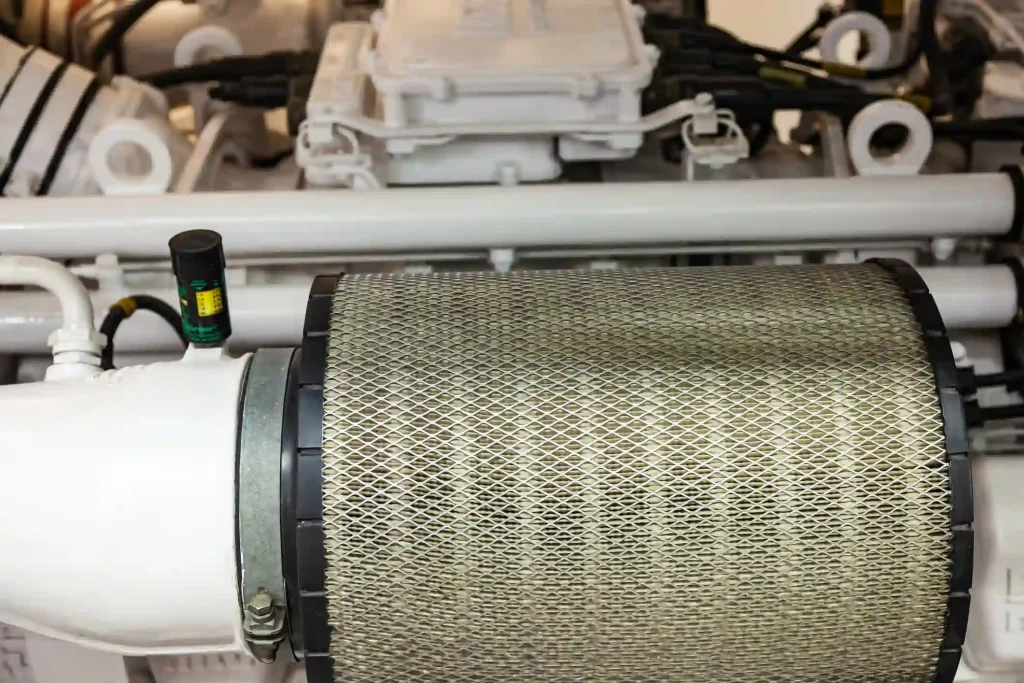
- Engine startup and inspection: checking everything that was addressed during winterization, coolant level, oil, belt tension, raw water intake and strainer condition, before the engine runs under load for the first time. On engines due for major service at the 1,000 to 2,000 hour interval, this is also when valve adjustment, injector inspection, and heat exchanger service happen if they have not already been done over the winter.
- Through-hull and seacock checks: confirming nothing was compromised during winter storage, and that every seacock operates freely before the boat goes back in the water.
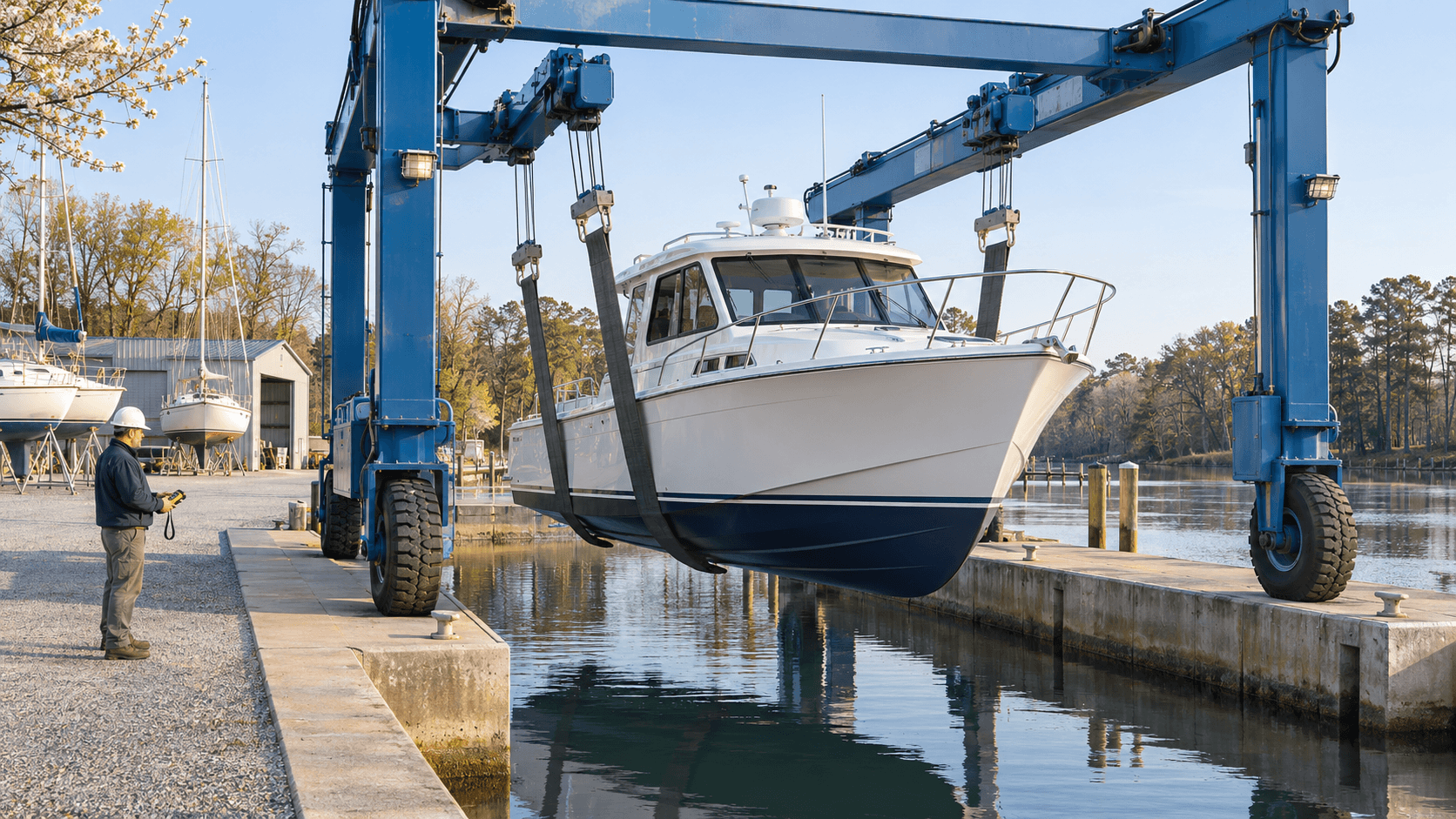
- Cutless bearing and shaft alignment: on shaft-drive boats, or saildrive seal inspection on saildrive-equipped sailboats, both checked as part of the same haul-out window rather than as a separate trip.
- Rigging inspection and tune (for sailboats): standing rigging gets a visual check for broken strands, kinks, or stretching, with particular attention to spreader bases, the mast step, and chainplate connections after a winter of temperature swings. Rigging generally sits on a ten to fifteen year replacement cycle regardless of visible damage; commissioning is when overdue replacements typically get flagged and scheduled.
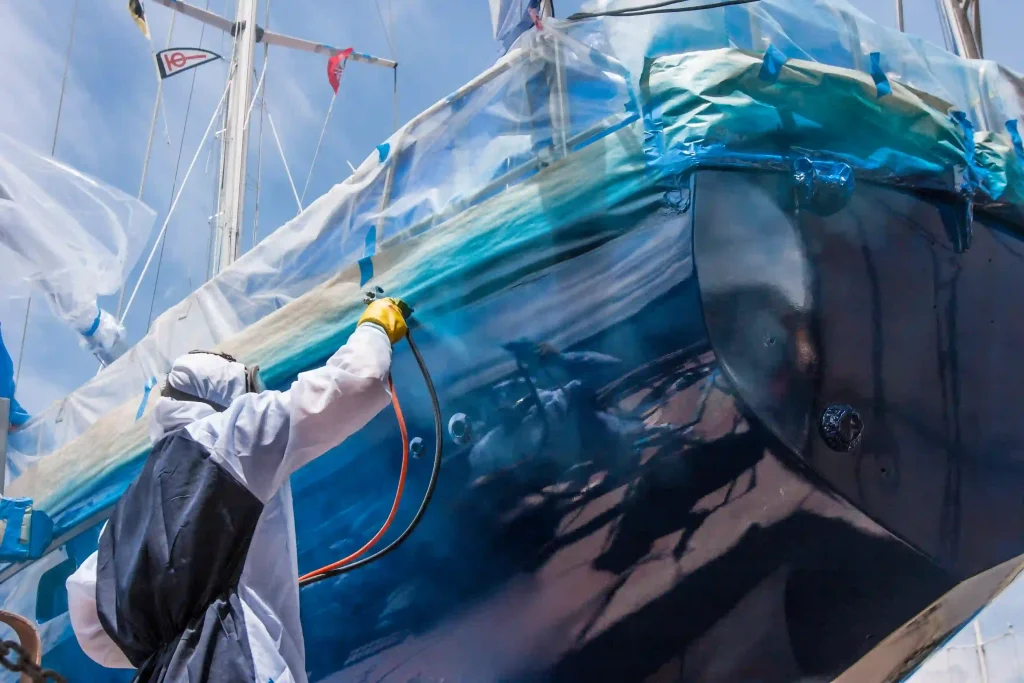
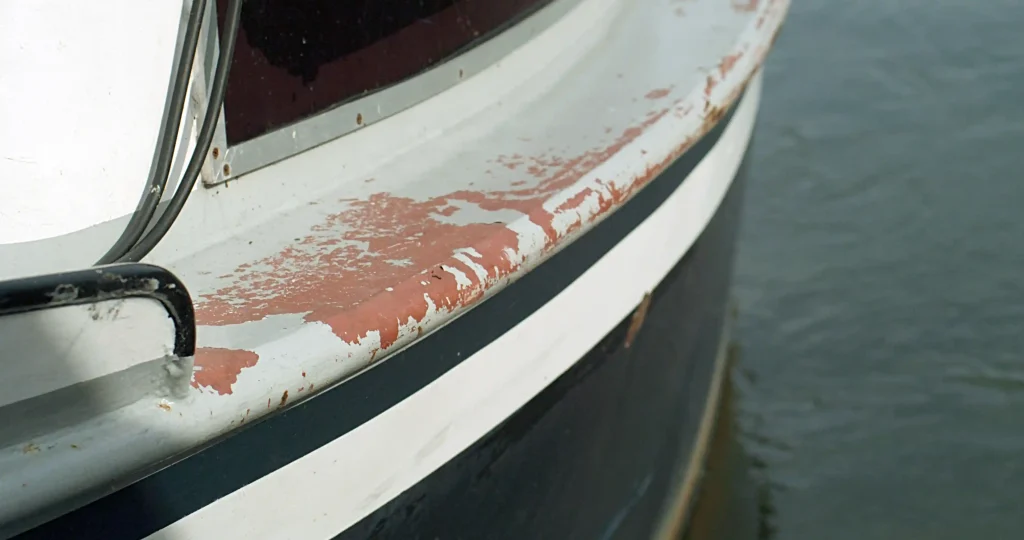
- Bottom paint: either a fresh application or a touch-up depending on the boat’s cycle (bottom paint is generally renewed every one to three years depending on use), timed so the paint is fully cured before launch.
- Anode replacement: across the engine, shaft, and heat exchanger, since Bay salinity corrodes unprotected metal faster than fresh water does.
- Electronics and systems verification: confirming chartplotters, autopilots, bilge pumps, and other systems are functioning correctly before the boat goes back in the water.
Why November Scheduling Specifically Helps
Scheduling in November, while a boat is likely already in for fall haul-out or winterization, lets our yard plan the spring commissioning queue around confirmed appointments rather than guessing at demand. We also use the off-season window itself, particularly January and February, for the inspection and major service work that feeds directly into commissioning: a thorough out-of-water inspection of hull, rigging, and systems in January, followed by the heavier bottom paint, rigging, and major engine service work in February.
Owners who schedule early typically get their preferred launch window, and the major items are already done by the time spring commissioning itself happens, rather than being discovered and scrambled for in April. Owners who wait until February or March to call are working against a queue that has already filled up with the owners who planned ahead.
For more on how year-round maintenance, not just commissioning, protects a boat over time, see Why Yearly Preventative Maintenance Costs Less Than Waiting for Repairs. You can also browse the full Knowledge Center.
Frequently Asked Questions
How far in advance should I schedule spring commissioning?
Scheduling in the fall, well before spring, is the surest way to get an early launch slot. What matters most is being on our schedule before the spring rush fills the queue, not a fixed number of weeks.
What is the difference between commissioning and winterization?
Winterization prepares a boat for storage over the winter. Commissioning is the reverse process in spring, bringing all of those systems back online, checking what winter storage may have affected, and confirming the boat is ready to launch and run safely.
What gets checked during commissioning that owners typically miss if they do it themselves?
Through-hull and seacock operation, cutless bearing and shaft alignment, and the condition of standing rigging at the spreader bases and chainplates are the items most often missed by an owner working without a lift and a trained eye. These are also the items most likely to cause a problem on the water if something is wrong.
Does scheduling early cost more than waiting until spring?
No. The price for the commissioning work itself does not change based on when you schedule it. What changes is your position in the queue and how early a launch date you can secure.
To schedule spring commissioning or ask about current availability for next season, call Norton Yachts at (804) 776-9211 or schedule an appointment.