
If you are starting to think about selling, the question that actually matters is not “what is my boat worth” in the abstract. It is which specific factors a buyer, and the surveyor a serious buyer hires, will weigh when they look at your boat, and what that survey will and will not actually catch. Having a clear picture of both before you list gives you time to address what you can and set realistic expectations for what you cannot.
This is a different question from protecting your boat’s value through ongoing maintenance while you still own it. If that is where you are, see How Regular Maintenance Protects Your Boat’s Value. This piece is specifically for owners preparing to sell.
Norton Yachts’ brokerage team handles sailboat and powerboat sales through our Sell Your Boat program. For a brokerage consultation, visit our boat selling center or call (804) 776-9211.
The Factors That Actually Move the Needle
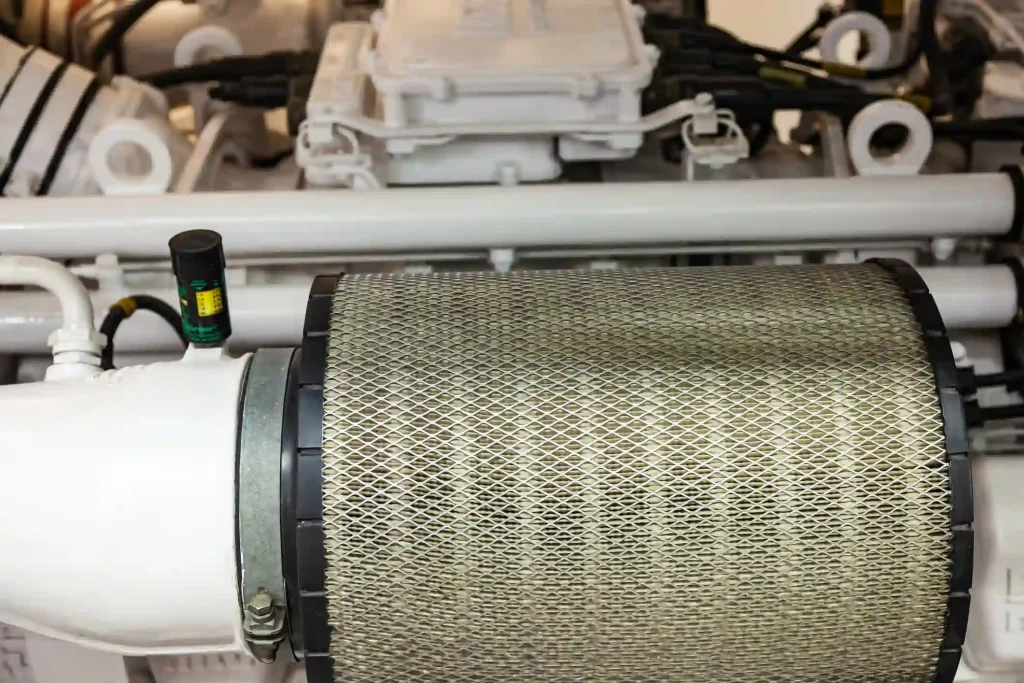
- Engine hours and documented service history: A low-hour engine with a clear maintenance record is worth more than a higher-hour engine with no documentation, even if the undocumented engine has actually been well cared for. Buyers and surveyors cannot evaluate what they cannot see on paper.
- Standing rigging age. Rigging is generally replaced on a ten to fifteen year cycle, and on the Bay, UV exposure and salt air work against it compared to boats kept in covered storage elsewhere. A full rig replacement on a mid-size boat typically runs $5,000 to $15,000, so a buyer’s surveyor flagging overdue rigging is effectively asking you to absorb or negotiate that cost. An answer that is vague or old about when the rigging was last replaced works against the asking price.
- Sails. Sail condition and age are a real line item buyers factor in. Sails that need replacement soon after purchase are effectively a discount a buyer will try to negotiate.
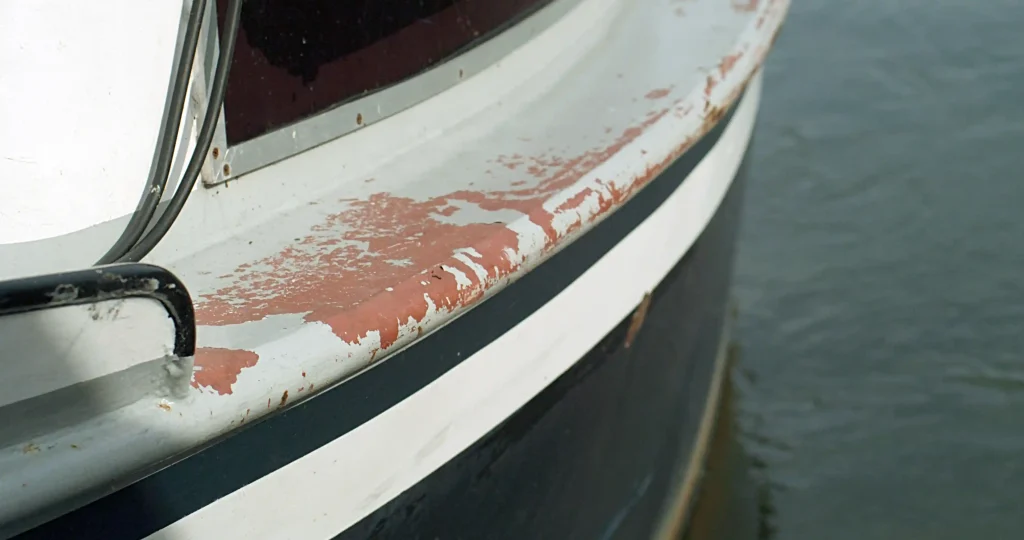
- Hull and finish condition. Whether your boat has gelcoat or an Awlgrip finish, chalking, fading, or visible repairs affect both the asking price and how quickly a buyer commits. A well-maintained finish signals a well-maintained boat overall, fairly or not.
- Systems age. Marine water heaters and refrigeration systems typically run eight to fifteen years before needing replacement, and a holding tank system starts showing real problems around the ten to fifteen year mark. A buyer’s survey will note the age and apparent condition of these systems even though the survey itself may not test them exhaustively.
- Electronics. Updated chartplotters, autopilots, and properly functioning bilge and freshwater systems are increasingly expected rather than treated as a bonus, particularly for buyers coming from newer boats.
- Survey outcome. This is where all of the above gets confirmed or contradicted, and it is worth understanding exactly what a standard marine survey does and does not cover before you list.
What a Marine Survey Actually Covers, and What It Does Not
A pre-purchase survey is hired and paid for by the buyer, typically from a surveyor accredited by SAMS (Society of Accredited Marine Surveyors) or NAMS (National Association of Marine Surveyors), both of which require a minimum of five years of surveying experience and passing a discipline-specific exam.
In the Chesapeake region, a pre-purchase survey generally runs $30 to $35 per foot, so a 40-foot sailboat typically runs in the neighborhood of $1,200 to $1,400 for the survey itself. A standard survey covers hull condition and structural integrity, deck condition, electrical, plumbing, and fuel systems, a basic external engine inspection (cold start and thermal check), a dockside visual rigging inspection, and a safety gear and equipment inventory, delivered as a written report typically 40 to 80 pages with photos.
What a standard survey does not cover is where sellers, and buyers, get surprised. Surveyors do not typically climb the mast to inspect standing rigging at height, and they do not typically open the engine for internal inspection. Those are separate specialist inspections: a rigger’s masthead inspection generally runs $200 to $500, and a specialist engine inspection, including oil analysis at roughly $85 per sample, generally runs $300 to $1,000.
If your rigging or engine has anything a buyer would want to know about at that level of detail, it is worth having that inspection done before you list rather than finding out about it during the buyer’s due diligence, when it becomes a negotiating point instead of a known fact you have already priced in.
What You Can Still Do Before Listing
Addressing deferred maintenance items, an overdue rigging inspection, a bottom paint cycle, a detailing pass to address chalking or oxidation, before you list almost always returns more value than it costs, because it removes objections a buyer would otherwise use to negotiate down. That’s why regular boat detailing protects more than just appearance for what that process involves.
What you generally cannot change meaningfully in the short term is the boat’s age, model, and overall market demand for that model on the Bay. Being honest with yourself about which category a given issue falls into, fixable before listing versus simply a fact of the boat, helps set a realistic asking price from the start rather than one that needs to be corrected downward after weeks on the market.
How a Sale Actually Moves From Offer to Close
A typical offer on a used sailboat comes with a deposit, commonly around 10 percent of the offer price held in the broker’s trust account, and a short window, often around three days, during which the buyer can walk away based on the contingencies in the offer: a satisfactory survey, a satisfactory sea trial, satisfactory engine and rigging inspections, financing if applicable, and insurance binding. This is why preparing for the survey before you list matters so much.
A clean survey keeps a deal moving through those contingencies. A survey that surfaces deferred maintenance the buyer did not expect is often where a deal gets renegotiated or falls through entirely.
How Long It Realistically Takes to Sell
Sailboat sales on the Bay move on their own timeline, and we would rather tell you that honestly than promise a number we cannot guarantee. A well-prepared, well-priced boat with clean documentation generally moves faster through the contingency period described above than a comparable boat with unclear maintenance history or an asking price that has not accounted for the factors above.
You can read more ownership guidance in the Knowledge Center, or talk directly with our brokerage team about your specific boat.
Frequently Asked Questions
What is my boat actually worth?
There is no single number without looking at the specific boat. Model, age, engine hours and documentation, rigging and sail condition, finish condition, and current market demand all factor in. Our brokerage team can give you a realistic range based on comparable sales.
Does a marine survey happen before or after a buyer makes an offer?
Typically after an offer is accepted, as one of several contingencies the buyer uses to confirm the boat’s condition before the sale finalizes. This is why addressing known issues before listing matters: a survey that uncovers deferred maintenance can affect the deal after you have already agreed on a price.
Will a standard survey catch everything a buyer cares about?
No. A standard survey does not typically include a masthead rigging inspection or an internal engine inspection. If either system has condition issues a buyer would care about, it is worth having that specialist inspection done before you list.
Is it worth fixing things before I list, or should I just price the boat accordingly?
It depends on the item. Inexpensive, visible fixes, detailing, minor cosmetic repair, generally return more value than they cost. Larger items, such as a full rigging replacement, are worth discussing with us directly, since the right call depends on your specific boat and timeline.
Does an Awlgrip finish sell for more than a gelcoat boat of the same model and age?
A well-maintained finish of either type helps. An Awlgrip finish that has held its gloss well can be a positive, but a neglected Awlgrip finish does not outperform a well-cared-for gelcoat boat. Maintenance history matters more than which finish the boat has.