You are weighing an Awlgrip refinish against a gelcoat respray, or your current Awlgrip finish is starting to chalk and you are trying to figure out whether that is normal wear or a sign the job was done wrong. Either way, the honest answer depends on more variables than most articles on this topic admit, and the variable that matters most is one most owners never see: what happened to the hull before the first coat of topcoat ever went on.
Norton Yachts employs the #1 Awlgrip painter in the United States. This guide reflects what our master Awlgrip painter, Frankie Bushong, actually tells owners who ask this question in our Deltaville boatyard, not a manufacturer brochure figure.
If you are evaluating an Awlgrip project now, call (804) 776-9211 or visit our Awlgrip painting services hub to talk through your boat specifically.
What Actually Determines How Long Awlgrip Lasts
A properly applied Awlgrip linear polyurethane topcoat, such as Awlgrip HDT Topcoat over Awlgrip 545 epoxy primer, is engineered to hold gloss and color longer than gelcoat or a lesser paint system. A well-prepared, well-maintained Awlgrip finish commonly holds its appearance and protective qualities for eight to twelve years or more before it needs major attention again, though that range moves in both directions depending on four factors:
Surface preparation before the first coat
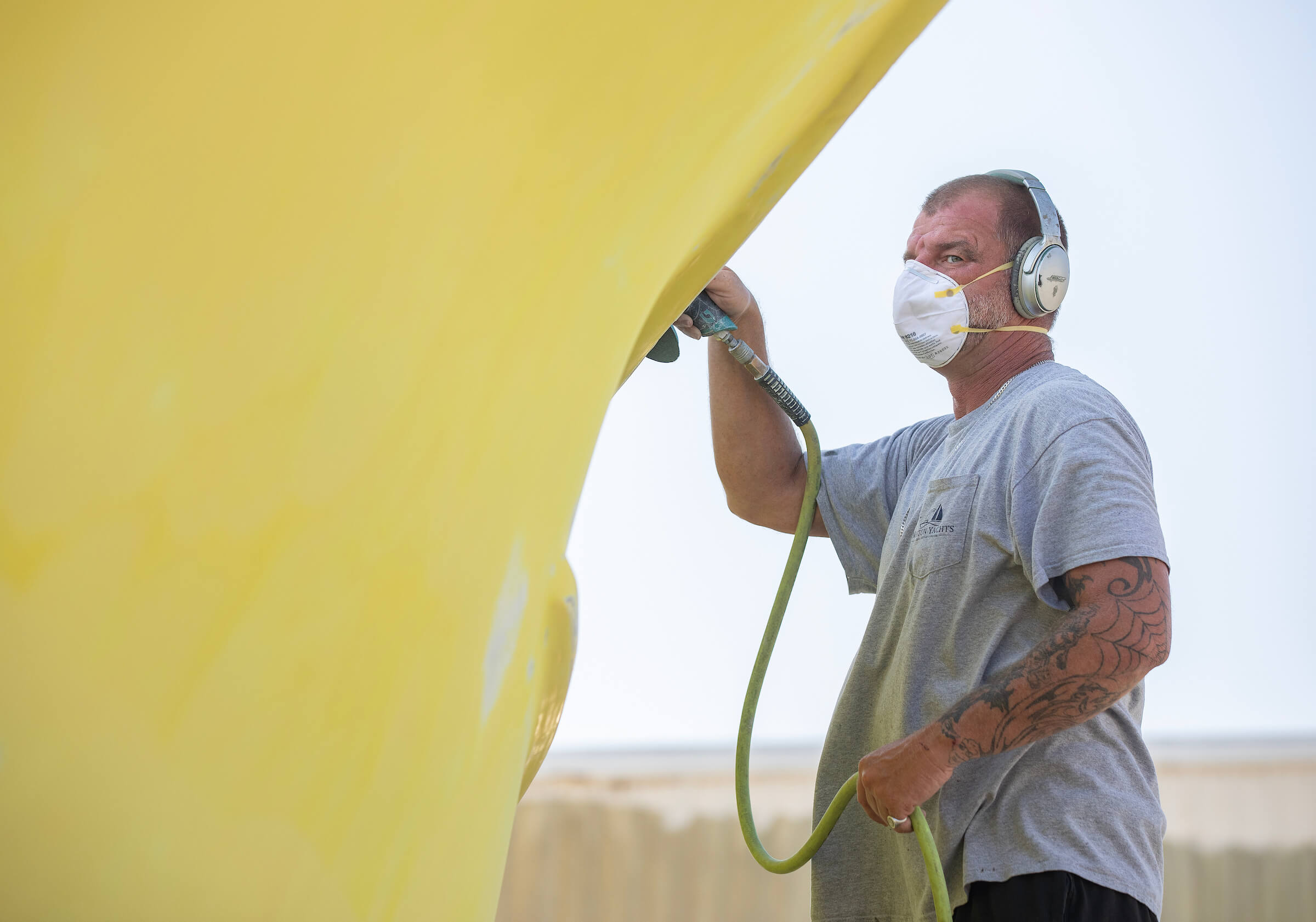
Fairing, sanding, and primer application represent roughly 70 percent of the eventual result, and it is also the factor owners are least able to evaluate by looking at a finished boat. Any existing coating and gelcoat damage has to be addressed and the surface faired smooth before Awlgrip 545 primer goes on. Rushed or incomplete fairing causes a finish to fail years earlier than one applied over properly prepared fiberglass, regardless of how good the topcoat product itself is.
Environmental control during application
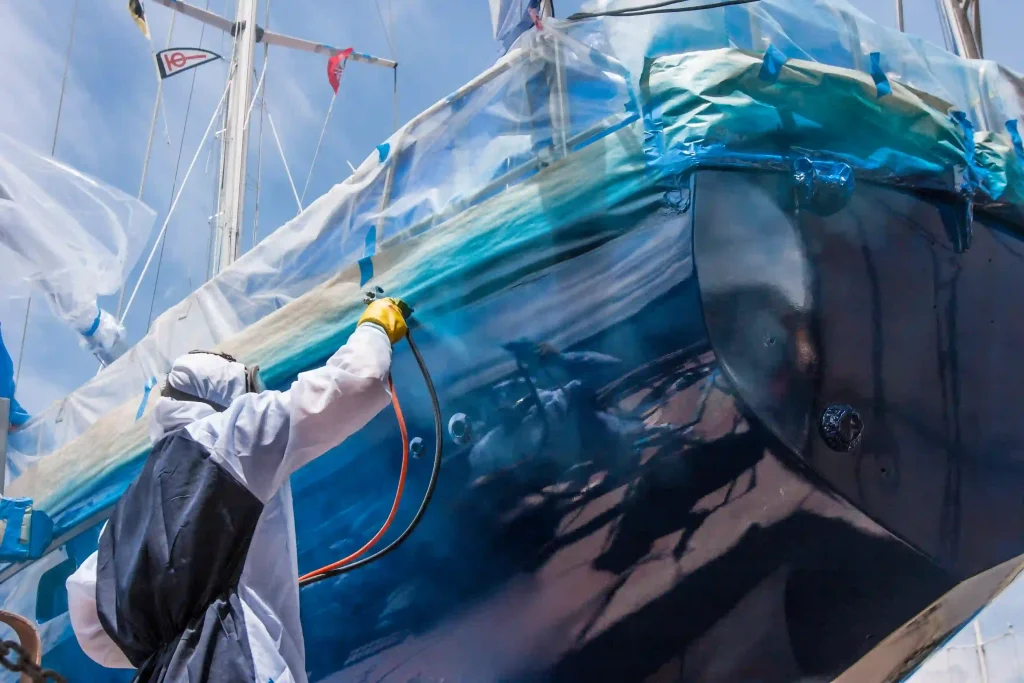
Awlgrip is a two-part linear polyurethane that cures correctly only within specific temperature and humidity ranges, with defined recoat windows between coats. A job sprayed outside those conditions, even with correct prep underneath it, shows up later as reduced gloss retention, orange peel, or premature chalking.
UV exposure and storage
A boat kept on a mooring or at a slip in direct sun year-round on the Bay shows finish degradation sooner than a boat that spends winters under cover. Chesapeake summers are intense enough that UV is a real factor in the lifespan estimate above, not a marginal one.
Maintenance between applications
Regular washing with the right, non-abrasive products extends the life of an Awlgrip finish meaningfully. A finish that is never cleaned, or cleaned with the wrong compounds, chalks and dulls faster than one maintained on a schedule. See Why Regular Boat Detailing Protects More Than Just Appearance for that maintenance cycle.
A Note on What Awlgrip Is (and Isn’t)
Awlgrip is a topsides and boot-stripe finish, not a bottom paint. It replaces or goes over gelcoat above the waterline; the hull bottom below the waterline still needs its own antifouling system, such as Interlux Fiberglass Bottomkote, on its own maintenance cycle. Owners sometimes assume one paint job covers the whole boat. It does not, and conflating the two is a common source of confusion when budgeting a refinishing project.
Awlgrip vs. Gelcoat vs. Doing Nothing
A gelcoat finish costs less upfront and is easier to touch up in small areas, but it oxidizes faster under Bay UV exposure and does not hold a deep gloss as long as a properly applied Awlgrip finish. Awlgrip costs more to apply correctly, in large part because the fairing work is labor-intensive, but a properly applied finish on a well-prepared hull typically holds its appearance for meaningfully longer between major refinishing cycles.
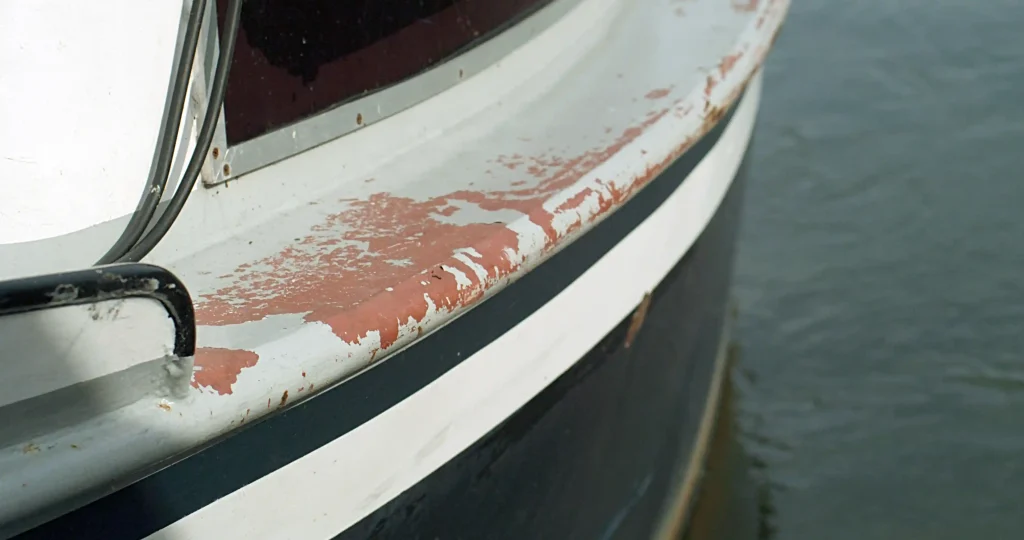
Doing nothing, meaning deferring a refinish on a hull that is already chalking or showing fiberglass print-through, is the most expensive path of the three. The longer a failing finish sits exposed, the more surface preparation it needs before a new topcoat can go on correctly, which raises the cost of the eventual job.
We see this constantly: a boat that comes in two or three seasons after chalking first appeared needs significantly more fairing work than the same boat would have needed if the owner had called when the chalking first showed up.
What Separates a Professional Awlgrip Job From a DIY or Rushed Application
The difference almost always comes down to fairing and environmental control during application. A job done outside controlled conditions, or over fairing that was not done properly, shows orange peel, reduced gloss retention, or early chalking regardless of how good the Awlgrip product itself is.
This is the gap between a boatyard that paints occasionally and one where Awlgrip is the primary specialty, with a painter whose reputation depends on the finish still looking correct after three or four Bay summers, not just at the dock the day the boat splashes.
For the full picture on Norton Yachts’ refinishing services, visit our boat services center, or browse related ownership guides in the Knowledge Center.
Frequently Asked Questions
How many years should I expect from an Awlgrip finish on the Chesapeake Bay?
A well-prepared, well-maintained finish commonly holds its appearance for eight to twelve years or more before needing major attention again. Surface preparation and maintenance between applications move that number more than the product itself does.
Is Awlgrip worth the extra cost over gelcoat?
For owners planning to keep the boat for years, most find it worthwhile given the longer interval between major refinishing cycles. For a boat headed to sale soon or on a tight budget, a gelcoat respray may make more sense. Our painter can walk through the tradeoff for your specific boat and timeline.
What are the signs my Awlgrip finish needs attention?
Chalking, a dull, powdery residue that comes off on your hand when you wipe the surface, loss of gloss, and visible fading are the early signs. Catching these before the finish fails outright usually means a less invasive, less expensive fix.
Can Awlgrip be touched up, or does it always require a full repaint?
Small areas can sometimes be touched up, but matching color and gloss exactly is more difficult with Awlgrip than with gelcoat. A full or partial repaint is often the better long-term result once a finish has degraded broadly.
Does Awlgrip also protect the hull below the waterline?
No. Awlgrip is a topsides and boot-stripe system. The bottom still needs a separate antifouling paint, such as Interlux Fiberglass Bottomkote, maintained on its own cycle.