Not every boat on the Chesapeake Bay needs to come out of the water for winter. Some stay in a heated slip all season. But for most boats, there’s a point each fall where staying in the water stops being a convenience and starts being a risk to the boat’s condition and value. The hard part is knowing where that point is, especially if this is your first winter with the boat or your first winter on the Bay.
If you’re already seeing one or more of the signs below, or you’re not sure whether your boat is a candidate for a fall haul-out this year, Norton Yachts’ boatyard team can take a look and give you a straight answer. Call (804) 776-9211 or visit nortonyachts.com/boat-service-center. Yard schedules fill up fast once temperatures start dropping, so check sooner rather than later.
Here’s what we tell owners to watch for.
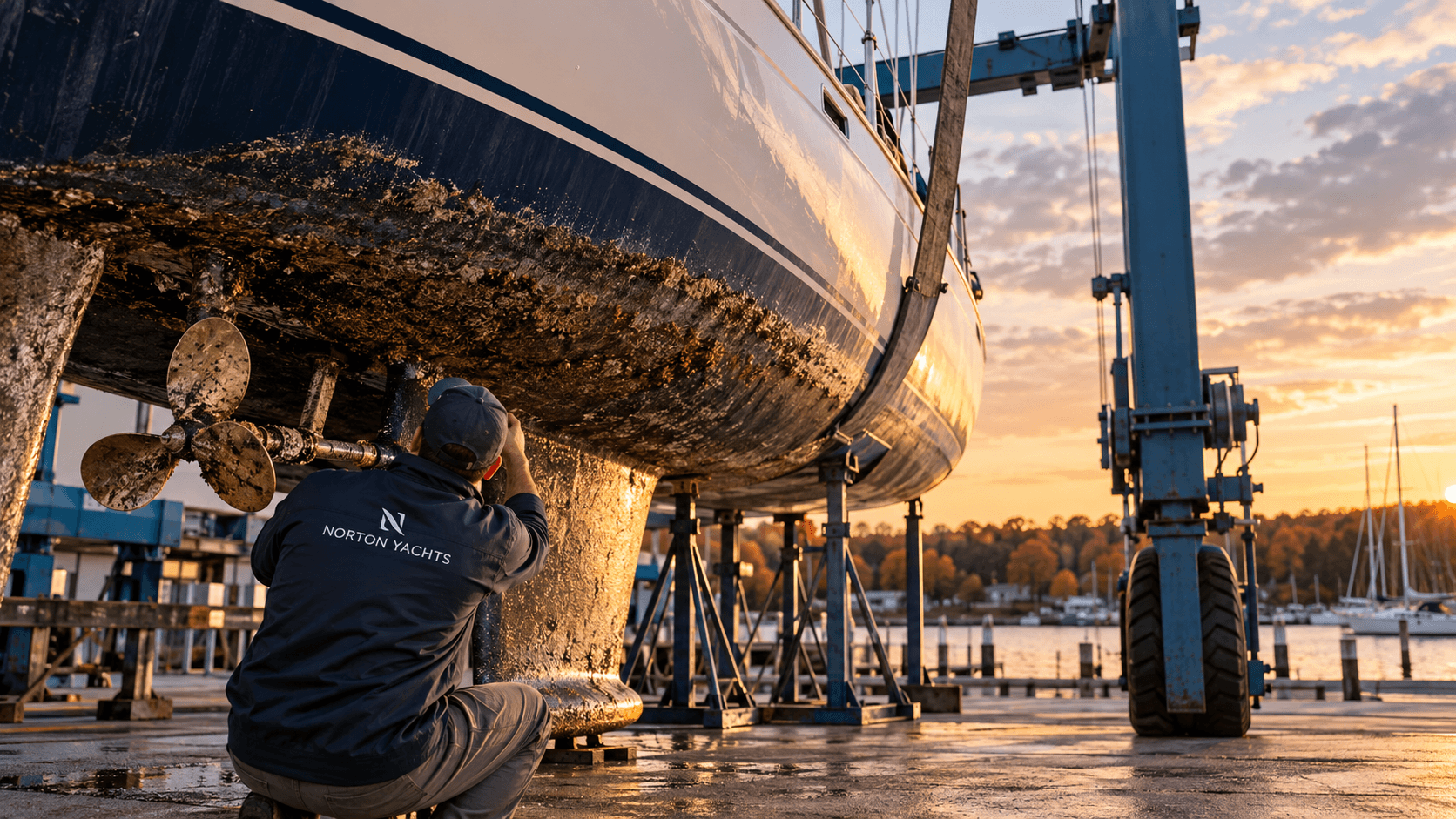
1. Visible Growth or Fouling Below the Waterline
What it means: Marine growth, barnacles, and slime accumulate on any hull sitting in the water, and the rate depends on the season, the water temperature, and how recently the bottom was painted.
Why it matters: Growth left on the hull through winter doesn’t just sit there. It can continue to attach and, depending on the paint’s remaining biocide, keep growing in milder winter stretches. It also makes spring splash-in harder, since a fouled bottom needs to be cleaned before the boat performs the way it should.
What happens if you wait: Heavier fouling means more aggressive cleaning in spring, which is harder on the paint itself and can shorten the life of your next bottom paint job.
2. A Noticeable Drop in Speed or Fuel Efficiency Underway
What it means: If the boat feels sluggish compared to earlier in the season, or you’re burning noticeably more fuel for the same trip, bottom fouling or a damaged prop is the most likely explanation.
Why it matters: This is one of the clearest signals that whatever’s below the waterline needs attention before the boat sits idle all winter. A problem that’s already affecting performance in October won’t improve by sitting in cold water until April.
DIY check: If you can safely inspect the hull at the dock or have a diver do a quick look, check for heavy growth, a fouled prop, or anything visibly off about the running gear.
3. Softness or Discoloration Near the Waterline
What it means: Soft spots, bubbling, or dark discoloration near the waterline can be early signs of osmotic blistering, where moisture has worked its way into the laminate beneath the gelcoat.
Why it matters: Blistering is a slow-developing problem, and catching it early, before haul-out and drying out over winter, is far less expensive than addressing it after it’s spread.
Professional fix: This isn’t a DIY diagnosis. If you notice anything like this, have it looked at before you decide how, or whether, to store the boat this winter.
4. Depleted or Heavily Corroded Zincs
What it means: Zinc anodes sacrifice themselves to protect your underwater metal (props, shafts, through-hulls) from galvanic corrosion. When they’re more than 50% consumed, they’re due for replacement.
Why it matters: A boat sitting in the water all winter, especially near other boats or shore power connections, continues to experience galvanic activity. Depleted zincs left unaddressed through winter put your actual underwater hardware at risk instead of the sacrificial anode.
DIY check: Zincs are usually visible with a simple hull inspection and easy to assess visually for wear.
5. Through-Hulls or Seacocks You’re Not Confident About
What it means: Any through-hull fitting or seacock that’s stiff to operate, shows corrosion, or that you don’t fully trust.
Why it matters: A boat left in the water through winter depends on every through-hull below the waterline holding tight, with no one checking on it daily. This is exactly the kind of system where “probably fine” isn’t good enough, especially through freezing stretches when a failure is harder to catch quickly.
Professional fix: If you have any doubt about a through-hull’s condition, a haul-out lets a technician inspect and service it properly, on dry land, instead of hoping it holds.
6. The Boat Will Sit Unused Through Freezing Temperatures
What it means: Even without a specific problem showing up, a boat that won’t be used again until spring and will see hard freezes is a candidate for haul-out on timing alone.
Why it matters: Standing water anywhere in the boat (raw water systems, plumbing, bilge) that freezes can crack fittings, hoses, and in worst cases, engine blocks. In-water storage through a Bay winter is possible, but it depends on reliable heating, bubblers, and someone checking the boat regularly. If that’s not your setup, haul-out and proper winterization is the lower-risk path.
What happens if you wait: Freeze damage is one of the most expensive and most preventable categories of winter boat damage we see.
7. You Have Yard Work Planned for Spring Anyway
What it means: If you already know you want bottom paint, a bottom job, or other haul-out-dependent service done before next season.
Why it matters: Scheduling that haul-out now, rather than waiting for a spring rush when every other boat owner on the Bay has the same idea, gets your boat worked on and back in the water sooner.
What Happens During the Haul-Out Itself
A professional haul-out at a full-service yard is more than lifting the boat out of the water. It’s the point where a technician can actually see and assess everything that’s been hidden below the waterline all season: the prop, the running gear, the through-hulls, the condition of the bottom paint, and any early signs of blistering or damage. That inspection is part of why timing your haul-out proactively, rather than waiting until there’s an obvious problem, is worth more than the haul-out fee itself.
Timing It Right on the Chesapeake Bay
Bay yards see a predictable crunch each fall as temperatures drop and owners realize winter is closer than they thought. Boats that wait until the first hard freeze warning often end up on a waitlist, sometimes past the point where proper winterization can be completed before temperatures actually drop. Scheduling your haul-out in the early fall, even if the boat could technically stay in a few more weeks, gives the yard time to do the work right and gives you first pick of storage spots.
Frequently Asked Questions
How do I know if my boat is a candidate for in-water winter storage instead of haul-out?
In-water winter storage works for boats in heated marinas with reliable bubbler systems and regular monitoring. If your slip doesn’t have both of those, haul-out is the safer choice for a Bay winter.
How early should I schedule a fall haul-out?
As soon as you know you’ll need one, ideally before mid-fall. Bay yards fill their fall haul-out schedules quickly, and waiting until the first cold snap often means a longer wait.
Can I inspect the bottom of my boat myself before deciding?
A basic visual check at the dock or a quick look by a diver can tell you about growth and obvious prop damage, but soft spots, blistering, and zinc condition are best assessed by a technician during the haul-out itself.
What’s the difference between a haul-out and full decommissioning?
A haul-out is the physical process of lifting the boat from the water. Decommissioning is the full set of systems work (engine, fuel, plumbing, electrical) done once the boat is out, to prepare it for winter storage.
If you’ve noticed any of these signs, or you’d rather have a professional assessment than guess, Norton Yachts’ boatyard team in Deltaville, Virginia handles haul-outs and winterization for sail and power boats throughout the Chesapeake Bay. Call (804) 776-9211 or visit nortonyachts.com/boat-service-center to get on the schedule.