Every fall, Chesapeake Bay boat owners face the same decision: shrink wrap the boat for the season, or use a fitted cover instead. It looks like a cost question. It’s actually a value-protection question. The choice you make in October shows up again in May, in the condition of your gelcoat, your canvas, your electronics, and in some cases your insurance premium.
Both options protect a boat from winter weather. They don’t protect it equally well, and they don’t suit every boat the same way. Here’s how to think through the decision like someone who has to re-commission the boat in spring, not just put it away in the fall.
What Each Option Actually Does
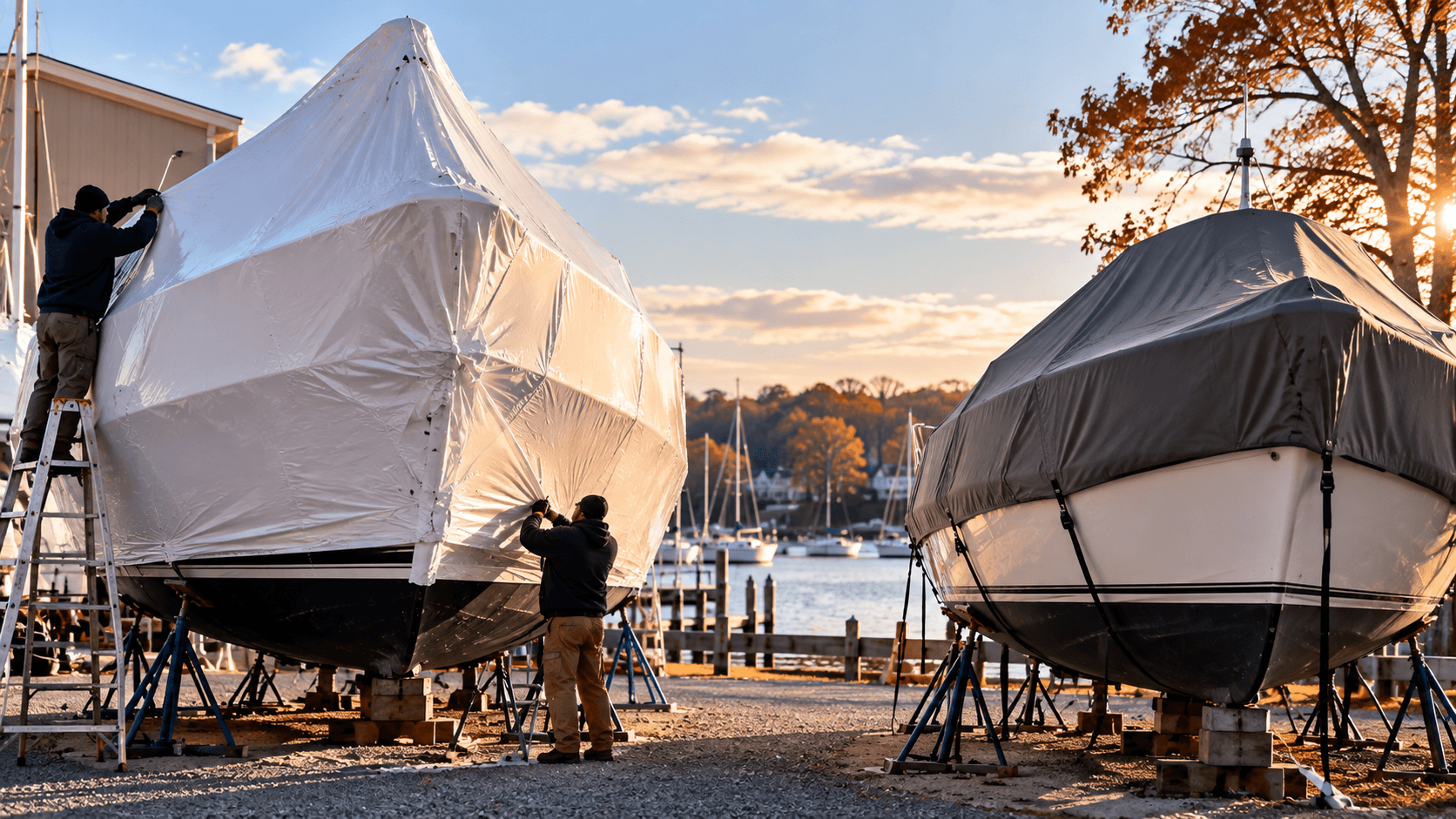
Shrink wrap is a heavy-gauge polyethylene film stretched over a wood or metal frame built around the boat’s shape, then heat-shrunk until it’s taut. Done correctly, it includes a ridge pole or support frame to shed water and snow, and vents to let the boat breathe so moisture doesn’t collect underneath. It’s a single-season product: once it comes off in spring, it’s cut away and recycled or disposed of.
A fitted boat cover is a reusable canvas or heavy-duty fabric cover, custom-fit or semi-custom to the boat’s deck and cabin layout, secured with straps, snaps, or a combination of both. A good cover goes on and comes off repeatedly across multiple seasons, and some owners use the same cover for storage and for in-season rain protection at the slip.
The difference that matters most isn’t the material. It’s what each one does to airflow, water shedding, and how forgiving each is of a less-than-perfect installation.
How Each Performs Against a Chesapeake Bay Winter
Bay winters aren’t the harshest in the country, but they’re not mild either. Freeze-thaw cycles, nor’easters off the water, and the Bay’s humidity all put specific demands on winter protection that a boat owner in a drier climate doesn’t have to think about.
Shrink wrap, applied correctly with proper venting, handles this combination well. It sheds snow and ice without sagging, it’s essentially waterproof, and the venting prevents the greenhouse effect that would otherwise cook mildew into your upholstery and headliner on the first sunny February afternoon. The tradeoff is that a cheap or rushed shrink wrap job, without adequate venting or a properly built frame, traps moisture instead of shedding it, and that’s worse than no cover at all.
A fitted cover performs well in milder, drier winters and for boats stored indoors or under a shed roof where wind-driven rain and ice accumulation aren’t a factor. On an exposed outdoor lot through a Bay winter, a cover alone struggles more than shrink wrap does with standing water in low spots, wind getting underneath the edges, and UV breakdown of the fabric itself over repeated seasons.
What You’re Actually Protecting
This is where the decision stops being about weatherproofing in the abstract and starts being about your specific boat’s value.
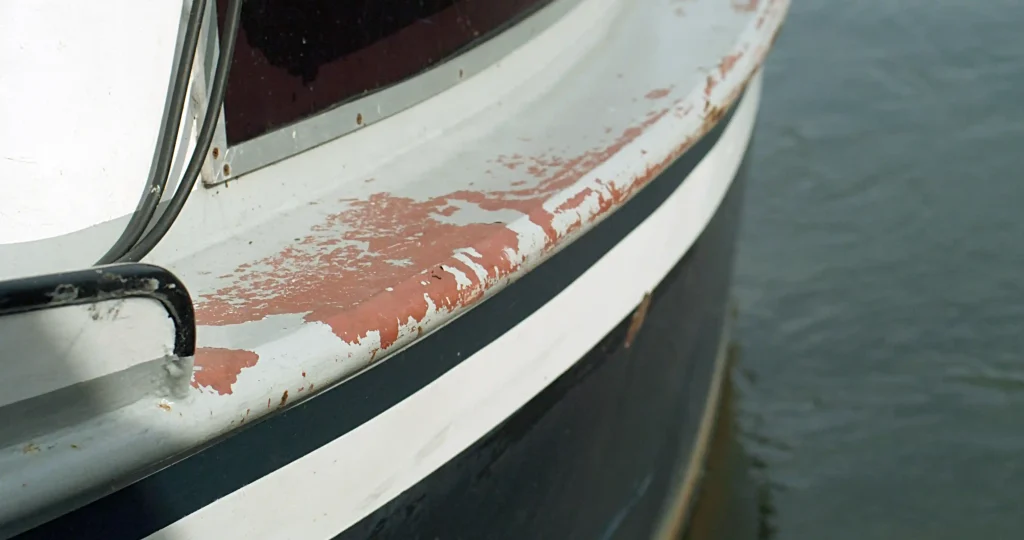
- Gelcoat and finish. UV exposure and standing moisture are the two things that age a hull’s finish fastest. Either option helps here, but shrink wrap’s tighter seal does more to block UV over a full winter.
- Canvas, upholstery, and headliner. Moisture trapped without airflow is what causes mildew and the musty smell that’s expensive to remove once it’s set in. Venting, not material, is what prevents this.
- Electronics and wiring. Repeated freeze-thaw cycling on exposed connections accelerates corrosion. Full enclosure matters more here than cover type.
- Resale and survey outcomes. A surveyor evaluating a boat for sale notices chalky, oxidized gelcoat and mildew-stained upholstery immediately, and both knock value off an asking price before a single mechanical system is even inspected.
Treating winter protection as a cost to minimize instead of an investment in the boat’s condition is one of the most common ways owners end up paying more later, whether that’s in a spring detailing bill, a compounding gelcoat problem, or a lower number on a survey three years down the line.
If you’re weighing shrink wrap against a cover for this season and want an honest read on which makes sense for your boat and your storage situation, Norton Yachts’ service team can walk through it with you. Call (804) 776-9211 or visit nortonyachts.com/boat-service-center.
When Shrink Wrap Is the Right Call
- The boat will sit outdoors, exposed to wind and precipitation, for the full winter
- You winterized the boat yourself or had it done, and want maximum protection for systems you won’t be checking on until spring
- The boat has a complex deck layout (towers, hardtops, flybridges) that’s difficult to fit a standard cover around well
- You want a clean, done-once solution and don’t mind the annual cost
When a Cover Makes More Sense
- The boat is stored indoors, under a carport, or in a covered rack
- You’ll want access to the boat periodically through the winter for maintenance or off-season work
- You already own a well-fitted cover and it’s holding up season over season
- The boat’s shape is straightforward enough for a cover to seal well without gaps
What a Proper Installation Should Include
Whichever option you choose, the quality of the installation matters more than the choice itself. A shrink wrap job worth paying for includes a support frame that prevents water pooling, ridge venting so moisture can escape, and strapping rather than screws driven into gelcoat or canvas to secure the frame. A cover worth using is sized correctly for your boat, not a generic “fits most” fit that leaves gaps at the bow or stern, and is checked periodically through the winter for wind damage or pooling water.
Frequently Asked Questions
Is shrink wrap or a boat cover better for a sailboat with standing rigging?
Shrink wrap generally works better around standing rigging because the frame can be built to accommodate the mast and shrouds without the repeated on/off friction a cover would put on the fabric around those points.
Can I reuse shrink wrap the following year?
No. Shrink wrap is a single-use product by design. Once it’s heat-shrunk and cut away in spring, it can’t be reapplied.
Does shrink wrap trap moisture and cause mold?
Only when it’s installed without proper venting. A correctly vented shrink wrap job allows airflow that prevents moisture buildup. This is the single biggest factor separating a good installation from a problem one.
How much does professional shrink wrapping typically cost compared to a cover?
Shrink wrap is an annual expense, while a quality cover is a one-time purchase amortized over several seasons. The right answer depends on your storage situation and how long you plan to keep the boat, which is a conversation to have before you commit either way.
Norton Yachts’ winter storage team handles both shrink wrapping and winterization for Chesapeake Bay boaters out of our Deltaville facility, with indoor and outdoor storage options depending on what your boat needs. Call (804) 776-9211 or visit nortonyachts.com/boat-service-center to talk through the right protection plan for your boat before winter sets in.