Winterizing a diesel engine means treating the fuel with a diesel-specific stabilizer and biocide, changing the oil and filter before storage instead of after, circulating non-toxic antifreeze through the raw water cooling system until it exits the exhaust, and inspecting the raw water impeller and zincs while the boat is already out of the water. It does not mean fogging the cylinders the way a gasoline outboard gets fogged. Skip any one of these steps and a $200 winterization job turns into a cracked block or a no-start engine in the spring.
Every diesel inboard on the Chesapeake needs this done before the first hard freeze, whether Norton does the work or you do it yourself at the dock. Here is the actual sequence, and why the order matters.
Key Takeaways
- Fuel is the biggest diesel-specific risk. Diesel fuel absorbs water and grows microbial contamination, often called diesel bug, over a winter layup far more than gasoline does.
- Change the oil and filter before storage, not after. Used oil holds acidic combustion byproducts that sit against internal surfaces all winter.
- Circulate antifreeze through the raw water side until it exits the exhaust. This is what actually prevents a cracked block, heat exchanger, or exhaust elbow.
- Diesels don’t get fogged. Fogging oil protects a gasoline engine’s cylinders through the spark plug holes. A diesel has no spark plugs, and fuel treatment plus coolant circulation do the protective work instead.
- Haul-out is the moment to inspect the raw water impeller and zincs, since the boat is already out and the pump is already accessible.
- A documented winterization record protects resale value as much as it protects the engine itself.
Why isn’t diesel winterization just a smaller version of gas engine winterization?
Gasoline and diesel engines fail for different reasons over a winter layup, so they get winterized differently. A gasoline engine’s biggest winter risk is corrosion inside the cylinders, which is why fogging oil gets sprayed through the spark plug holes to coat the cylinder walls before storage.
A diesel has no spark plugs and no equivalent access point, and corrosion inside the cylinders isn’t the main risk anyway. The main risk is the fuel itself. Diesel fuel holds more dissolved water than gasoline, and that water settles to the bottom of the tank over a winter layup, right where the fuel pickup sits. Microbes that cause diesel bug live at the boundary between that water and the fuel, and a Chesapeake winter, with its temperature swings between a cold snap and a warm spell, is exactly the kind of condensation cycle that feeds the problem. A boat that starts fine in October and won’t start in April usually has a fuel problem, not an ignition problem, because there was never an ignition system to fail in the first place.
The diesel engine winterization checklist, in order
| Step | What to actually do | Why it matters |
|---|---|---|
| Fuel system | Top off the tank to minimize air space, add a diesel-specific stabilizer with a biocide component, then run the engine 10 to 15 minutes to circulate the treated fuel through the lines and injectors | A full tank limits condensation, and the biocide is what actually stops diesel bug growth, which a generic stabilizer alone won’t do |
| Fuel filters | Change the primary (often a Racor-type separator) and secondary fuel filters after the treated fuel has circulated | Starting next season on clean filters instead of ones that sat full of untreated fuel all winter is what prevents a spring no-start |
| Oil and filter | Change while the engine is still warm from the fuel circulation run, before the boat goes on the hard | Used oil holds acid and moisture that corrodes bearings and cylinder walls if left sitting for months |
| Raw water cooling | Flush with fresh water to clear salt and silt, then circulate non-toxic propylene glycol antifreeze through the heat exchanger, exhaust elbow, and raw water pump until it runs out the exhaust | This is the step that actually prevents a hard freeze from cracking the block, the heat exchanger, or the exhaust elbow |
| Raw water pump impeller and zincs | Inspect both while the boat is already hauled; replace the impeller if it’s due or shows wear, and replace zincs that are more than half consumed | Corrosion doesn’t stop just because the boat is out of the water, and haul-out is the easiest moment all year to get at either part |
| Exhaust and intake | Close the raw water intake seacock and confirm no water is standing in the exhaust manifold or riser that the antifreeze didn’t reach | Standing water in the exhaust is exactly what a hard freeze cracks open |
| Battery | Disconnect or maintain with a trickle charger through the off-season | A dead or damaged battery in spring is a separate problem from anything above, but it’s the easiest one to prevent |
| Document it | Log the date, hours, and what was done | This record is what a surveyor or a buyer wants to see, and it’s what protects the boat’s value at resale |
Why the order matters
Run the fuel circulation before the oil change, not after, so the engine is already warm when the oil comes out. Warm oil drains faster and carries more of the contaminants with it than oil that’s gone cold. Do the raw water antifreeze circulation after the oil change is done, since the engine still needs to run briefly to pull antifreeze through the system, and there’s no reason to run it twice. Inspecting the impeller and zincs comes last because the boat needs to already be hauled for either to be worth doing in the same visit.
What actually happens if you skip a step
A tank of untreated diesel fuel over a Chesapeake winter is how a boat that ran fine in the fall won’t start, or runs rough and stalls, the first warm weekend in spring, usually from a fuel filter that’s already clogged with the byproducts of diesel bug. A raw water side that never got antifreeze is how a block, a heat exchanger, or an exhaust elbow cracks from a single hard freeze, and any one of those three is a repair that costs many times more than the winterization would have. Used oil left sitting all winter is a slower version of the same idea: it’s not one dramatic failure, it’s accelerated wear that shows up as a shorter engine life and a lower number on a survey report when it’s time to sell. None of this is theoretical. It’s the same handful of preventable issues every spring, and they’re all cheaper to prevent in the fall than to repair after the fact.
If you’d rather have this done for you
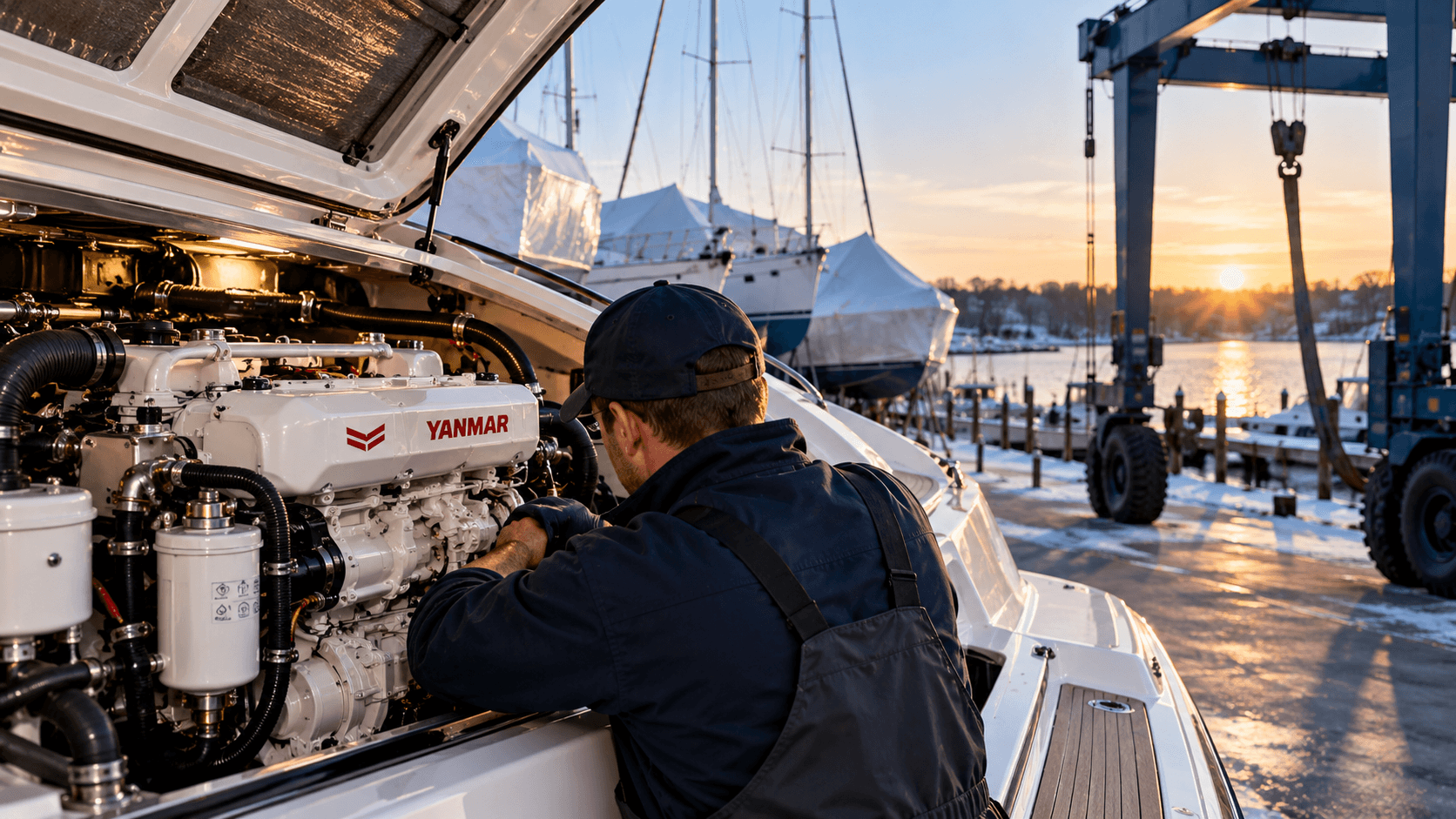
Norton is an Authorized Yanmar Marine Engine Dealer with certified Yanmar diesel technicians on-site in Deltaville, and winterization is one of the services built into a haul-out at Norton’s Marine Service Center. For owners who want the boat stored through the season as well, not just winterized and left, Norton’s winterization and storage program covers the boat from haul-out through spring commissioning, with the yard keeping an eye on hundreds of boats on the hard every winter.
Bottom line
Diesel winterization protects the engine through fuel treatment and coolant circulation, not fogging, and the fuel system is the step most owners underestimate. Done in the right order, before the first hard freeze, it’s a few hundred dollars of prevention against repairs that run into the thousands. Call Norton at (804) 776-9211 or visit our boat service center to schedule diesel winterization before haul-out.
FAQ
Do I need to fog my diesel engine’s cylinders like an outboard?
A question we hear from diesel owners every fall: No. Fogging protects a gasoline engine’s cylinders through the spark plug holes, and a diesel has no spark plugs. Diesel winterization protects the engine through fuel treatment and antifreeze circulation instead.
What’s the single most important step in diesel winterization?
Treating the fuel with a diesel-specific stabilizer and biocide. Fuel contamination, not the ignition system, is the main risk a diesel faces over a winter layup.
How do I know if my diesel fuel already has water or microbial growth in it?
Dark, sludgy residue in a fuel filter, a filter that clogs faster than usual, or an engine that runs rough shortly after starting are the common signs. A fuel sample from the bottom of the tank will show separation if water has settled out.
When should diesel winterization happen relative to haul-out?
At haul-out, in the same visit, since the impeller and zinc inspection only make sense once the boat is already out of the water.
Does Norton offer diesel winterization as a service?
Yes. It’s built into Norton’s haul-out process, done by certified Yanmar diesel technicians, and can be paired with winter storage for the full season.