Vibration that shows up or gets noticeably worse at a specific RPM is almost always the propeller or the running gear behind it: a bent or nicked blade, fishing line or debris wrapped around the shaft, a damaged strut, or a shaft that’s out of alignment with the engine.
Vibration that’s present across the entire RPM range, from idle to cruise, points more toward loose motor mounts or an out-of-balance driveline. Either pattern is worth inspecting before it wears into a bearing, seal, or transmission repair.
Key Takeaways
- RPM-specific vibration points to the prop or shaft; all-RPM vibration points to mounts or alignment.
- A bent shaft or damaged prop is the most common cause and usually traces back to a grounding or strike.
- Note when the vibration started and under what conditions — it’s the fastest way to narrow down the cause.
- Running on a suspected bent shaft accelerates damage to the seal, bearing, and transmission.
Step One: Where in the RPM Range Does It Show Up?
This single question does more diagnostic work than almost anything else you can check yourself.
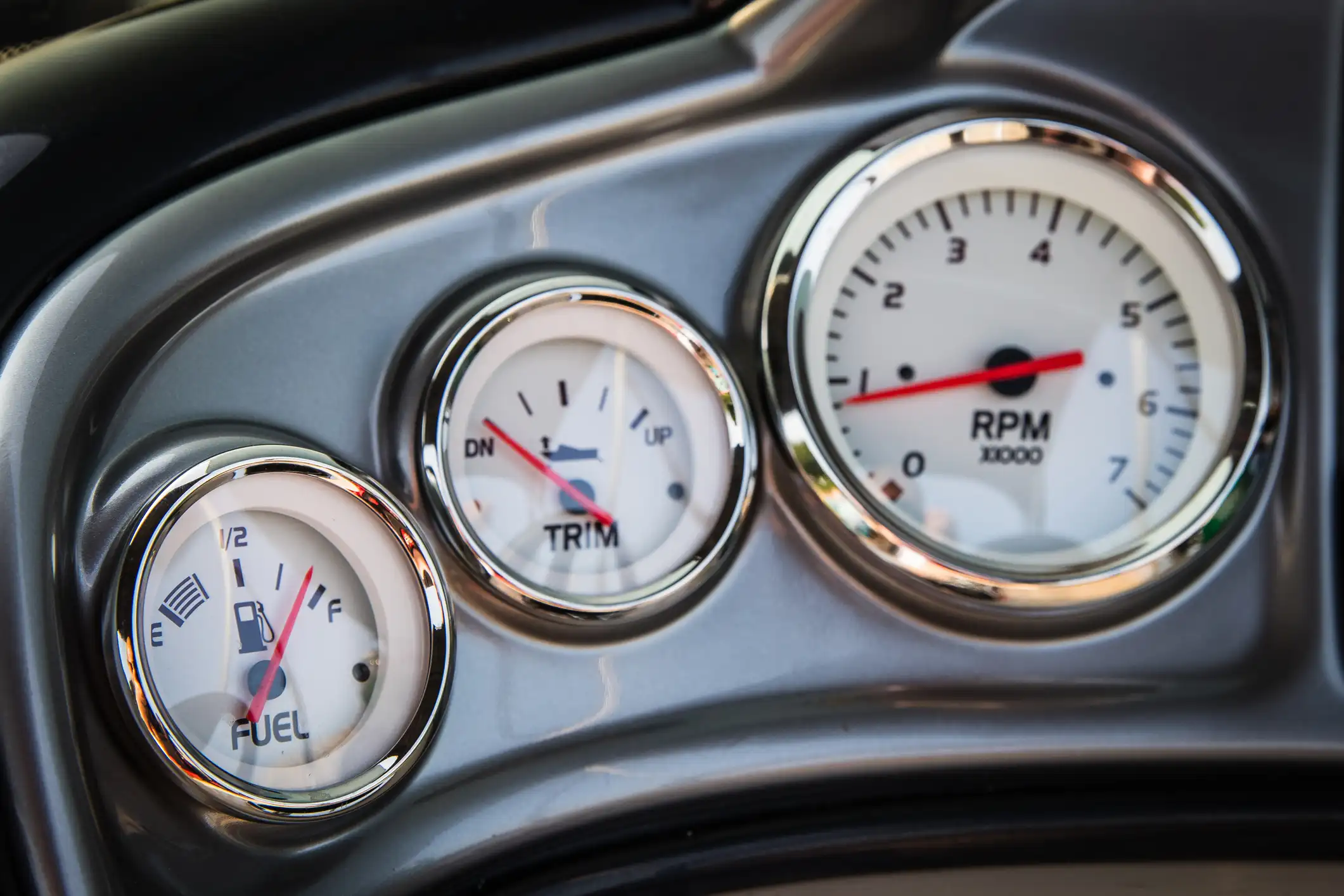
Vibration at one specific RPM (or a narrow band), smoothing out above or below it: This is a classic sign of a propeller or shaft issue — the vibration frequency matches the shaft’s rotational speed at that RPM. Think bent blade, fouled prop, or shaft imbalance.
Vibration present at all speeds, including idle: This points more toward engine mounts, alignment between the engine and shaft, or a driveline component that’s out of balance regardless of speed.
New vibration after hitting something in the water: Treat this as a running-gear inspection priority, even if the boat still handles fine. Prop strikes commonly bend blades or shafts without any other obvious symptom.
Common Causes, Ranked by Likelihood
1. Damaged or fouled propeller. A bent or chipped blade, or debris (rope, fishing line, a plastic bag) wrapped around the shaft just ahead of the prop, is the single most common cause of RPM-specific vibration. Even minor blade damage — invisible from the dock — can throw off balance enough to feel through the hull.
2. Bent shaft. Usually the result of a prop strike or grounding. A bent shaft creates vibration that scales with RPM and often gets progressively worse as speed increases.
3. Worn or damaged strut and cutlass bearing. The strut supports the shaft where it exits the hull; a worn cutlass bearing inside it lets the shaft wobble slightly, which shows up as vibration and, left unaddressed, accelerates wear on the shaft seal.
4. Misalignment between engine and shaft. This can develop over time as mounts settle or after any engine service that involved loosening the coupling. It typically produces vibration across a broader speed range than a prop issue.
5. Loose or worn engine mounts. More likely to cause vibration across the whole RPM range, including idle, and can sometimes be felt as a knocking or shifting sensation under quick throttle changes.
6. Fouled bottom or damaged hull surface near the running gear. Marine growth or hull damage disrupting water flow into the prop can create a rougher-than-normal feel at speed, though this is more often felt as a performance loss than true vibration.
What You Can Safely Check at the Dock
Before scheduling a haul-out, a few things are worth a quick look: inspect the prop for visible nicks or bent blades if you can see it from the dock or in shallow water, check for anything wrapped around the shaft, and note exactly when the vibration started (after a grounding, a haul-out, an engine service, or with no clear trigger). That context alone speeds up diagnosis significantly.
When It Needs to Come Out of the Water
Anything involving the prop, shaft, strut, or cutlass bearing needs a proper look with the boat hauled.
Don’t keep running a boat with a suspected bent shaft; over time it accelerates wear on the shaft seal, cutlass bearing, and transmission coupling, turning an inexpensive prop or shaft fix into a much larger repair.
Frequently Asked Questions
Can a fouled bottom cause vibration, or just a loss of speed?
Mostly a loss of speed and efficiency, but if growth is affecting water flow right at the prop, it can contribute to a rougher feel at speed. It’s rarely the sole cause of true vibration.
How much does it cost to fix a bent prop or shaft?
A prop can often be repaired or trued rather than replaced outright, depending on the damage. A bent shaft typically needs replacement. Both are far cheaper to address early than after they’ve damaged the bearing or seal.
Is it safe to keep boating with mild vibration?
For a short trip back to the dock, generally yes. Continuing to run it regularly without inspection risks turning a prop or shaft issue into a bearing, seal, or transmission repair.
Will an alignment fix vibration that only happens at high RPM?
Usually not by itself — RPM-specific vibration is more commonly a prop or shaft issue. Alignment problems tend to show up more evenly across the RPM range.