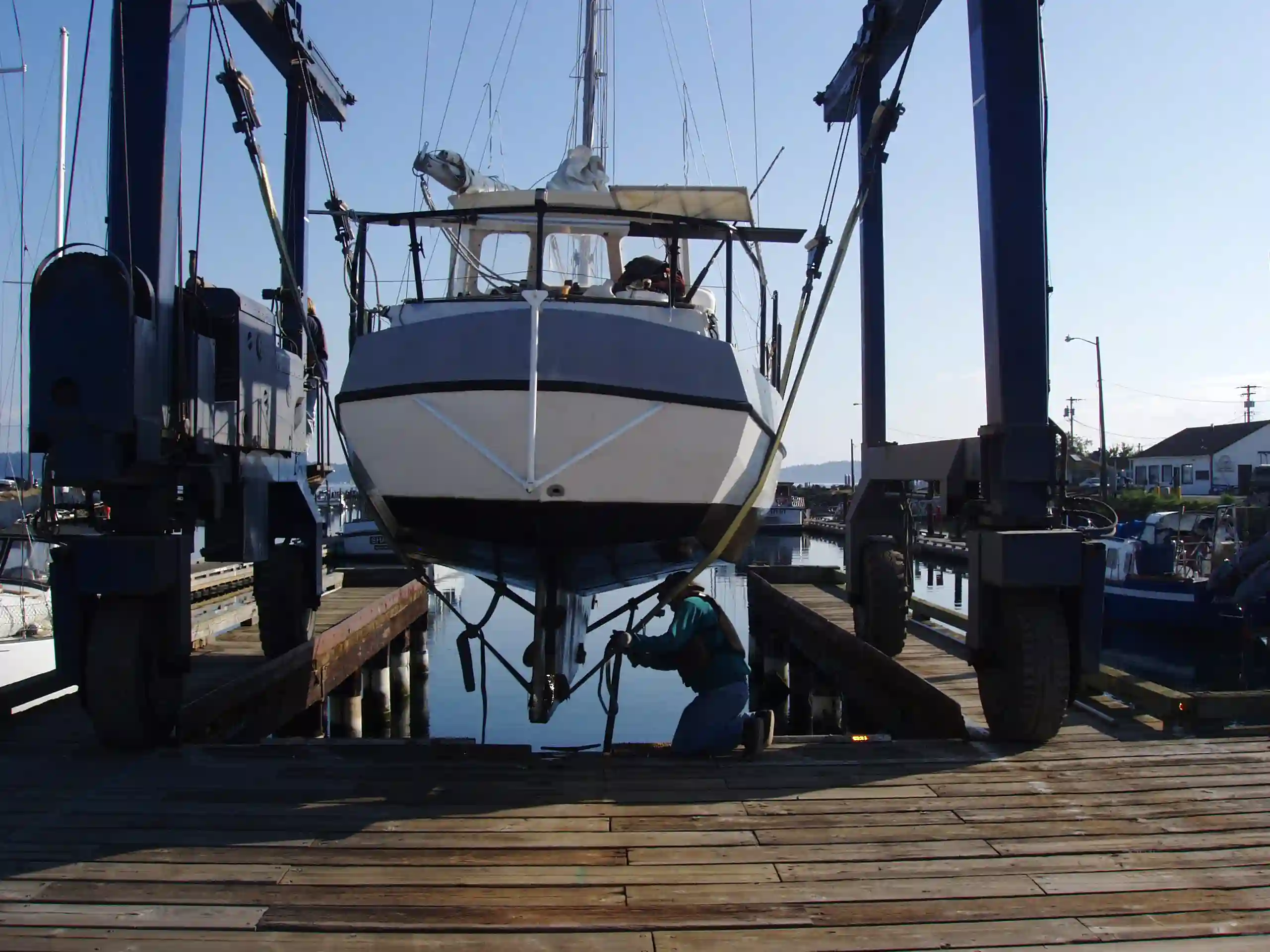
A haul-out is when a travel lift (or similar equipment) removes your boat from the water so the yard can pressure-wash the hull, inspect the running gear, and access anything below the waterline that can’t be worked on while floating.
The lift, wash, and initial inspection typically take under an hour. Any bottom paint, prop, or repair work found during that inspection gets scheduled separately, once you and the yard agree on what needs to happen.
Key Takeaways
- The lift, wash, and inspection portion of a haul-out usually takes under an hour.
- The inspection is where small problems (a nicked prop, worn zincs, early blistering) get caught before they’re expensive.
- Tell the crew about any symptoms you’ve noticed — vibration, leaks, sluggish performance — before the lift.
- A yard with paint, mechanical, and rigging in-house can move straight from inspection to repair without a boat leaving the property.
Step 1: Scheduling and Pre-Arrival
Haul-outs are typically scheduled in advance, especially during the spring and fall rush when every boat on the Bay seems to want in or out of the water on the same two weekends. When you book, the yard will confirm your boat’s dimensions and weight (for lift capacity), any specific work you already know you want done (bottom paint, prop inspection, zincs), and a target date.
Step 2: Arrival and the Lift
You’ll motor the boat into the travel lift slip, where the crew positions the lift slings under the hull at the correct points — this matters, since slings placed wrong can stress the hull or damage running gear. The lift raises the boat clear of the water in a few minutes.
Step 3: Pressure Wash
While the boat hangs in the slings, the crew pressure-washes the bottom to remove marine growth, old loose antifouling paint, and slime. This is also the moment that reveals what’s actually going on below the waterline — growth patterns, blister spots, and prop condition all become visible once the hull is clean.
Step 4: Initial Inspection
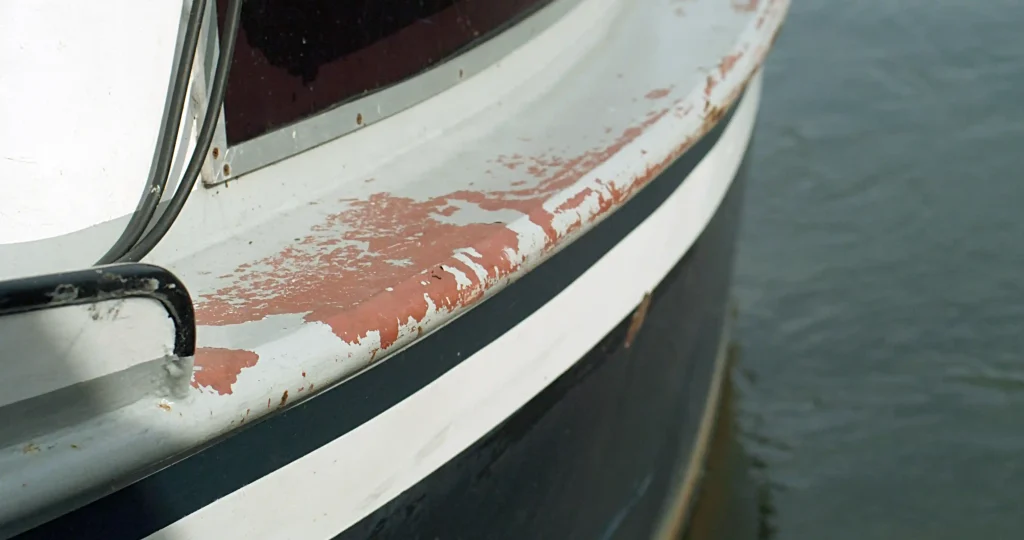
A good yard does a walk-around inspection right there in the slings: checking the prop for nicks or bends, looking at the cutlass bearing and strut for play, checking through-hull fittings and zincs for corrosion, and noting any blistering, gelcoat damage, or rudder issues. This is the point where you’ll hear about anything unexpected — and it’s exactly why regular haul-outs catch small problems before they become expensive ones.
Step 5: Blocking and Storage (or Immediate Work)
If you’re just doing a quick bottom job, the boat may stay in the slings or get set on blocks/stands nearby for the work to happen same-day. If it’s going into extended storage — see our winter storage program — it gets moved to a designated storage spot and properly blocked and supported for the season.
Step 6: The Work Itself
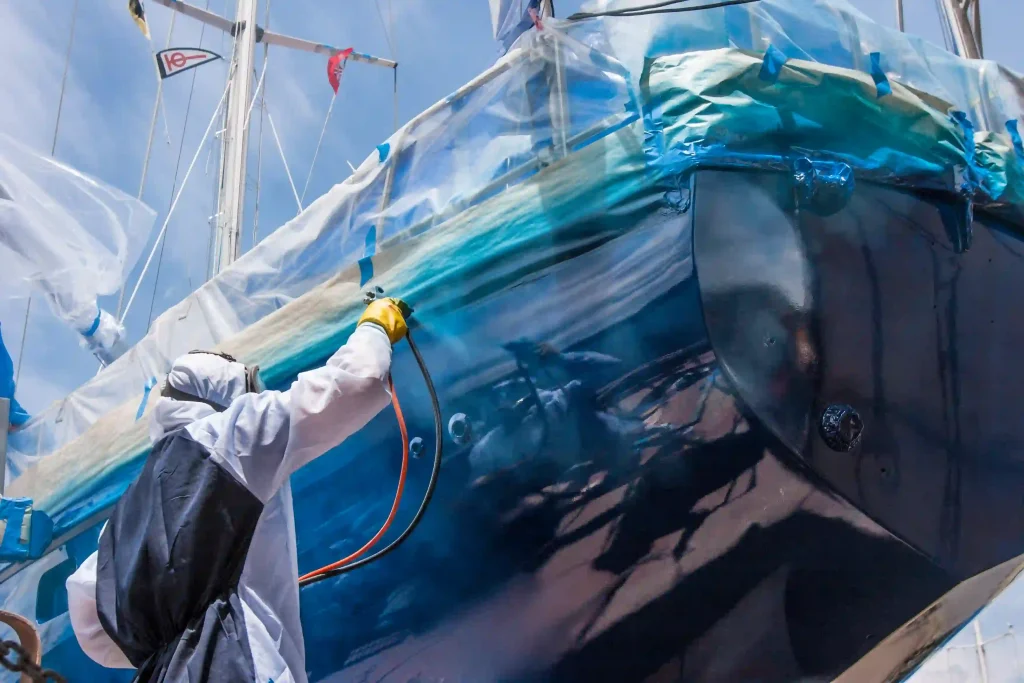
Depending on what the inspection turned up and what you scheduled, this stage might include bottom paint (ablative or hard, depending on your usage pattern), prop repair or replacement, zinc replacement, through-hull service, or gelcoat and Awlgrip work. Having paint, mechanical, and rigging under one roof — which isn’t the norm at most yards — means findings during the inspection can move straight into a work order without shipping the boat to a different shop for each trade.
Step 7: Relaunch
Once the work is done, the boat goes back into the slings and back into the water, followed by a quick check for leaks around any fittings that were serviced before you head back to your slip.
What to Prepare Before You Arrive
- Empty the boat of loose gear you don’t want handled during the lift and wash
- Note any specific issues you’ve noticed (vibration, a slow leak, a sluggish bilge pump) so the crew knows to check them specifically
- Confirm ahead of time whether you want bottom paint or other work done same-day, so materials are on hand
- Ask about lead times if you’re hauling during the spring or fall rush
What a Good Yard Checks For (Even If You Didn’t Ask)
Through-hull fittings and hose clamps, prop condition and shaft straightness, cutlass bearing play, rudder attachment and play, zinc wear, and any blistering or soft spots in the gelcoat. These are the items that are cheap to catch during a routine haul and expensive to discover mid-season.
Cost Factors
Haul-out pricing scales with boat size and lift requirements, and total cost depends heavily on what work gets done once the boat is out of the water — a simple wash-and-relaunch costs far less than a haul that includes bottom paint, prop service, and Awlgrip touch-up. Get a quote specific to your boat and scope rather than assuming a flat rate.
Frequently Asked Questions
How long does a haul-out take?
The lift, wash, and initial inspection typically take under an hour. Total time depends on whatever additional work gets scheduled once the boat is out of the water.
How often should I haul my boat out?
Most boats on the Bay come out at least once a year for bottom paint and inspection, with some owners doing a mid-season haul as well depending on growth rates and usage.
How much does hauling a boat cost?
It varies by boat size and scope of work. Ask for a quote that separates the lift/wash fee from any bottom paint, mechanical, or paint work you’re planning to have done while it’s out.
Do I need to be present for the haul-out?
Not for the lift and wash itself, but being there — or at least reachable — for the inspection means you can approve any work the crew finds on the spot rather than waiting on a callback.