“Decommissioning” sounds like a formality, something that happens after the real work of winterizing a boat is already done. In practice, it’s the opposite. Decommissioning is the real work. Winterization is one piece of it. A proper decommission touches every system on the boat, in a specific sequence, and the sequence matters almost as much as the individual tasks.
Here’s what actually happens when a boat comes out of the water at a full-service yard and goes through a complete decommissioning, system by system.
Engine and Drivetrain Systems
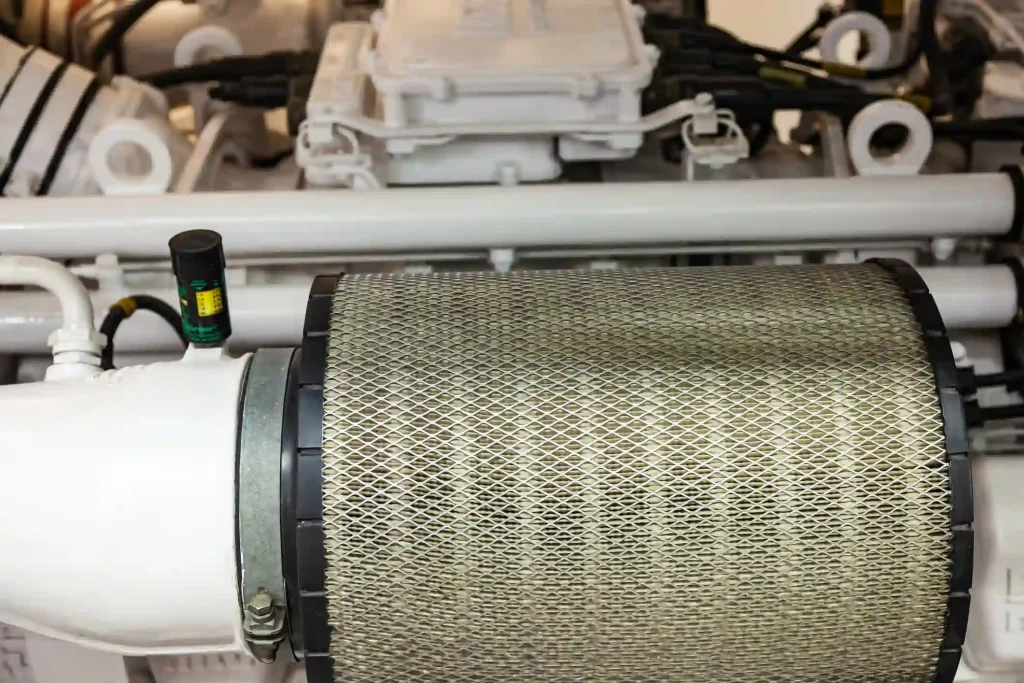
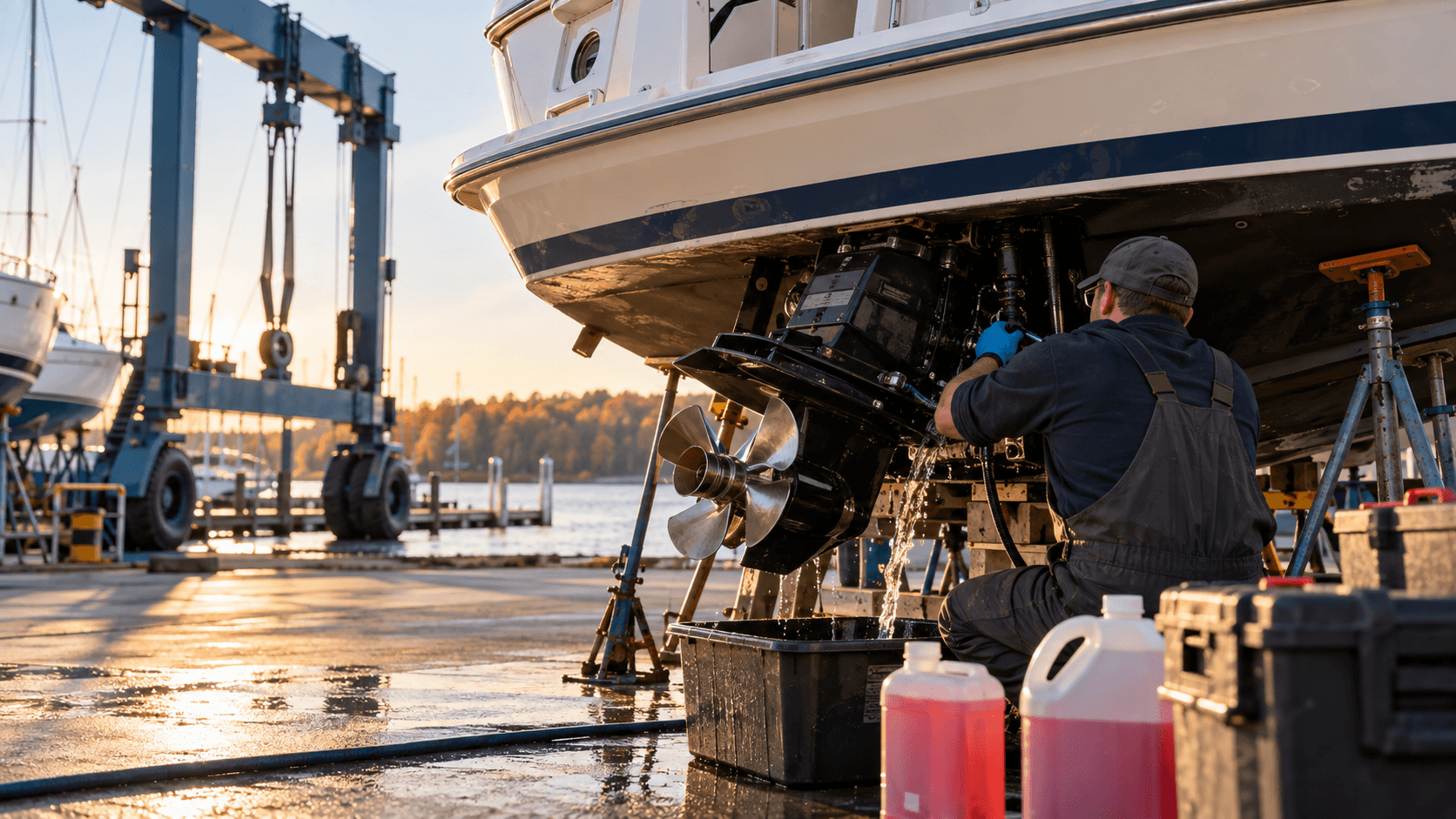
This is usually where decommissioning starts, because it’s the most time-sensitive piece. The raw water cooling system gets drained of Bay water and flushed with antifreeze to protect against freeze damage in exchangers, hoses, and the engine block itself. Depending on engine type, cylinders may be fogged with a protective oil to prevent corrosion over the winter layup. Oil and filters are typically changed before storage, not after, since used oil holds contaminants that can sit against internal components for months otherwise.
Fuel System Preparation
Fuel left untreated over a long winter layup degrades, and ethanol-blended fuels in particular can separate and pull water into the tank. A proper decommission includes fuel stabilizer treatment and, depending on the boat and how full the tank is kept, a filter change so the system starts clean in spring rather than pulling degraded fuel through a system that sat all winter.
Fresh Water and Plumbing Systems
Every line that can hold standing water (fresh water tanks, plumbing runs, water heater, heads, holding tank systems) needs to be drained and, in most cases, run through with non-toxic antifreeze. This is one of the most commonly rushed parts of a DIY winterization, since it’s tedious and involves systems that aren’t visible without opening access panels. A missed line here is exactly the kind of thing that turns into a cracked fitting discovered in April, usually at the worst possible moment.
Electrical and Battery Systems
Batteries left connected and unmonitored over a Bay winter either drain to the point of damage or, left on a poor charger, can overcharge. A proper decommission includes battery service (cleaning terminals, testing condition, and setting up a maintenance charge if the boat’s staying in winter storage with shore power) or removal if the storage situation doesn’t support monitoring.
Exterior, Canvas, and Cover
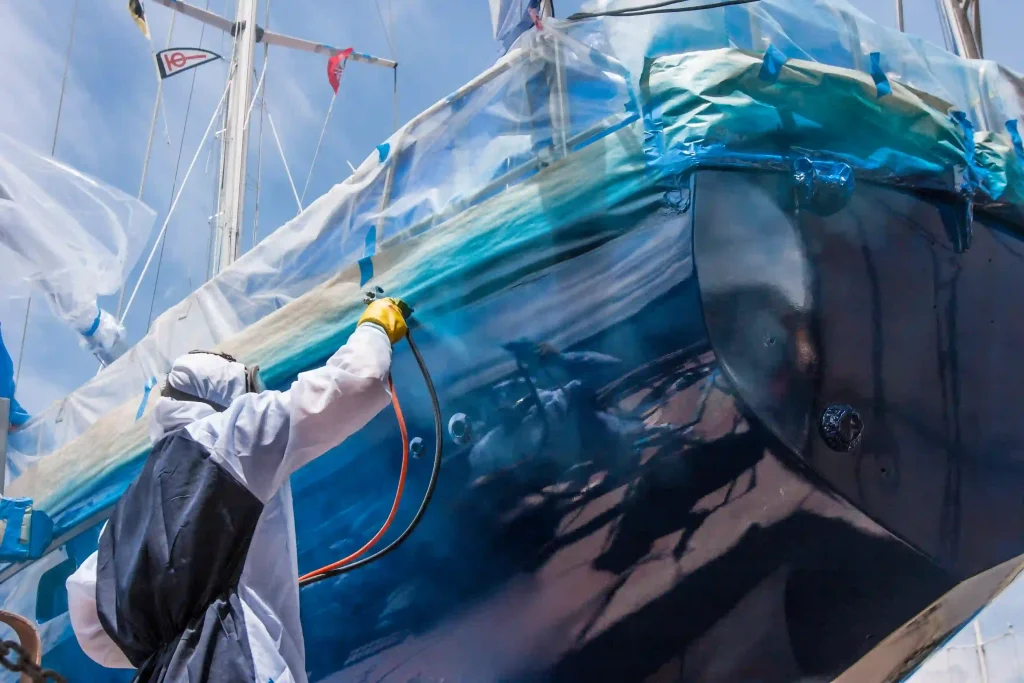
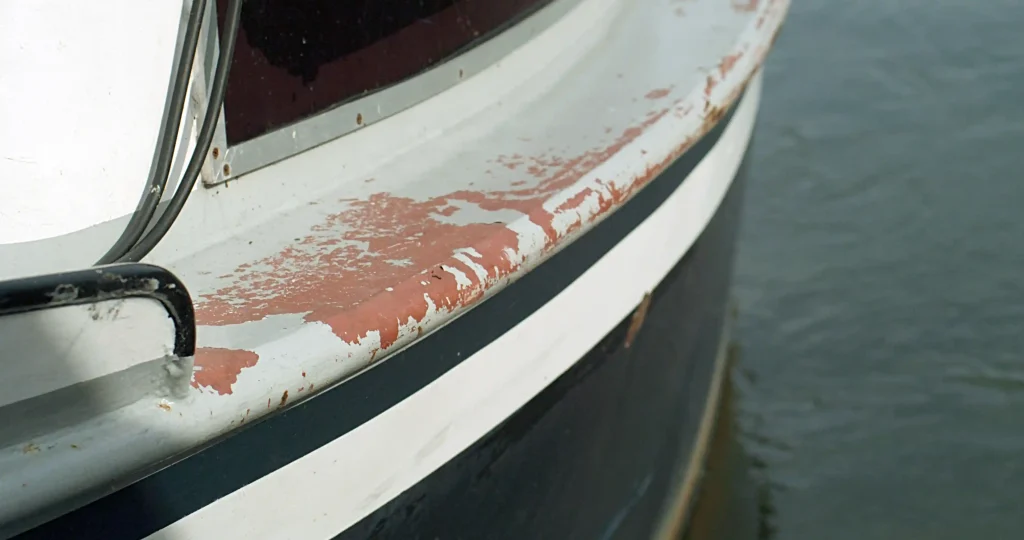
Once the mechanical and plumbing systems are addressed, the exterior gets cleaned before covering. This step gets skipped more often than it should. Covering a dirty hull or deck means salt residue, algae, and grime sit against the gelcoat and canvas all winter instead of being washed off first, which makes spring commissioning both harder and more expensive. From here, the boat is either shrink wrapped or covered, depending on the storage plan.
Why Sequencing Actually Matters
Each of these steps depends on the ones before it. Draining plumbing before the engine’s raw water system is flushed can leave you working in a boat that’s colder and wetter than necessary. Covering the boat before the mechanical work is finished means removing and replacing a cover to get back in. A yard that’s done this hundreds of times isn’t just checking boxes faster. It’s sequencing the work so nothing has to be undone and redone, which is where a lot of the real cost of a rushed or DIY decommission shows up.
This is also where the proactive-versus-reactive distinction that matters so much in boat ownership plays out most clearly. A boat decommissioned properly in the fall comes out of storage in spring needing a commissioning check, not a repair bill. A boat that skipped steps, or had them done out of order, often surfaces its problems in the first weeks back on the water, when they’re harder and more expensive to trace back to a winter shortcut.
If you want your boat decommissioned by a yard that handles this process on dozens of boats every fall, Norton Yachts’ service team in Deltaville, Virginia can walk you through exactly what your boat needs this season. Call (804) 776-9211 or visit nortonyachts.com/boat-service-center.
What to Ask Before You Book
Not every yard includes the same scope under “winterization” or “decommissioning,” and the difference matters. Before booking, ask specifically whether fuel stabilization is included, whether the fresh water system is fully drained and treated, whether batteries are serviced or just disconnected, and whether the hull is cleaned before covering. A clear answer to each of those questions tells you a lot about how thorough the process will actually be.
Sail and Power Have Different Decommissioning Priorities
A sailboat’s decommission adds a layer power boat owners don’t deal with: the rig. Standing rigging gets a visual once-over for broken strands or corrosion before winter, halyards are checked or removed to prevent chafe over a season of wind, and sail covers or removed sails are stored properly rather than left to collect moisture. A power boat, by contrast, puts more weight on the engine and drive system side, particularly if it’s running outdrives or sterndrives that need their own freeze protection separate from the main engine cooling system.
This is part of why decommissioning isn’t a single checklist applied identically to every boat on the lot. A yard that treats every vessel the same way, sail and power alike, is almost certainly missing something specific to your boat.
Frequently Asked Questions
Is decommissioning the same thing as winterization?
Winterization is typically used to describe the freeze-protection parts of the process (engine and plumbing antifreeze). Decommissioning is the broader term for the full system-by-system shutdown, which includes winterization as one component along with fuel, electrical, and exterior prep.
Can I decommission my own boat instead of having a yard do it?
Many owners handle parts of this themselves, particularly simpler boats. The risk is in the systems that aren’t visible without specialized access, like full plumbing drainage and fuel system prep, where a missed step often doesn’t show up until spring.
How long does a full decommissioning take?
This varies by boat size and system complexity, but most boats can be fully decommissioned in a single yard visit once hauled out, assuming no additional repair work is identified during the process.
What happens if a problem is found during decommissioning?
A thorough decommission often surfaces small issues (a worn hose, a weak battery, early corrosion) while the boat is already out of the water and accessible. Addressing those in the fall, while the yard is already working on the boat, is almost always less disruptive than discovering them during spring commissioning under time pressure to get back on the water.
Norton Yachts handles full decommissioning for sail and power boats throughout the Chesapeake Bay, out of our Deltaville boatyard. Call (804) 776-9211 or visit nortonyachts.com/boat-service-center to schedule before the fall rush fills the yard’s calendar.