The Sun Odyssey 455 had a lot of attention on it before it ever touched the water at City Dock. A private preview in Newport, a world premiere at the Paris Nautic Show the year before, and a walkthrough from our own team teasing specs ahead of the show. All of that is marketing, and it’s fair to be skeptical of marketing.
This isn’t that. The show is over, the boat has actually been walked, sat in, and sailed by people on our team, not just photographed from a dock. This review is the honest version: what the 455 actually does well, where it makes sense for a Chesapeake Bay owner, and where it doesn’t.
If you’d rather skip straight to seeing the boat yourself or talking through whether it fits your specific plans on the Bay, that’s an easy conversation to set up directly with our team: contact us or call (804) 776-9211. Nothing below is written to rush you there faster than an honest look at the boat deserves. It’s just worth knowing the option’s there before you read on.
Where the 455 Fits in Jeanneau’s Lineup
The Sun Odyssey 455 is the second model in Jeanneau’s ninth-generation Sun Odyssey line, following the 415 and replacing the outgoing 490 as the range’s flagship cruiser. That succession matters: Jeanneau isn’t positioning this as a bigger 410 or a smaller 490. It’s a ground-up redesign, hull by Marc Lombard, interior by Jean-Marc Piaton, built specifically to close the gap between Jeanneau’s mid-size walkaround cruisers and its larger blue-water boats.
For a Bay owner shopping in the 44 to 46-foot range, that positioning is the first thing worth understanding. The 455 isn’t trying to be the easiest boat in Jeanneau’s range to step up into. It’s trying to be the boat you buy once you already know what you want from a 45-footer and don’t want to compromise on it.
On Deck: What You Notice First
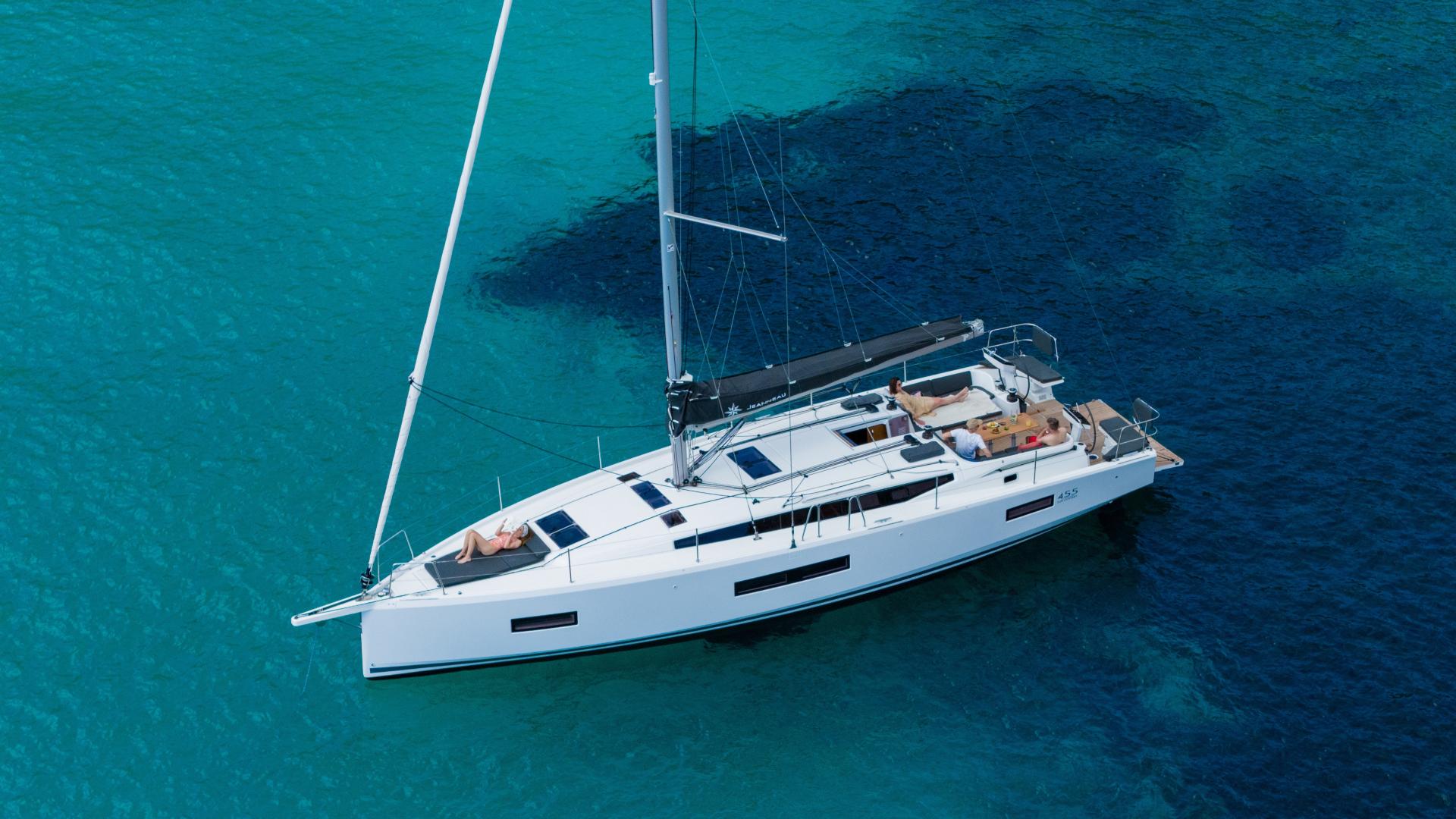
Jeanneau’s signature walkaround sidedecks, no steps from bow to stern, are the first thing anyone who’s sailed an older-generation Sun Odyssey will notice. On a boat this size, that design choice matters more than it sounds like it should. Moving forward to handle ground tackle or reef a sail doesn’t mean picking your way around a raised coachroof, which is exactly the kind of detail that either makes a boat easy to singlehand or doesn’t.
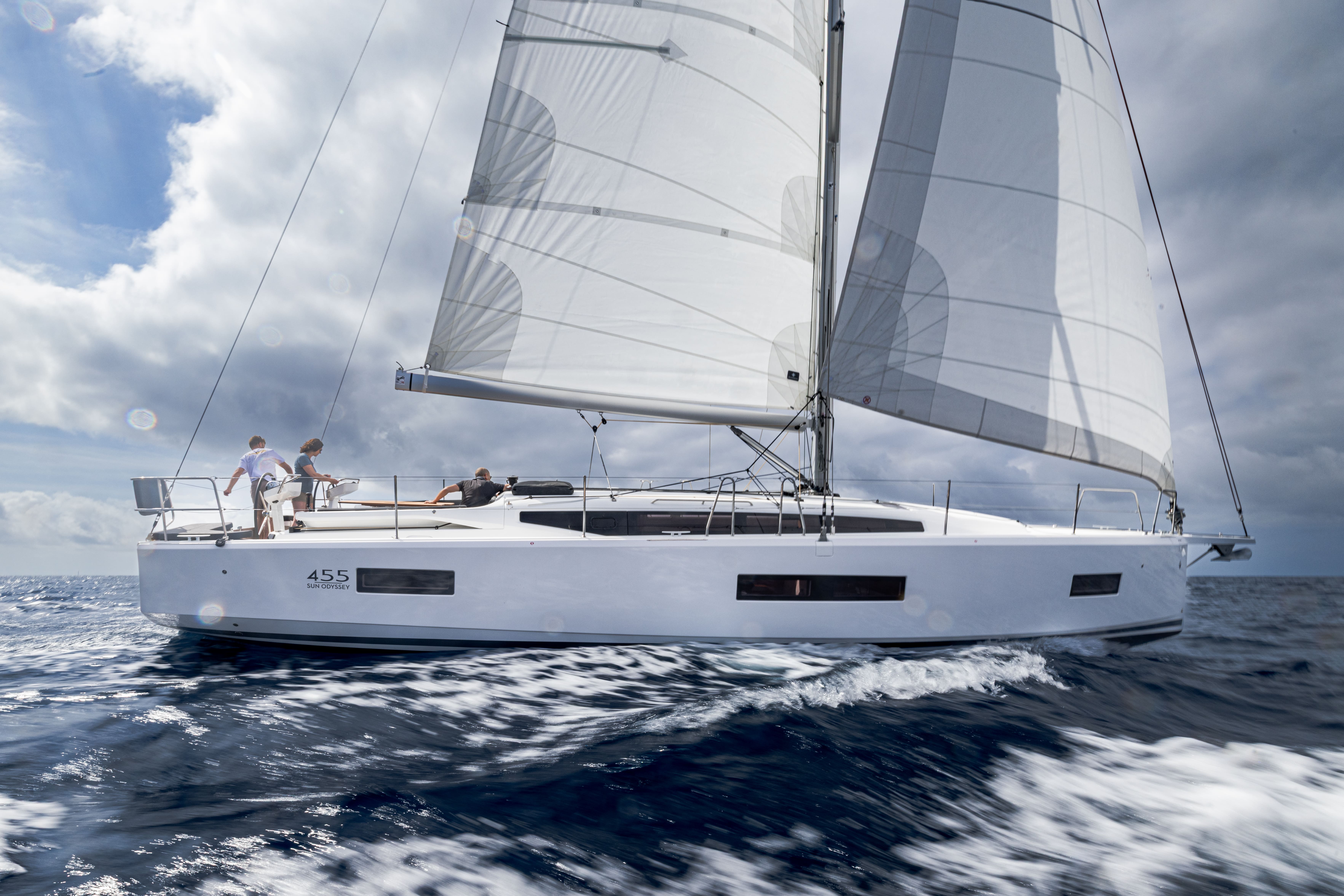
The twin-helm, twin-table cockpit carries that same logic through. Two wheels mean whoever’s steering can actually see the sails and the water ahead from either side, rather than craning around a single pedestal mounted off-center, and the twin tables give crew somewhere to brace drinks, charts, or a winch handle without crowding the person at the helm.
Bigger topside windows than earlier Sun Odyssey generations bring real light below without needing to go up on deck to feel like you’re not shut in a cave, which matters more on a boat you might actually live aboard for a week or two at a time than it does on a boat you sail for an afternoon and tie up.
At 46’10” overall with a 52-gallon fuel tank and 100 gallons of water capacity, the 455 is built with enough range for a real week-plus cruise down the Bay or out to the Eastern Shore without constantly watching gauges, which is a meaningfully different conversation than a boat sized for long weekends.
Below Deck: Four Layouts, and Which One Actually Makes Sense on the Bay
Jeanneau builds the 455 in four configurations, and which one makes sense depends entirely on how you actually plan to use the boat.
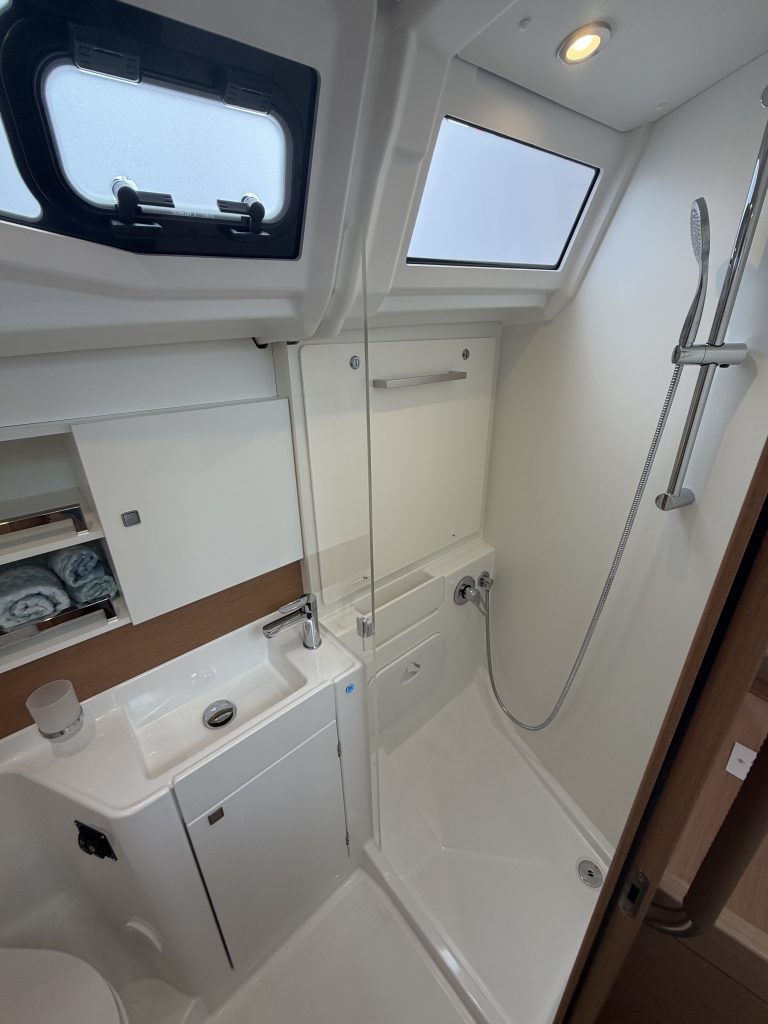
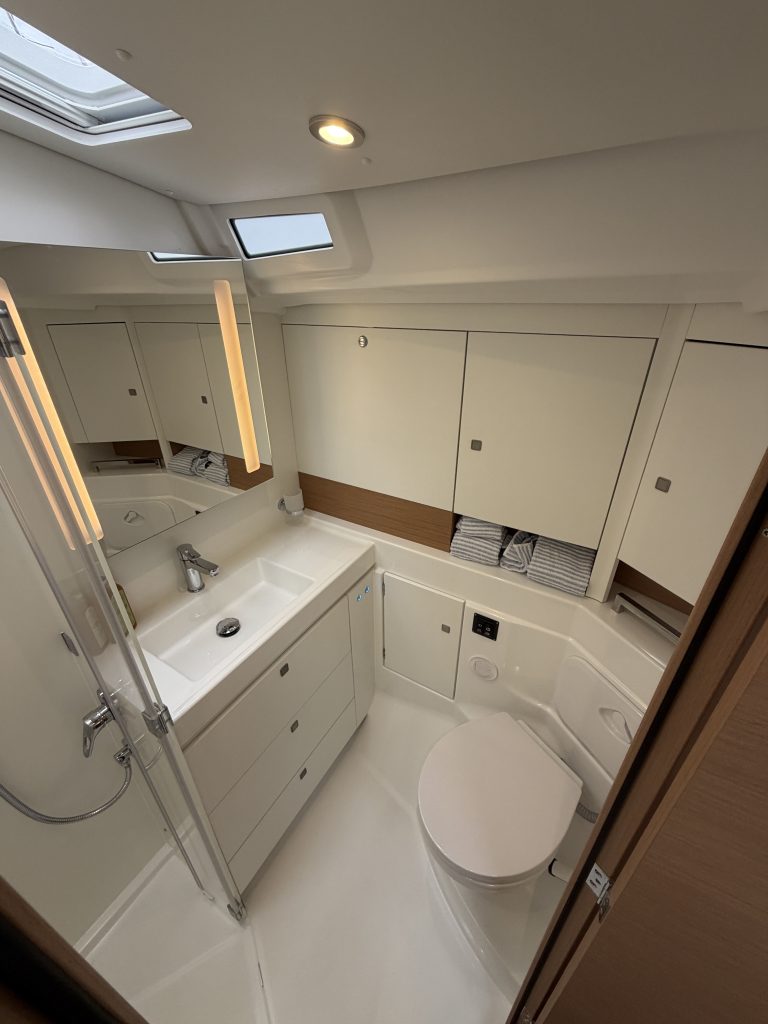
The owner’s version is the one most Bay cruising couples will want to look at first: a three-cabin, two-head layout with a genuinely spacious forward owner’s cabin, separate from the two aft cabins, instead of competing for the same square footage everyone else on board is using. This is also, typically, the configuration dealers show at events like Annapolis, since it’s the version most buyers in this segment are actually comparing against competitors.
A three-cabin variant with a technical room swaps one of the aft cabins for dedicated workshop and storage space, instead of a third sleeping cabin. For owners planning longer cruises rather than weekend trips with guests, that tradeoff (losing a berth for real storage and system access) is worth considering seriously rather than defaulting to the layout with the most beds.
A four-cabin, two-head version is built for the charter and crewed-guest market, more berths spread across less private space per cabin. If Norton ever brings in a 455 for charter-style use on the Bay, this is the layout that configuration would use. For a private owner, it’s rarely the right call.
A rare five-cabin layout exists on paper, with a small Pullman-berth room replacing the aft head entirely. It’s a real option in Jeanneau’s catalog, essentially never ordered in practice, and worth knowing about mostly so you’re not surprised if a broker mentions it.
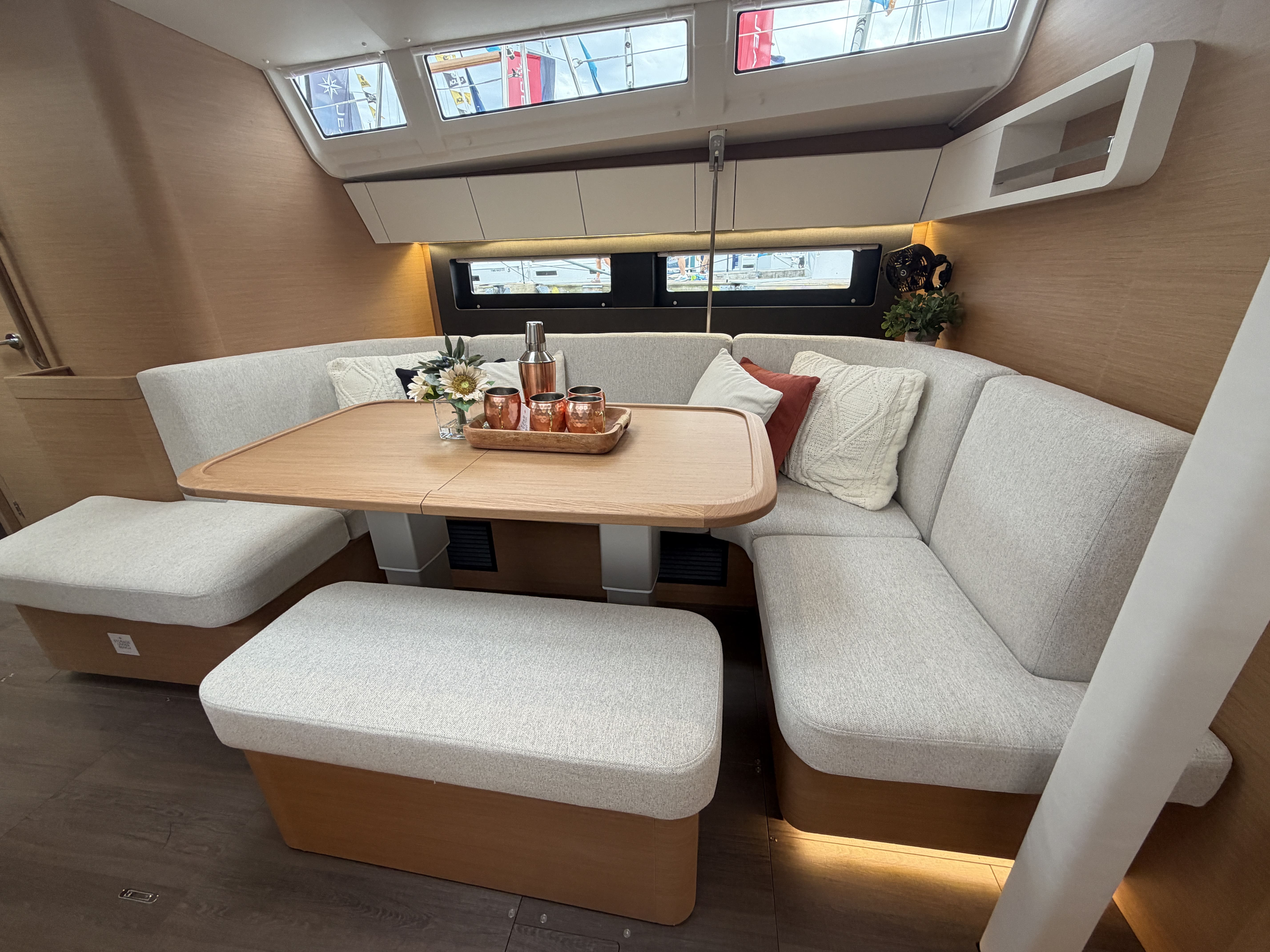
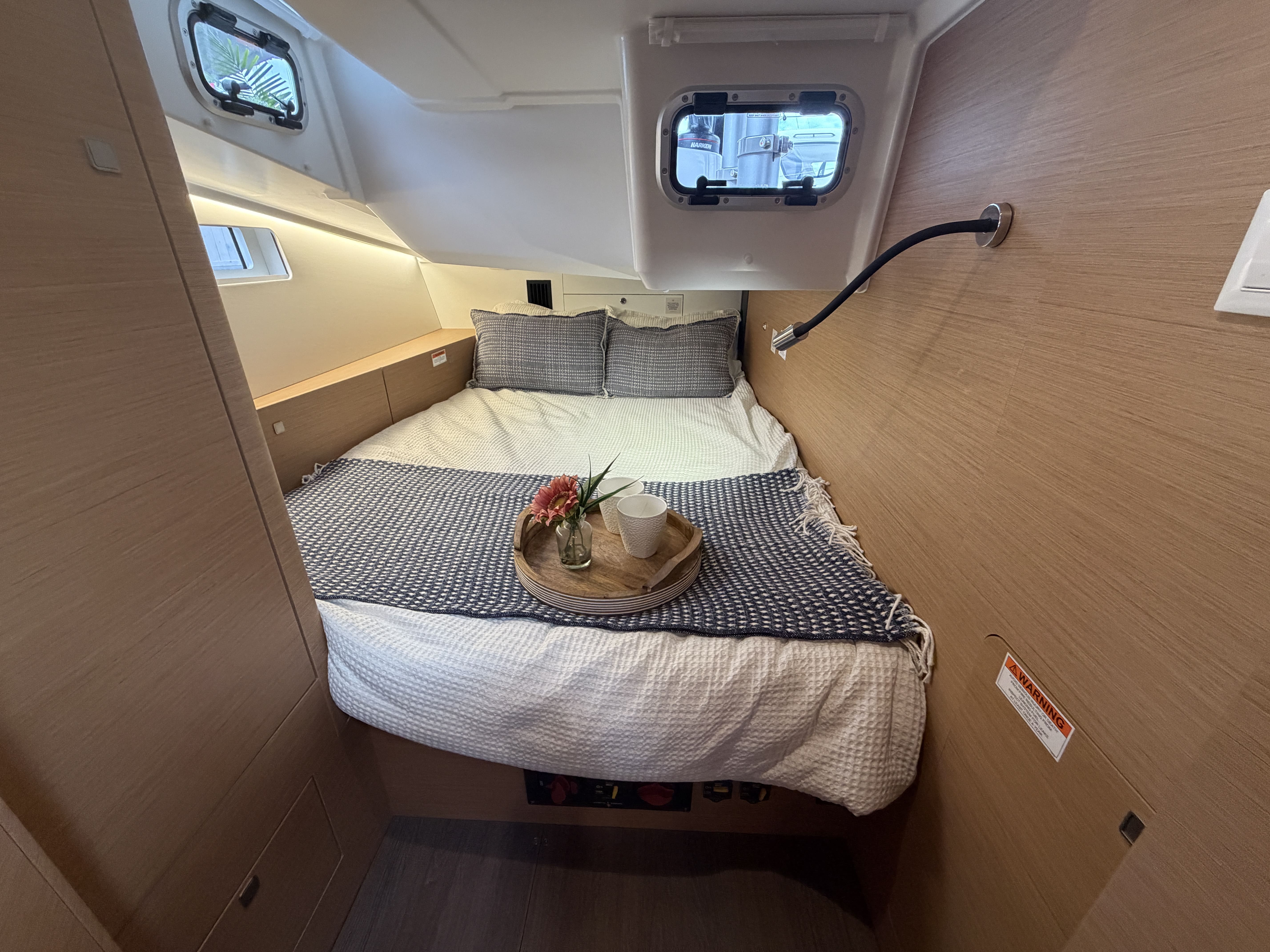
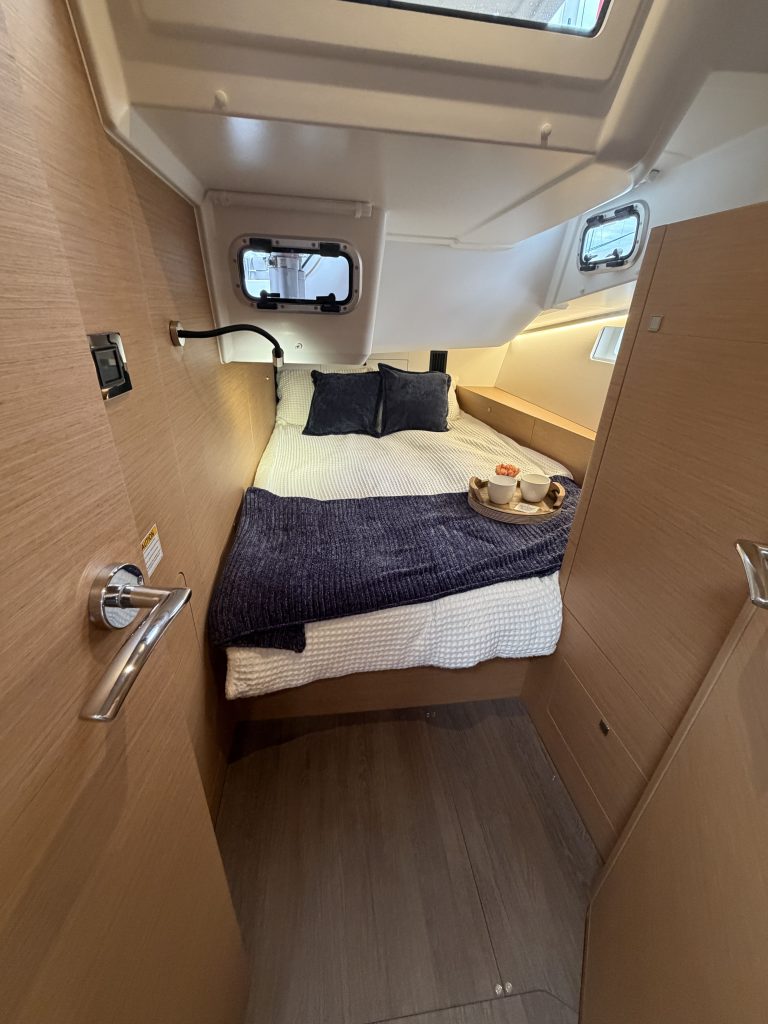
If you’re not sure which layout actually fits how you use a boat, that’s a better question to bring to an appointment than to try to answer from a brochure. It’s also exactly the kind of decision that’s cheap to get right up front and expensive to get wrong after the boat’s already rigged the way you didn’t quite want it.
If the layout conversation, or anything else about the 455, has you thinking it might be the right next boat, the fastest way to get real answers (including pricing, which Norton doesn’t publish for new models) is to set up time with our team directly. Talk to us or call (804) 776-9211.
The Galley and Chart Table: Small Details That Add Up
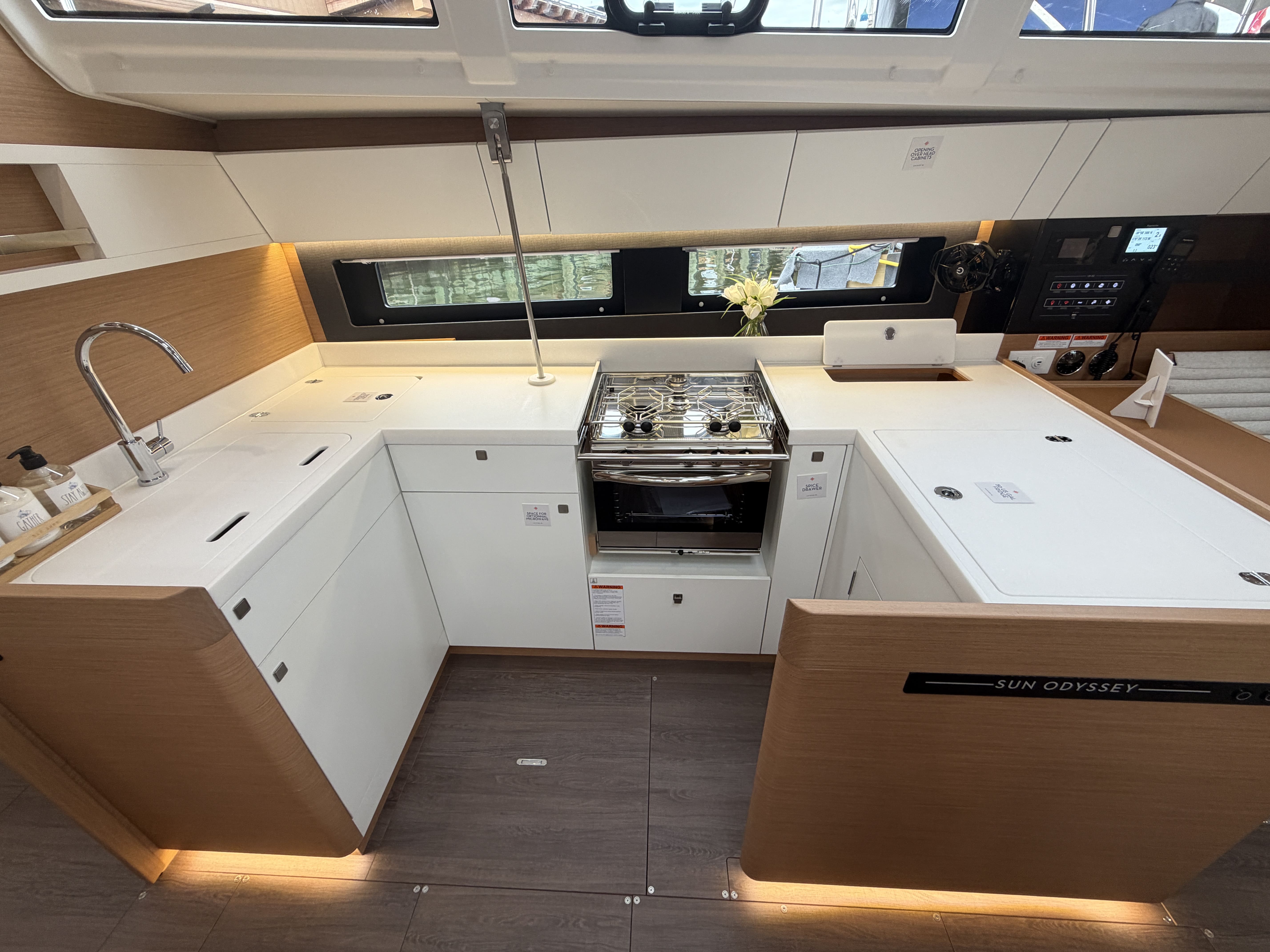
The U-shaped galley sits to starboard, against the hull, which is a deliberate choice for anyone who’s actually tried to cook underway on a boat with an open, linear galley. The enclosed shape gives the cook something to brace against when the boat’s moving, rather than a counter that looks great at the dock and becomes a hazard twenty miles out.
Just forward of the galley, the chart table gets its own dedicated seat rather than sharing space with the saloon table, with a storage cupboard behind it sized for the kind of gear (manuals, spares, charts, the actual working tools of running a boat) that tends to end up crammed into whatever locker’s left over on older designs. It’s a small detail, but it’s the kind of detail that tells you Jeanneau designed this boat around how people actually use a cruiser, not just how it photographs at a show.
None of this is the kind of thing that shows up in a spec sheet or sells a boat at first glance across a show floor. It’s the kind of thing you notice after the third or fourth time you’ve reached for a chart in rough air, or tried to keep a pot from sliding across a counter on a close reach, and realized the boat you’re on either solved that problem already or left you to solve it yourself every time.
On the Water
Reports from the boat’s European sea trials point to twin rudders that hold their bite well as the boat heels, and a hull that generates apparent wind, and with it speed, even in lighter air than you’d expect from a 45-foot cruiser. That combination (easy to drive, forgiving in light air) is exactly what matters for Bay sailing, where a boat that needs 15 knots of true wind to come alive spends a lot of its season sitting still.
That combination matters more on the Chesapeake Bay than it would almost anywhere else. The Bay’s summer pattern (light morning air, an afternoon thermal breeze that can die out again by evening) punishes a hull that needs a hard breeze to feel alive, and rewards one that doesn’t.
What Bay Sailors Should Actually Weigh Before Deciding
Here’s the part of this review that’s easy to leave out of a glossy write-up and that we think matters more than anything above.
The 455’s standard draft is 7’9”. That’s a reasonable number for a boat this size, and it’s not unusual for a boat in this class. It is, however, deeper than a lot of the gunkholing anchorages and skinny Chesapeake creeks that a lot of Bay cruisers actually use through the season. If your current boat draws 5 to 6 feet and you’ve built your cruising plans around the specific creeks and anchorages that depth gets you into, the 455 is going to close some of those off, not open new ones.
That’s not a reason to rule the boat out. It’s a reason to actually map your typical cruising grounds against a 7’9” draft before falling for the rest of the package, rather than finding out the hard way on a falling tide in a favorite creek. If you’re coming from a shallower-draft boat and the Bay’s skinny-water anchorages are a real part of why you sail where you sail, that’s worth a direct conversation with our team before you commit, not an assumption either way.
Who the 455 Actually Fits
This boat makes the most sense for an owner who’s already logged real time on the Bay, knows the kind of sailing they actually do, and is looking to upgrade into more boat without giving up the walkaround ease and light-air manners that made whatever they’re sailing now enjoyable. It’s less of a fit as a first boat, not because it’s hard to handle, but because its real strength (a layout and rig suited to serious, repeated use) is wasted on someone still figuring out what they want from ownership.
It’s also worth a look for an owner currently in a Sun Odyssey 410 or 440 who’s outgrown the boat’s space without wanting to jump all the way to a 50-footer. The 455 sits in exactly that gap, and the walkaround deck and cockpit layout will feel immediately familiar if you’re coming from an earlier-generation Sun Odyssey.
On the other side of that, an owner who’s still deciding whether they even want to own a boat this size, or who’s comparing a 45-footer against a much smaller daysailer because they’re genuinely unsure how often they’ll actually use it, is better served starting that conversation with an honest capability match than with this particular model. That’s not a knock on the boat. It’s the same advice we’d give about any boat in this size range: the right first question is what you actually do on the water, not which new model just debuted.
Frequently Asked Questions
What does the Sun Odyssey 455 replace in Jeanneau’s lineup?
It replaces the Sun Odyssey 490 as Jeanneau’s flagship cruiser in this size range, and is the second model (after the 415) in Jeanneau’s ninth-generation Sun Odyssey line.
How many interior layouts are available for the Sun Odyssey 455?
Four: a three-cabin, two-head owner’s version; a three-cabin version with a technical room in place of one aft cabin; a four-cabin, two-head charter version; and a rarely-ordered five-cabin version with a Pullman-berth room.
Is the Sun Odyssey 455’s draft a concern for Chesapeake Bay sailing?
At 7’9” standard draft, it’s deeper than many of the shallow-draft Bay cruisers used for gunkholing in skinny creeks and anchorages. It’s not a problem for Bay sailing generally, but owners who prioritize access to shallow anchorages should map their typical cruising grounds against that draft before deciding.
Where can I see pricing for the Sun Odyssey 455?
Norton Yachts doesn’t publish pricing for new models online. The most direct way to get real numbers for your configuration is to set up an appointment with our team.
Did Norton Yachts have the Sun Odyssey 455 at the Annapolis Sailboat Show?
Yes. The 455 made its full U.S. debut at the 2026 Annapolis Sailboat Show at the Jeanneau booth, where our team had hands-on access to the boat throughout the show.
If the Sun Odyssey 455 looks like it could be the right next boat for how you actually sail the Bay, the fastest way to get real answers, including pricing and layout availability, is to talk to our team directly. Visit nortonyachts.com/contactus or call (804) 776-9211.