The temperature drops, you go to start the outboard for one last fall trip, and it just won’t catch. Or it fires briefly and dies. Or it cranks and cranks with nothing happening at all. Cold mornings on the Chesapeake Bay expose weaknesses in an outboard’s starting system the same way they do on diesel inboards, just through a different set of components.
If your outboard is giving you trouble this week and you need it running, Norton Yachts’ mechanical service team can diagnose and fix most cold-start issues quickly. Call (804) 776-9211 or visit nortonyachts.com/boat-service-center.
Here’s what’s most likely behind it.
1. A Weak or Undercharged Battery
Why it causes cold-start failure: Cold temperatures reduce a battery’s effective capacity right when starting demands are highest. A battery that cranked the engine fine in September can struggle in November without anything else having changed about it.
How to diagnose: Slow or labored cranking, a clicking sound instead of the starter engaging, or accessory lights dimming noticeably when you turn the key.
DIY testing: Most auto parts stores will load test a battery for free. A reading below 12.6V at rest, or significant voltage drop during cranking, points to a battery that needs replacing before it strands you on the water.
Chesapeake Bay note: Batteries stored on a boat through fluctuating fall temperatures age faster than ones kept in a climate-controlled garage. Annual testing before cold weather arrives catches this before it becomes a no-start situation.
2. Stale or Ethanol-Contaminated Fuel
Why it causes cold-start failure: Ethanol-blended fuel absorbs moisture over time, and in cold weather that moisture can separate from the gasoline (phase separation), leaving water at the bottom of the tank and a weaker fuel mixture reaching the engine.
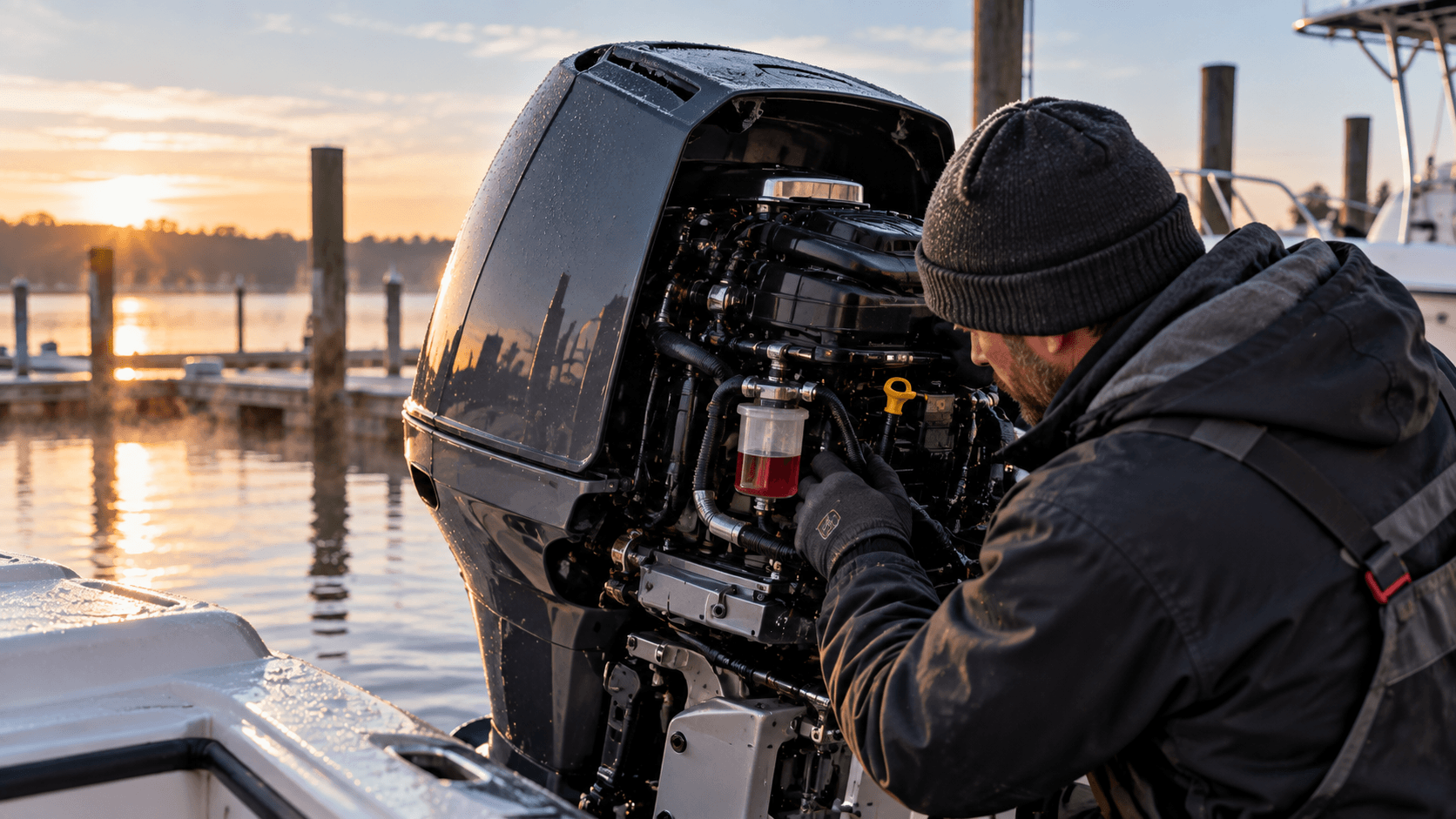
How to diagnose: Hard starting that gets worse the longer fuel has been sitting, rough running once started, or fuel that looks cloudy or has visible separation in a clear fuel filter bowl.
DIY fix: Fresh fuel and a fuel stabilizer added before any extended period of sitting prevents most of this. If the fuel’s already suspect, draining and replacing it is usually faster and cheaper than troubleshooting around bad gas.
Professional fix: If contamination has already reached the carburetor or injectors, a full fuel system cleaning is the more reliable path back to a reliable start.
3. Choke or Primer Bulb Issues (Carbureted Models)
Why it causes cold-start failure: Carbureted outboards rely on the choke to richen the fuel mixture for a cold start. A sticking choke linkage, or a primer bulb that’s lost its prime, means the engine isn’t getting the fuel-rich mixture it needs to fire when cold.
How to diagnose: Engine turns over but doesn’t catch, or catches briefly on choke and dies as soon as it’s pushed off.
DIY check: Inspect the primer bulb for firmness (a soft, collapsed bulb has lost prime) and make sure the choke linkage moves freely without binding.
4. Worn or Fouled Spark Plugs
Why it causes cold-start failure: Spark plugs that are worn, fouled with carbon, or gapped incorrectly produce a weaker spark, which is more of a problem in cold weather when the fuel mixture is already harder to ignite.
How to diagnose: Rough idle once started, occasional misfiring, or plugs that look black and sooty rather than light tan or gray when inspected.
DIY fix: Spark plugs are a straightforward, low-cost replacement item and one of the first things worth checking before assuming a bigger problem.
5. A Flooded Cylinder
Why it causes cold-start failure: Repeated starting attempts with the choke engaged, especially if the engine fired briefly and stalled, can flood the cylinder with more fuel than it can burn, which then prevents further starts until it clears.
How to diagnose: A strong gasoline smell near the engine, and starting attempts that get progressively weaker rather than better.
DIY fix: Let the engine sit for several minutes with the choke off before trying again, which gives excess fuel time to clear.
6. A Failing Primer Bulb Check Valve
Why it causes cold-start failure: The one-way check valve in the primer bulb line is supposed to hold fuel pressure between uses. When it fails, the system loses prime overnight, meaning every cold start requires re-priming the fuel line before the engine will catch.
How to diagnose: A primer bulb that feels soft again after sitting overnight, even though it was firm the last time the engine ran.
Professional fix: This is a small, inexpensive part, but it requires fuel line work to replace, which is better left to a technician who’ll do it right the first time.
7. Low Compression on an Older Two-Stroke
Why it causes cold-start failure: As two-stroke outboards age, piston rings and cylinder walls wear, reducing compression. There’s usually enough compression for a warm start, but a cold engine needs every bit of compression it can get, which is why this often shows up first as a cold-weather problem before it affects warm starts too.
How to diagnose: Gradually worsening cold starts over multiple seasons, high total hours on the engine, and normal warm-weather starting.
Professional testing required: A compression test is the only reliable way to confirm this, and it determines whether you’re looking at minor service or a bigger decision about the engine’s remaining service life.
When to Call for Service
If you’ve checked the battery and fuel and the outboard still won’t cooperate, or you’re not confident diagnosing it yourself, have a technician look at it before the next cold snap, not during it. A quick fall diagnostic appointment is a lot less stressful than troubleshooting a dead outboard at the dock with family waiting to head out.
Frequently Asked Questions
Should I use fuel stabilizer in my outboard every time it sits for more than a few weeks?
Yes, particularly with ethanol-blended fuel, which degrades faster than non-ethanol gas. Stabilizer added before any extended sitting period, cold weather or not, prevents most fuel-related starting problems.
Why does my outboard start fine when warm but not when cold?
This pattern usually points to a component that’s borderline, rather than fully failed, such as a weak battery, a worn spark plug, or low compression. Warm conditions mask the weakness; cold conditions expose it.
Is it safe to keep trying to start a flooded outboard?
Repeated attempts without letting the engine clear can make flooding worse. Give it several minutes with the choke off before trying again, and avoid more than a few consecutive attempts.
How often should outboard spark plugs be replaced?
This varies by engine and usage, but annual inspection before cold weather, with replacement at the first sign of fouling or wear, is a reasonable baseline for most recreational use on the Bay.
Norton Yachts’ factory-certified technicians service Yamaha, Mercury, and other major outboard brands at our Deltaville location. If cold weather has your outboard giving you trouble, call (804) 776-9211 or visit our boat service center.