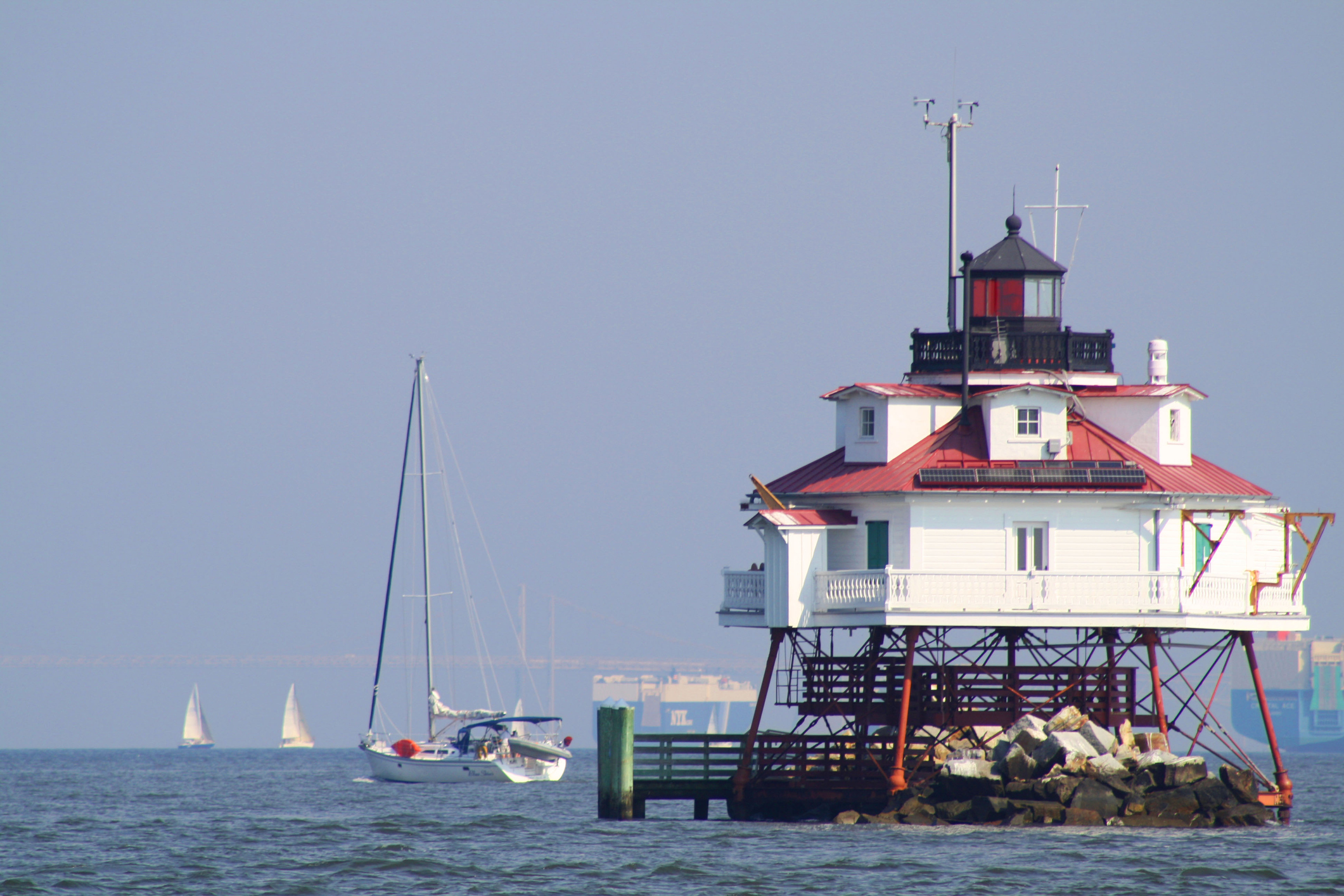
The Chesapeake Bay offers roughly 200 miles of protected cruising ground from Havre de Grace, Maryland down to Norfolk, Virginia, with hundreds of tidal rivers and creeks branching off it — making it one of the most beginner-friendly big-water cruising areas on the East Coast. May through October is the core season, with September and early October widely considered the best combination of settled weather, warm water, and thinner summer crowds.
Key Takeaways
- The Bay’s protected geography makes it one of the most approachable big-water cruising areas on the East Coast.
- September and early October offer the best combination of weather, water temperature, and lighter crowds.
- Deltaville sits centrally for reaching both the northern and southern Bay.
- Tidal creeks and crab pot fields require attention that open-ocean cruising doesn’t.
Why the Bay Is Different From Open-Ocean Cruising
The Chesapeake’s defining feature is protection: it’s a large body of water, but it’s sheltered from ocean swell, which means conditions are far more forgiving for newer boaters than coastal or offshore cruising. That doesn’t mean it’s without challenges — wind can build quickly across open stretches, tidal creeks require attention to depth and current, and the Bay’s many rivers each have their own personality. But compared to open-water cruising, it’s a genuinely approachable place to build experience.
Best Time to Cruise, Month by Month
May-June: Water is warming, crowds are lighter than summer, and this is prime season for the Bay’s blue crab and rockfish runs if fishing is part of your trip.
July-August: Peak season — warmest water, most crowded anchorages and marinas, and the highest chance of afternoon thunderstorms. Plan around weather windows.
September-early October: Widely considered the sweet spot — settled weather, still-warm water, and dramatically thinner crowds than summer.
Late October-November: Cooling fast, but still cruisable for well-prepared boaters chasing the last weekends of the season before winter layup.
Notable Destinations and Anchorages Near Deltaville
Deltaville sits at the mouth of the Rappahannock and Piankatank Rivers — a genuinely central jumping-off point for Bay cruising. Popular nearby destinations include Jackson Creek, a well-protected anchorage right at Deltaville itself; the Piankatank River, known for quiet, less-crowded gunkholing; Mobjack Bay, a favorite for its network of protected rivers just south; Urbanna Creek on the Rappahannock, home to a walkable small-town waterfront; and further north, the Solomons Island area at the mouth of the Patuxent. Heading south toward the Bay’s mouth, Norfolk and Hampton Roads offer a completely different, more urban cruising destination for a longer trip.
Route Planning Basics
Watch the crab pot fields. Especially in the warmer months, working watermen’s pot floats can be dense in certain channels and shallows — slow down and keep a sharp eye rather than running at speed through unfamiliar water.
Respect the tide in the creeks. Many of the Bay’s best anchorages sit up shallow tidal creeks. Time your entry and exit around tide height, and don’t assume chart depths account for recent shoaling.
Plan for wind, not just distance. The Bay’s open stretches can build a surprisingly uncomfortable chop with wind against tide. Check forecasts and have a bail-out anchorage in mind on longer crossings.
Family and Beginner-Friendly Options
If you’re newer to Bay cruising, or want to test the waters before committing to boat ownership, a pontoon rental is a low-pressure way to explore nearby creeks and rivers for an afternoon. For those looking to build real cruising skills, ASA-certified sailing lessons take you from absolute beginner through the skills needed for extended Bay cruising, with hands-on time on the water starting in your very first course.
Safety Essentials Before Any Bay Trip
Check the marine weather forecast (not just a general app) before departing, carry proper safety gear and a working VHF radio, know your draft relative to the shallow water common in Bay creeks, and always let someone know your general route and expected return time.
Frequently Asked Questions
What’s the best time of year to cruise the Chesapeake Bay?
May through October is the core season, with September and early October generally considered the best combination of settled weather, warm water, and lighter crowds.
Do I need a big boat to explore the Bay’s creeks and rivers?
No — many of the Bay’s best gunkholing destinations are shallow tidal creeks that are just as accessible, if not more so, to smaller boats and pontoons as to larger cruisers.
Is the Chesapeake Bay good for beginner boaters?
Yes. Its protection from ocean swell makes it significantly more forgiving than coastal or offshore cruising, though wind, tide, and crab pot fields still require real attention.
What’s a good first cruising destination from Deltaville?
Jackson Creek right at Deltaville is a well-protected, easy first anchorage, with the Piankatank River and Mobjack Bay both reasonable next steps for a slightly longer trip.