Norton Yachts Financing Boat Financing in Virginia If financing is part of your next boat purchase, you can start the credit application online through Norton Yachts. Apply securely through AppOne before you visit the dealership or while you are still comparing boats. Start Your Credit Application Questions? Call (804) 776-9211 The application opens securely on AppOne, Norton Yachts’ third-party financing platform. Financing is subject to lender approval. Apply Online Start the credit application from your phone, tablet, or computer. Marine Financing Financing options are based on the applicant, vessel, and lender guidelines. Serving Boaters Since 1948 Norton Yachts has helped generations of Chesapeake Bay boaters buy and enjoy their boats. Understanding Marine Loans Boat financing works differently than an auto loan Vessel age, purchase price, condition, loan amount, and lender guidelines can all affect the final structure. Knowing the basics before you apply makes the process easier to navigate. Loan term Marine loans can use longer repayment terms than many auto loans. The available term depends on the loan amount, vessel, and lender. Down payment Requirements vary by lender and transaction and may change based on credit profile, loan size, vessel age, and other underwriting factors. Vessel condition Because the boat serves as collateral, lenders may consider its age, condition, value, and survey results. Documentation The closing may involve state titling or U.S. Coast Guard documentation in addition to lender paperwork. Before You Apply Have the basics ready AppOne asks for personal, residence, employment, and vessel information. Having these details nearby will make the application easier to complete. Personal information. Legal name, date of birth, Social Security number, driver’s license information, phone number, and email. Residence information. Current address, housing status, monthly housing payment, and previous residence details when required. Employment and income. Employer, occupation, time employed, work contact information, and gross income. The boat. If you know the vessel, have the year, make, model, purchase details, and available identification information ready. Trade-in information. If you are trading a boat or other unit, the application provides a place to enter those details. Co-applicant information. Joint applicants will need similar personal, residence, and employment information. The Financing Process What happens after you apply The online credit application starts the process. From there, the next steps depend on the lender, the boat, and the structure of your purchase. 01 Complete the application Enter the requested applicant, residence, employment, and purchase information through AppOne. 02 Your application is reviewed The application is evaluated according to participating lender requirements and the details of the transaction. 03 Review the next steps A Norton Yachts representative can help you understand what is needed next for the boat you are purchasing. 04 Complete the purchase Once financing and purchase requirements are satisfied, the remaining documentation and closing steps can be coordinated. Start Your Credit Application Ready When You Are Start the financing process online The Norton Yachts credit application is handled through AppOne. Open the secure application in a new tab, or call the Norton Yachts team first if you have questions. Apply for Financing Call (804) 776-9211 Boat Financing FAQs Common financing questions Can I finance a brokerage or pre-owned boat? Pre-owned and brokerage boats can often be financed through marine lenders. Eligibility, term, and down-payment requirements depend on the lender and the age, condition, and value of the vessel. Contact Norton Yachts if you are considering an older boat and want to discuss the transaction before applying. How long can a marine loan run? Available terms vary by lender, loan amount, and vessel. Marine financing can use longer terms than many auto loans, which may reduce the monthly payment while increasing the total interest paid over the life of the loan. How much will I need for a down payment? There is no single down-payment requirement that applies to every boat loan. The lender will consider the applicant, loan amount, vessel, and overall transaction before setting the required amount. Do I need to choose a boat before I apply? The AppOne application allows you to indicate whether you already know which unit you want to purchase. If you are still shopping, call Norton Yachts before applying and the sales team can help you determine the best next step. Can a boat qualify as a second home for tax purposes? Certain vessels may meet the federal definition of a home, but that does not mean a deduction automatically applies. Tax treatment depends on the vessel and your individual tax situation. Speak with a qualified tax advisor before making a purchase decision based on a potential deduction. Does Norton Yachts make the loan? No. Norton Yachts is a boat dealer, not a lender. The online credit application is submitted through AppOne for financing consideration, and any credit approval and final loan terms are determined by the participating lender. Browse Norton Yachts Inventory Find the boat that fits your plans Explore Norton Yachts’ selection of new and pre-owned sailboats and powerboats, or review current models available through the dealership. All Boats for Sale New Sailboats New Powerboats Pre-Owned Sailboats Pre-Owned Powerboats Boat Models Norton Yachts is not a lender and does not make credit decisions. Applications are submitted through a third-party financing platform for consideration by participating lenders. Financing is subject to approval, and terms, rates, down-payment requirements, and vessel eligibility vary. Nothing on this page is an offer of credit, legal advice, or tax advice. Review Norton Yachts’ Privacy Policy and consult your tax or legal advisor as appropriate.

Buying a Boat Sight-Unseen: What Out-of-State Buyers Should Know

Yes, buying a boat sight-unseen is common and manageable when handled correctly — the key steps are a detailed video walkthrough or virtual tour, a professional marine survey conducted on your behalf, and a clear delivery or transport plan agreed on before you commit to the purchase. Buyers from outside the immediate Chesapeake Bay area regularly purchase boats without visiting in person first — here’s how that process actually works. Key Takeaways How do you inspect a boat you can’t see in person? Through a combination of a detailed video walkthrough (often done live via video call so you can direct what’s shown) and an independent marine survey conducted by a professional surveyor on your behalf — the survey is your actual quality-assurance step, not the video call, which is mainly for getting a feel for the boat. What does the remote-buying process typically look like? Step What happens Initial research Review listing details, photos, and specs remotely Video walkthrough Live or recorded video tour, often with the ability to request specific angles/close-ups Marine survey Independent surveyor inspects the boat and provides a written report Sea trial (if possible) Ideally conducted by the surveyor or a trusted local contact if you can’t attend Delivery/transport Boat delivered by water, trailered, or shipped, depending on distance and size Do you still need a marine survey if you can’t attend? Yes — if anything, it matters more, since the survey is effectively standing in for your own eyes and hands-on inspection. A qualified surveyor’s written report is the single most important document in a remote purchase. How does delivery actually work? Depending on distance and boat size, delivery is typically handled by water delivery (a licensed captain relocates the boat), overland trailering, or, for larger yachts, professional shipping — this should be quoted and agreed upon as part of the purchase, not figured out afterward. Is financing different for a remote purchase? Not fundamentally — the same marine financing basics apply regardless of whether you’re local or buying remotely; lenders care about the boat and your financials, not your location. Bottom line A video walkthrough, an independent marine survey, and a clear delivery plan are what actually make a sight-unseen purchase safe — not being physically present at the dock. Ask our team about remote purchase logistics for a specific boat or browse inventory. FAQ A question we often hear from out-of-state buyers: “Is it safe to buy a boat without seeing it in person first?” Yes, when it’s done right — a detailed video walkthrough plus an independent marine survey conducted on your behalf gives you the same quality assurance as an in-person inspection. Do I need a marine survey if I’m buying a boat remotely? Yes, arguably more so — the survey stands in for your own hands-on inspection and is the most important document in a remote purchase. How does boat delivery work for an out-of-state purchase? Depending on distance and size, delivery is typically handled by water delivery with a licensed captain, overland trailering, or professional shipping for larger yachts. Can I do a video walkthrough before committing to a remote boat purchase? Yes — most dealers can provide a live or recorded video walkthrough, often letting you request specific angles or close-ups before you commit. Is financing different if I’m buying a boat from out of state? No — the same marine financing basics apply regardless of your location; lenders evaluate the boat and your financial profile, not where you live.

Do You Need a Boating License to Operate a Boat in Virginia?

Virginia doesn’t issue a traditional “boating license,” but state law requires a Boating Safety Education Certificate for most motorboat operators, phased in by age — anyone born on or after January 1, 1988 must complete an approved boating safety course before operating a motorboat with a 10 HP+ engine. If you’re buying your first boat in Virginia, understanding this requirement upfront avoids a surprise right before your first trip on the water. Key Takeaways What does Virginia actually require? Virginia’s Boating Safety Education requirement phases in by age rather than applying to everyone — if you were born on or after January 1, 1988, you’re required to complete an approved boating safety course and carry the certificate when operating a motorboat with an engine of 10 horsepower or more. Who is exempt from the requirement? Situation Requirement Born before January 1, 1988 Currently exempt under the phase-in schedule Born on/after January 1, 1988, operating 10+ HP motorboat Certificate required Operating under 10 HP Generally exempt regardless of age Sailboat under auxiliary power only Rules can vary — confirm based on your specific setup Does this apply to sailboats too? The certificate requirement is tied to engine horsepower, so a sailboat’s auxiliary engine can trigger the same requirement if it meets the threshold — worth confirming your specific boat’s engine spec rather than assuming sailboats are automatically exempt. How do you actually get the certificate? Virginia accepts several NASBLA-approved boating safety courses, many of which can be completed online in a few hours — worth doing before your boat arrives rather than the week of your first trip out. Does this affect out-of-state buyers? No — Virginia’s requirement is based on where you’re operating the boat, not your state of residency, so out-of-state buyers taking delivery in Virginia are subject to the same rule. If you’re buying remotely, our guide to buying a boat sight-unseen covers the rest of that process. Bottom line If you were born on or after January 1, 1988 and plan to operate a motorboat over 10 HP in Virginia, complete an approved boating safety course before your first trip — it’s a straightforward online requirement, not a barrier to buying. Contact our team with questions about your specific boat or browse inventory. FAQ A question we often hear from first-time Virginia boat buyers: “Do I need a special license to operate the boat I’m about to buy?” Not a traditional license — but if you were born on or after January 1, 1988, Virginia requires a Boating Safety Education Certificate before operating a motorboat with a 10 HP+ engine. Does Virginia require a boating license? Not a standalone license — Virginia requires a Boating Safety Education Certificate, phased in based on birth year. Who is required to get a boating safety certificate in Virginia? Anyone born on or after January 1, 1988 who plans to operate a motorboat with an engine of 10 horsepower or more. Do sailboats require the same certificate as powerboats in Virginia? The requirement is based on engine horsepower, so a sailboat’s auxiliary engine can trigger the same requirement if it meets the threshold. Do out-of-state buyers need a Virginia boating certificate? Yes — the requirement is based on where you operate the boat, not your state of residency, so it applies the same way to out-of-state buyers.

Boat Financing 101: How Marine Loans Actually Work

Marine loans work similarly to auto loans but with longer terms (often 10–20 years for larger boats) and typically require a down payment of 10–20%. Lenders evaluate credit score, income, and the boat’s age/value the same way they would for any secured loan, and new boats generally qualify for better rates and longer terms than older used boats. If you’re budgeting for a boat purchase, understanding how marine financing actually works helps you shop with realistic numbers instead of guessing. Key Takeaways How is a marine loan different from a car loan? The core mechanics are similar — a secured loan with the boat as collateral — but marine loan terms are typically much longer, since boats depreciate more slowly than cars and lenders are comfortable extending 10–20 year terms for larger purchases. This is part of why total cost of ownership (see our true cost of ownership guide) should factor in loan payments alongside insurance and maintenance. What do lenders actually look at? Factor Why it matters Credit score Same as any secured loan — higher scores unlock better rates Income/debt-to-income ratio Confirms the loan payment fits your budget Boat age and value Newer boats generally qualify for longer terms and better rates Down payment size A larger down payment can improve your rate and reduce total interest Does financing work differently for a new vs. used boat? Yes — new boats typically qualify for longer loan terms and better rates, since lenders view them as lower-risk collateral than an older used boat. If you’re still deciding between new and used, our new vs. used boat guide covers that decision directly. How much down payment should you expect to need? Most marine lenders look for 10–20% down, though the exact figure depends on the lender, the boat’s age, and your credit profile — worth confirming with a specific lender or our team before you shop for a specific boat. Is it better to finance or pay cash? That depends entirely on your personal financial situation and isn’t something we’d generalize — but understanding the loan mechanics above at least lets you compare financing against paying cash on equal footing rather than guessing at the terms. Bottom line Marine loans function like long-term secured loans — expect a 10–20% down payment, multi-year terms, and better terms on newer boats. Talk to our team about financing options for a specific boat or browse inventory. FAQ A question we often hear from first-time buyers: “How much down payment do I need for a boat loan?” Most marine lenders look for 10-20% down, though the exact figure depends on the lender, the boat’s age, and your credit profile. How is a marine loan different from a car loan? The core mechanics are similar, but marine loans typically have much longer terms — often 10-20 years for larger boats — since boats depreciate more slowly than cars. Do new boats get better financing terms than used boats? Generally, yes — new boats are viewed as lower-risk collateral, which typically means better rates and longer available terms than an older used boat. What do lenders look at for a boat loan? Credit score, income/debt-to-income ratio, the boat’s age and value, and the size of your down payment. Should I finance a boat or pay cash? That depends on your personal financial situation — understanding how marine loans work is the first step to comparing the two options on equal footing.

How to Choose the Right Boat Size for Your Family

For most families, a boat in the 22–28 foot range strikes the best balance of comfortable capacity, ease of handling, and cost — pontoons and dual-console boats in this range typically seat 8–12 people, while anything smaller feels cramped for a full family outing and anything larger adds cost and docking complexity without much added benefit for casual use. Boat size is one of the most consequential — and most overlooked — decisions in the buying process, since it drives cost, storage needs, and how the boat actually gets used. Key Takeaways What size boat fits a typical family? Most families of 4–6 are comfortably served by a boat in the 22–28 foot range — large enough for everyone to move around, bring gear, and have space at anchor, without the cost and handling complexity of a larger cruising boat. Bennington pontoons and Jeanneau’s smaller NC-series powerboats both fall in this practical range. Quick Reference by Size Length Typical use case Family fit Under 20 ft Day trips, easy trailering Tight for a full family plus gear 22–28 ft Day trips, watersports, casual weekends Sweet spot for most families 28–35 ft Overnight/weekend cruising Good for families wanting to stay aboard 35+ ft Extended cruising, larger groups Best for frequent overnight use, higher cost/complexity Does boat type change the size calculation? Yes — a pontoon’s open, flat layout fits more people comfortably per foot of length than a sailboat or deep-V powerboat, since there’s no cockpit or cabin eating into usable space. If you’re weighing boat types generally, our sailboat vs. powerboat guide covers that decision in more depth. Should you size up for future growth? It’s reasonable to size up moderately if you expect your family’s boating use to grow, but sizing up significantly “just in case” usually isn’t worth the added cost and slip requirements unless you’re already fairly certain about future use — a boat that’s comfortably right-sized now is generally the better financial decision. What if my family wants to try overnight trips eventually? That’s the point where 28+ feet starts to matter, since cabin space, berths, and galley setup become relevant — worth discussing directly with our team about which current inventory fits that future use case. Our Chesapeake Bay cruising guide is a useful next read if overnight cruising is part of the plan. Bottom line For most families, 22–28 feet is the practical sweet spot — size up only if overnight cruising or larger groups are a near-term reality, not just a hypothetical. Talk to our team about matching boat size to your family or browse inventory by size. FAQ A question we often hear from first-time family buyers: “Is bigger always better when choosing a family boat?” No — bigger adds cost, docking complexity, and handling difficulty without necessarily adding comfort for a typical day trip. Most families are best served by 22–28 feet unless overnight cruising is a near-term plan. What size boat is best for a family of 4–6? Most families of 4-6 are comfortably served by a boat in the 22-28 foot range for day trips and casual weekend use. Does a pontoon fit more people than a similarly sized powerboat? Yes, generally — a pontoon’s open, flat layout uses space more efficiently for passengers than a deep-V powerboat’s cockpit-and-cabin layout. Should I buy a bigger boat than I need in case my family grows into boating? Only if you’re fairly confident about future use — sizing up significantly “just in case” usually isn’t worth the added cost unless growth is a near-certainty. At what size does overnight cruising become realistic? Around 28 feet and up is typically where cabin space, berths, and galley setup make overnight trips comfortable for a family.

The True Cost of Boat Ownership (Beyond the Purchase Price)

 A good rule of thumb is to budget 10–15% of the boat’s purchase price per year for ongoing ownership costs — insurance, dockage or slip fees, winterization, routine maintenance, and fuel. A $50,000 boat, for example, typically costs somewhere in the range of $5,000–$7,500 a year to own and operate responsibly, not counting financing. Every first-time buyer focuses on the purchase price, but the real budgeting question is what it costs to keep a boat running well year after year. Key Takeaways What are the actual recurring costs of owning a boat? Cost category What it covers Frequency Insurance Liability, hull damage, weather events Annual Dockage/slip or storage Marina slip, dry storage, or trailer/driveway Monthly or seasonal Winterization Engine flush, fluids, shrink-wrap or cover Annual (seasonal climates) Routine maintenance Oil changes, hull cleaning, sail/rigging checks Ongoing Fuel Varies heavily by engine type and usage Per outing Does a sailboat or powerboat cost more to maintain? Powerboats generally carry higher recurring engine-related maintenance costs (oil changes, impellers, fuel system service), while sailboats shift more of that cost toward rigging, sail care, and haul-outs for bottom paint. Neither is categorically cheaper — the cost simply shows up in different places. If you’re still deciding between the two, our engine maintenance schedule guide breaks down engine-specific costs in detail. Does buying new vs. used change the ownership cost picture? Yes — a new boat typically has lower near-term maintenance costs (fewer worn components, manufacturer warranty), while a used boat needs a larger maintenance buffer built into your first-year budget for deferred wear. Our new vs. used boat guide covers the purchase-decision side of this in full. What’s the single most underestimated cost? Winterization and off-season storage, especially in a Chesapeake Bay climate — many first-time owners budget for the boat and the slip but forget the annual cost of properly winterizing and storing the boat through the off-season. Our DIY winterizing checklist walks through exactly what that involves. Budget 10–15% of purchase price annually, know that sailboats and powerboats shift costs to different categories, and factor in a maintenance buffer if you’re buying used. Talk to our team about ownership costs for a specific boat or browse current inventory. FAQ A question we often hear from first-time buyers: “Is the purchase price the biggest cost of owning a boat?” Not over time — while it’s the largest single payment, ongoing costs like insurance, dockage, maintenance, and winterization typically add up to 10–15% of the purchase price every year you own the boat. How much should I budget annually for boat ownership? A common rule of thumb is 10–15% of the boat’s purchase price per year, covering insurance, dockage or storage, maintenance, and winterization. Do sailboats or powerboats cost more to maintain? Neither is universally cheaper — powerboats carry more engine-related maintenance costs, while sailboats shift cost toward rigging, sails, and haul-outs. Does buying a used boat cost more to maintain than a new one? Typically, yes in the near term — a used boat needs a larger maintenance budget for deferred wear, while a new boat benefits from lower initial maintenance needs and warranty coverage. What ownership cost do first-time buyers most often forget to budget for? Winterization and off-season storage — it’s frequently left out of first-year budgets even though it’s an annual, unavoidable cost in a seasonal climate like the Chesapeake Bay.

2027 Jeanneau NC 1095
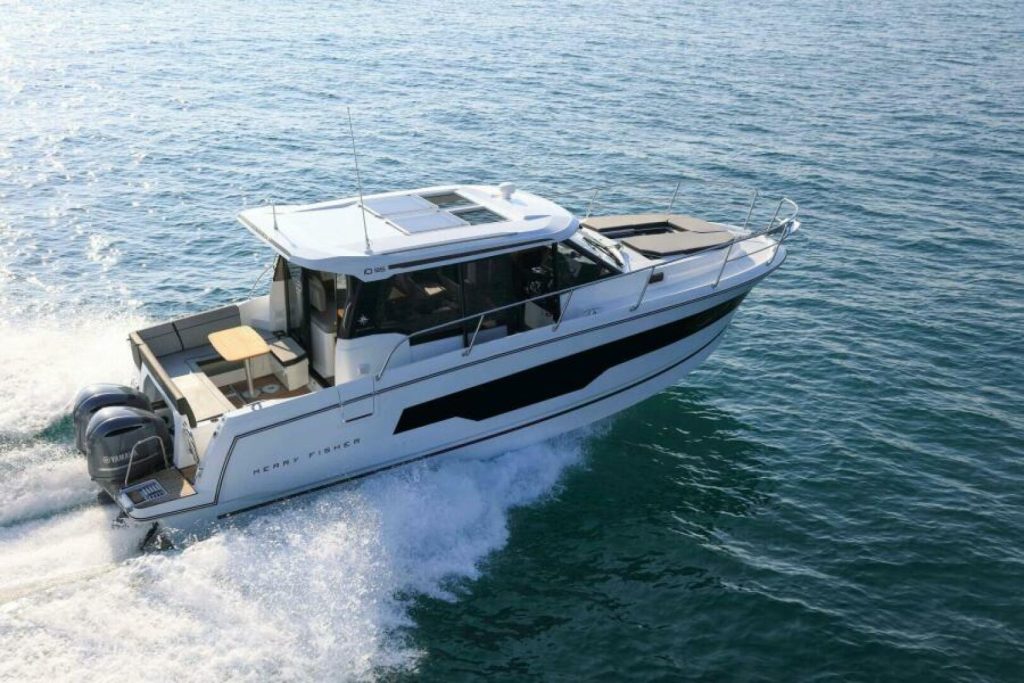
25 Jeanneau NC 1095: The Ultimate Weekender

Experience the perfect blend of comfort, innovation, and performance aboard the 2025 Jeanneau NC 1095. This award-winning 35-foot cruiser redefines family boating with its exceptional design and versatile features.

Sail the New Sun Odyssey 455

Newport private preview · July 30–August 1, 2026 Norton Yachts Official Jeanneau dealer JEANNEAU Exclusive North American preview Sail the new Sun Odyssey 455 before Annapolis. Join Norton Yachts in Newport for a private look at Jeanneau’s newest cruiser. Request an on-water sea trial or a guided dockside walkthrough before the yacht’s public debut. Request a sea trial → Official event details Private appointments Weather permitting Confirmation required Sun Odyssey 455 launch event Newport, Rhode Island 3-daypreview DatesJuly 30–August 1, 2026 VenueMidtown Race Club Marina Address20 Perry Mill Wharf, Newport, RI 02840 VisitSea trial or dockside walkthrough 3 daysPrivate preview 46’10"Length overall 4 layoutsInterior options Since 1948Norton Yachts Why step aboard The details that matter are the ones a brochure cannot prove. The 455 is designed around easier movement, confident handling, and practical comfort. A private appointment lets you evaluate those differences in person rather than guessing from specifications. Move through the yacht with confidence Walkaround sidedecks eliminate unnecessary steps, while the cockpit and twin-helm layout are designed for safer, more natural circulation. Feel how the 455 handles A sea trial lets qualified guests assess helm ergonomics, sail handling, visibility, balance, and the boat’s character underway. Test the living space, not the photography Explore the bright saloon, equipped galley, modular chart table, cabins, storage, and integrated workshop in the context of real cruising. A closer look below deck A bright, connected interior designed for how people actually cruise. See how the saloon, galley, companionway, and cockpit relate to one another before evaluating the layout in person. Open saloon, dining area, and L-shaped galley Natural light and a direct connection to the cockpit Private forward owner cabin with a spacious V-berth Pure life at sea Power, comfort, and peace of mind without the usual compromise. Jeanneau positions the Sun Odyssey 455 as an elegant, seaworthy cruiser that is easy to handle, inviting in the cockpit, and genuinely comfortable below deck. 46’10"Length overall 7’9″Standard draft 52 galFuel capacity 100 galWater capacity Why Norton Yachts The dealer matters after the excitement of the event wears off. Norton Yachts is an official Jeanneau dealer serving Virginia and North Carolina. Its operation extends beyond sales into commissioning, service, warranty work, storage, and sailing education. Norton Yachts Since 1948 ✓ Official Jeanneau dealer Brand-specific sales support for Jeanneau sailboats and powerboats. ✓ Full-service in-house operation Commissioning, installation, warranty work, maintenance, repairs, and storage. ✓ ASA-accredited sailing school A dealer that also helps owners build the skills to use their boat confidently. Plan your visit Choose the appointment that matches what you need to evaluate. On the water Private sea trial Request time to assess the helm, handling, cockpit flow, and sailing experience. Subject to qualification, weather, and availability. At the dock Guided walkthrough Review the deck layout, saloon, galley, cabins, storage, systems, and available configurations with the Norton team. Newport location Midtown Race Club Marina 20 Perry Mill Wharf, Newport, RI 02840.Open directions ↗ Request your appointment Get aboard before the public debut. Send your preferred visit type, day, and time window. A Norton Yachts representative will contact you directly to confirm availability. July 30–August 1, 2026 Private sea trial or dockside walkthrough Appointments are limited and require confirmation Prefer to speak directly? 804-776-9211 · sales@nortonyachts.com View the official Jeanneau event page ↗ Appointment request Required fields are marked with an asterisk. First name * Last name * Email * Phone * I am requesting * Private sea trialOn-water experience, weather and availability permitting. Dockside walkthroughGuided review of the yacht, layouts, and key systems. Preferred day * Select a dayThursday, July 30Friday, July 31Saturday, August 1 Preferred time No preferenceMorningMiddayAfternoon Party size 12345+ Current boat, if any Questions or details I agree that Norton Yachts may contact me about this appointment request. See the privacy policy. Request my appointment → Submitting a request does not guarantee a sea-trial slot. Norton Yachts will confirm availability directly. Norton Yachts · Deltaville, Virginia · Official Jeanneau Dealer nortonyachts.com · Back to top Sun Odyssey 455 · NewportJuly 30–August 1 Request a sea trial

Jeanneau, Saffier, or Bennington: Choosing the Right Boat Brand

Man working on yacht office with laptop. Traveling on sailboat. Traveler using tablet computer. Freelancer workplace in self isolation, social distance. Successful business lifestyle.

Jeanneau, Saffier, or Bennington: Choosing the Right Boat Brand for Your Chesapeake Bay Lifestyle Norton Yachts carries three distinct boat brands, and that’s by design rather than accident. Jeanneau, Saffier, and Bennington serve genuinely different buyers — different budgets, different skill levels, and different visions of what a good day on the Chesapeake Bay looks like. Here’s how to think through which one fits you, drawing on what our team has seen across thousands of deliveries and services since 1948. Jeanneau: The Versatile, Full-Line Choice Jeanneau is the largest sailboat manufacturer in the world, and Norton is an authorized dealer for both its sail and power lines — which makes it the most versatile brand in our inventory. The Sun Odyssey series is the go-to line for coastal cruising sailors, balancing comfort, performance, and price across a wide range of sizes. Buyers wanting more volume and offshore capability at the top end look at the Jeanneau Yachts series. On the power side, the Jeanneau NC series is built for coastal cruising with genuine cabin comfort, while the Jeanneau Leader models lean toward sportier day-boating and entertaining. Jeanneau is the right starting point if you want a brand with options across your whole boating life — sail or power, entry-level or flagship. Saffier: The Premium, Performance-Focused Choice Saffier Yachts is a Dutch builder known for European Yacht of the Year-winning designs, and Norton is Virginia’s only authorized Saffier dealer. These are boats built for sailors who want a more refined, performance-oriented experience with minimal crew — often single-handed or with just one other person aboard. Saffier buyers have typically already researched the brand extensively before ever contacting a dealer; the appeal is precision engineering and sailing feel over sheer size or amenities. If you’re an experienced sailor looking to simplify — smaller, better-built, and more responsive rather than bigger — Saffier Yachts is worth a serious look. Bennington: The Family and Accessibility Choice Bennington pontoons serve an entirely different need: stability, deck space, and easy handling for families, first-time boat owners, or anyone who wants a low-friction way to be on the water. The Bennington S Series is the approachable entry point, while the Bennington L Series steps up into a more luxury-appointed pontoon for buyers who want the same ease of use with a higher level of finish. Bennington is often the right answer for multi-generational families, or for buyers whose priority is simply getting more people on the water more often without a steep learning curve. Matching the Brand to Your Chesapeake Bay Lifestyle All three brands can be compared directly on our Models page, and current inventory is available under New Sailboats and New Powerboats. Frequently Asked Questions What is the best Jeanneau sailboat model for a first-time buyer? The Jeanneau Sun Odyssey series is the most popular starting point for first-time Chesapeake Bay sailboat buyers, offering a balance of comfort, performance, and price across multiple sizes. Norton’s team can walk through specific models based on your experience level and typical crew size. Why is Saffier more expensive than other sailboat brands? Saffier Yachts are built with a premium, European construction standard and a design focus on performance and single-handed sailing rather than volume production. Norton is the only authorized Saffier dealer in Virginia, reflecting the brand’s limited, specialized positioning. What’s the difference between the Bennington S Series and L Series? The S Series is Bennington’s approachable entry-level pontoon line, while the L Series offers a higher level of luxury finish and features while retaining the same ease of handling and family-friendly layout. Does Norton Yachts sell both sailboats and powerboats? Yes. Norton is an authorized Jeanneau dealer for both sail (Sun Odyssey, Yachts) and power (NC, Leader) lines, Virginia’s only authorized Saffier dealer, and also carries Bennington pontoons. Can I compare Jeanneau, Saffier, and Bennington models in person? Yes. All three brands are on-site at Norton’s Deltaville, Virginia marina. You can schedule an appointment to view and compare models directly. Ready to compare brands in person? Schedule an appointment with our team, or start browsing all three lines on our Models page.

What to Look For When Buying a Used Sailboat on the Chesapeake Bay

mature adult man walks along the marina with yachts

What to Look For When Buying a Used Sailboat on the Chesapeake Bay A used sailboat can be an excellent value — but only if you know what you’re actually buying. Norton Yachts has operated a full-service boatyard alongside our dealership since 1948, which means our team has hauled out, rigged, and repaired thousands of boats over the decades. That’s the same lens we bring to a used-boat inspection, and it’s worth applying before you make an offer on anything. Start With the Rigging Standing rigging has a service life, and it’s one of the most expensive systems to replace after the fact. Look for corrosion at swage fittings, cracked or discolored wire, and any visible wear at the chainplates. Ask when the rigging was last inspected or replaced — most riggers recommend a full standing rigging replacement around the 10-15 year mark, and that number should factor directly into your offer if the boat is approaching it. Check the Hull and Finish Gelcoat oxidation is cosmetic and manageable. Blistering below the waterline is not — it can signal osmotic issues that are expensive to correct. If the boat has been refinished with Awlgrip rather than gelcoat, that’s often a sign of an owner who invested in long-term protection; Norton employs the #1 Awlgrip painter in the United States, so our team can tell at a glance whether a repaint was done to a high standard or a shortcut job. Also check the deck for soft spots, especially around stanchions and hatches, which usually indicate core saturation from long-term leaks. Inspect the Engine and Systems Ask for maintenance records on the diesel engine — service intervals, oil analysis, and any major repairs. A cold start tells you a lot: excessive smoke, hard starting, or unusual vibration are all worth flagging for a surveyor to look at more closely. Electronics, plumbing, and the electrical panel should all be tested while the boat is in the water, not just visually inspected on the hard. Get a Marine Survey Before You Commit A pre-purchase survey by a surveyor accredited through SAMS or NAMS is the standard step before closing on any used sailboat, and most lenders and insurers will require one anyway. On the Chesapeake Bay, survey costs typically run in the range of $29-34 per foot, plus haul-out — a 40-foot sailboat survey runs roughly $1,160-$1,360 before haul-out fees. That cost is small relative to what it can save you in negotiating leverage or in avoiding a boat with a hidden structural issue. Consider Norton’s Boatyard as Part of Your Decision Because Norton runs both a brokerage and a full-service boatyard from the same Deltaville marina, any used boat you’re considering through us can be hauled, inspected, and surveyed on-site without shuffling between locations. If you find issues during inspection that need addressing before you take ownership, our team can scope that work immediately rather than sending you elsewhere to get a quote. Browse current listings under Pre-Owned Sailboats, or if you’re comparing against new inventory, our Jeanneau Sun Odyssey and Saffier Yachts lines are worth a look side by side. Pre-Offer Checklist Frequently Asked Questions How much does a marine survey cost on the Chesapeake Bay? Survey costs on the Chesapeake Bay typically run $29-34 per foot, plus haul-out fees. A 40-foot sailboat survey generally costs $1,160-$1,360 before haul-out, which is a small cost relative to what it can reveal about the boat’s condition. How do I know if a used sailboat’s rigging needs replacing? Look for corrosion at swage fittings, discolored or cracked wire, and wear at the chainplates. Most standing rigging has a service life of 10-15 years, so ask when it was last replaced and factor that into your offer. Is a boat with an Awlgrip finish worth more than one with gelcoat? An Awlgrip finish, applied correctly, indicates an owner who invested in long-term protection and typically holds up better over time than gelcoat. Quality of the application matters, though — Norton’s team, home to the #1 Awlgrip painter in the United States, can assess whether a repaint was done to a high standard. Can Norton Yachts survey and haul a boat I’m considering from another seller? Norton’s full-service boatyard in Deltaville can haul and inspect boats being considered for purchase. Contact our team through Contact Us to coordinate scheduling. What’s the biggest red flag when inspecting a used sailboat? Blistering below the waterline is one of the more serious findings, since it can indicate osmotic issues that are costly to repair. Soft spots in the deck around hardware are also a strong signal of long-term water intrusion and core damage. Considering a used sailboat? Schedule an appointment with our team, or browse current listings under Pre-Owned Sailboats.