
Boats sell fastest, and closest to asking price, when they’re mechanically sound, cosmetically clean, and priced against actual comparable sales rather than the owner’s replacement-cost expectations. Before listing, budget time for a deep cleaning and staging pass, gather your maintenance records, address anything a surveyor would flag, and price using recently sold comps — not competing asking prices, which are frequently inflated.
Key Takeaways
- Cosmetic staging (cleaning, smell, canvas, photos) has an outsized effect relative to its cost.
- Price against sold comps, not competing asking prices.
- Get ahead of common survey red flags before a buyer’s surveyor finds them first.
- Organized maintenance records build buyer confidence and can shorten negotiation.
The Staging Checklist That Actually Moves the Needle
Deep clean, everything. Not a quick wipe-down — bilges, engine bay, lockers, the works. Buyers (and their surveyors) read a spotless bilge as a signal that the whole boat has been cared for, and a dirty one raises questions about everything else.
Deal with the smell. Mildew, fuel, and holding tank odors are the fastest way to lose a buyer’s interest before they’ve even looked at the specs. Address the source, not just the symptom.
Declutter and depersonalize. Buyers need to picture the boat as theirs. Personal items, excess gear, and clutter make the space feel smaller and harder to evaluate.
Canvas and upholstery. Faded, torn, or mildewed canvas and cushions read as neglect even on a mechanically excellent boat — and they’re often the cheapest fix relative to the impression they make.
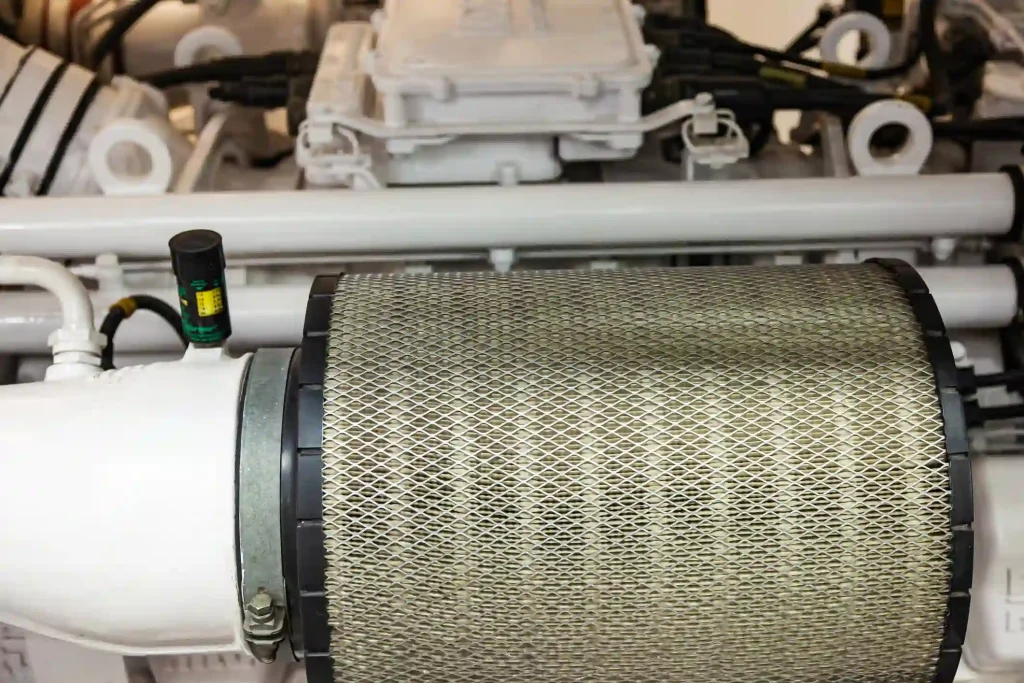
Present the engine bay intentionally. A clean, organized engine space with visible maintenance (fresh oil, tidy wiring, no fluid staining) tells a buyer the mechanical story before they ask a single question.
Photos and video matter more than most owners think. Natural light, a genuinely clean boat, wide shots that show the full layout, and a simple walk-around video dramatically outperform a handful of dim interior snapshots.
Pricing: Comps, Not Aspirations
The single most common seller mistake is pricing against what other boats are asking, rather than what comparable boats actually sold for. Asking prices are frequently aspirational and can sit on the market for months before a price cut.
A broker who tracks actual closed sales — factoring in age, engine hours, condition, upgrades, and even the season you’re listing in — will get you to a number that reflects the real market, not wishful thinking.
What Surveyors (and Serious Buyers) Focus On
Almost every financed or higher-value sale involves a marine survey, and surveyors have a consistent list of things they check closely: osmotic blistering below the waterline, moisture readings in the deck and coring, corrosion on fittings and rigging hardware, standing rigging age on sailboats, and engine hours versus the actual service records on file.
Addressing what you can ahead of a survey — rather than being surprised by it mid-transaction — keeps a deal from stalling or getting re-negotiated at the worst possible time.
Documentation to Gather Before You List
- Complete service and maintenance records
- Title and registration
- Any warranty documentation, especially for engines, electronics, or a recent Awlgrip or fiberglass repair
- Survey history, if a previous survey exists
- Upgrade and equipment list with purchase dates where available
Buyers read organized paperwork as a proxy for how the boat itself was maintained — it’s a small effort with an outsized effect on buyer confidence.
How Brokerage Commission Actually Works and Why FSBO Often Nets Less
A brokerage commission covers marketing, qualified-buyer screening, negotiation, and handling the closing paperwork — all of which affect your net proceeds more than the sticker commission percentage suggests. Private “for sale by owner” listings frequently sell for less than a brokered sale once you account for pricing accuracy, buyer qualification (tire-kickers and financing fall-throughs cost real time), and negotiation leverage, even after the commission is factored in.
What to Expect Timeline-Wise
Time on market varies significantly by boat type, price point, condition, and season — sailboats and powerboats in good condition, priced correctly against real comps, and listed in-season generally move faster than overpriced boats regardless of how good they look.
Frequently Asked Questions
How long does it typically take to sell a boat?
It depends heavily on boat type, condition, pricing accuracy, and season. A correctly priced, well-presented boat listed in season will consistently move faster than an overpriced one.
What should I fix before selling — and what can I skip?
Prioritize anything a surveyor would flag (moisture, corrosion, rigging age) and anything visibly obvious to a buyer (canvas, upholstery, cosmetic hull condition). Cosmetic issues that are purely aesthetic and disclosed upfront can sometimes be left as a pricing adjustment instead.
Do I need a survey to sell my boat?
Most buyers — especially anyone financing the purchase — will require one as part of the deal. Having your own recent survey or pre-listing inspection can speed up the process and avoid surprises.
Is it better to sell my boat myself or through a broker?
A broker’s pricing accuracy, buyer screening, and negotiation experience frequently offset the commission cost, particularly for higher-value boats where a single pricing misstep costs far more than the commission itself.