February 18, 2026 | Miscellaneous
That Sinking Feeling When You Spot a Fresh Scratch
Awlgrip scratch repair is one of the most common requests we get at our Deltaville boatyard, and for good reason. That beautiful mirror-like finish on your yacht’s hull is what turns heads at every dock—until the day you spot a fresh gouge from a careless fender, a dock piling, or another boat’s bowsprit. The good news? Most Awlgrip damage can be fixed, and understanding the right approach saves you both money and heartache.
Quick Answer: How to Repair Awlgrip Scratches
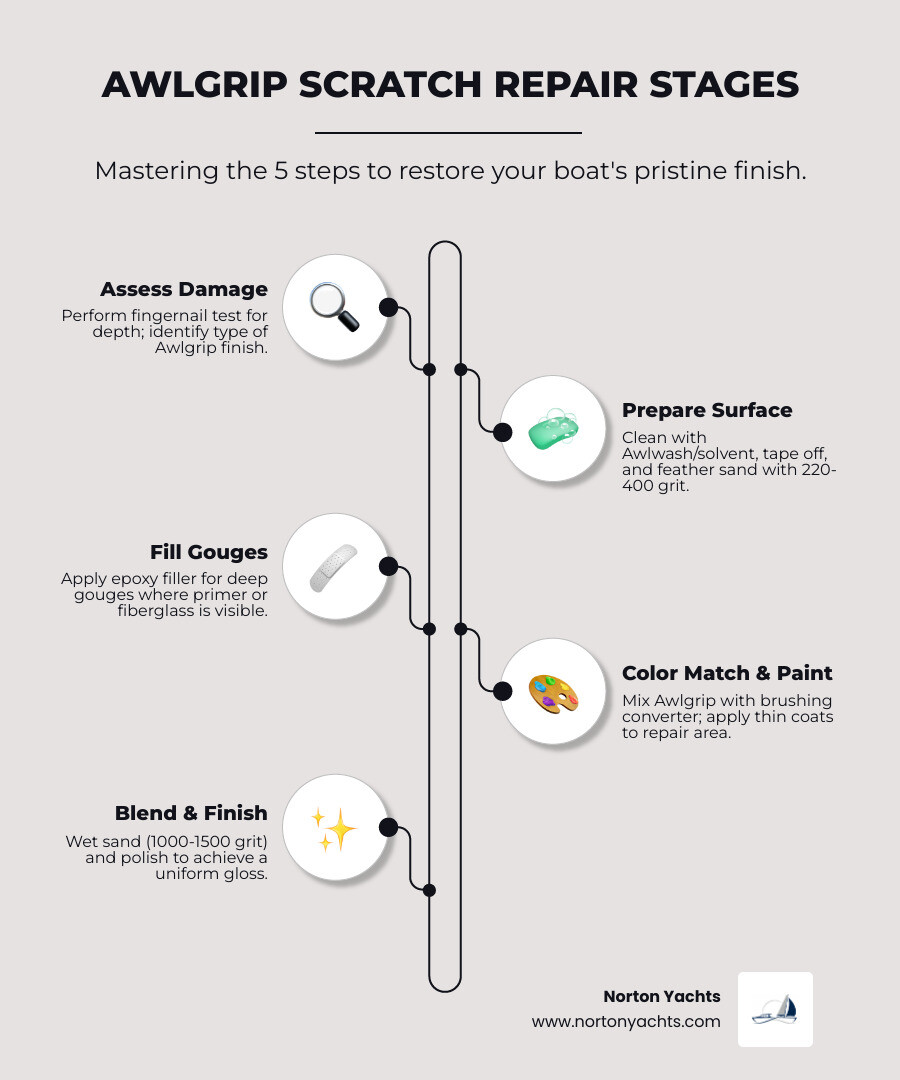
- Assess the depth – Run your fingernail across it. If it catches hard, you’re through the topcoat.
- Clean thoroughly – Use Awlwash and a degreasing solvent with the two-cloth method.
- Sand and feather – Progress from 220-grit to 400-grit, working 5 times the scratch size.
- Fill if needed – Deep gouges require epoxy filler before topcoat.
- Apply thin coats – Mix Awlgrip with brushing converter (2:1 ratio) for small areas, or roll-and-tip for larger repairs.
- Blend carefully – Wet sand with 1000-1500 grit, then polish to restore gloss.
- Call a pro for perfect color matching – Faded hulls need spectrophotometer color matching.
Awlgrip is designed for durability, not easy repair. Unlike automotive paint, its shine comes from the paint chemistry itself, not a clear coat. This makes blending repairs tricky, especially on dark or faded hulls exposed to years of Chesapeake Bay sun.
I’m Kendall Webre, and over my years at Norton Yachts, I’ve seen every type of scratch imaginable—and learned which Awlgrip scratch repair methods actually work in our Deltaville climate. Our team has refinished hundreds of hulls, from quick touch-ups to complete resprays, and I’ll walk you through exactly what works and when to call in the pros.
First, Assess the Damage: Is This a DIY Fix?
Before we even think about touching paint, we need to understand the enemy. The Chesapeake Bay sun, with its intense UV rays, can cause paint to fade differently over time, making color matching a crucial, and often challenging, step in any Awlgrip scratch repair. This initial assessment is vital in determining whether you can tackle the repair yourself or if it’s best left to the seasoned pros at our Deltaville boatyard.
The first step is a simple, yet effective, diagnostic: the fingernail test. Run your fingernail gently across the scratch. If your fingernail glides smoothly over the mark, you’re likely dealing with a surface scuff in the clear coat or just the very top layer of the paint. These are often the easiest to address. However, if your fingernail catches hard, that’s a clear indication that the scratch has cut through the topcoat and into the gelcoat, primer, or even the underlying structure. This distinction is critical, as it dictates the entire repair strategy.
Identifying the specific Awlgrip finish on your boat is also paramount, as their repair methods differ significantly. Awlgrip offers several product lines, each with unique characteristics:
- Traditional Awlgrip Topcoat: This is the classic, hard, high-gloss polyurethane finish many of us know and love. It’s incredibly durable but notoriously difficult to repair seamlessly. As many experienced boaters will tell you, traditional Awlgrip “won’t blend into itself” and “cannot be sanded and polished to the same shine” as automotive paint. Its shine comes from the paint’s chemistry, not a separate clear coat, making traditional buffing problematic as it can flatten the finish.
- Awlcraft 2000: This is a different system from Awlgrip, an acrylic urethane, and is generally considered much more repairable. Awlcraft 2000 is softer and designed to be buffed and repaired more easily, akin to automotive paint. If your boat has Awlcraft 2000, your DIY repair options are more forgiving.
- Awlgrip HDT (High Definition Technology): This newer, high-performance polyurethane topcoat is a game-changer. It combines hardness and micro-scratch resistance with improved repairability and buffability. The manufacturer states, “Awlgrip HDT is a high performance mirror-like topcoat specifically custom for use with AkzoNobel toners is not only a high gloss, robust topcoat system but is also repairable & buffable.” This finish offers the best of both worlds for durability and repair.
When a scratch compromises the fiberglass itself, we’re looking at a more serious issue than just cosmetic damage. Deep scratches let water soak into the laminate or wood beneath, leading to rot or blisters. Left untreated, these can weaken the hull and significantly lower your vessel’s resale value. In the humid conditions of the Chesapeake Bay, water intrusion is a constant concern, so acting early protects both your wallet and your boat.
Minor Scuffs and Light Scratches
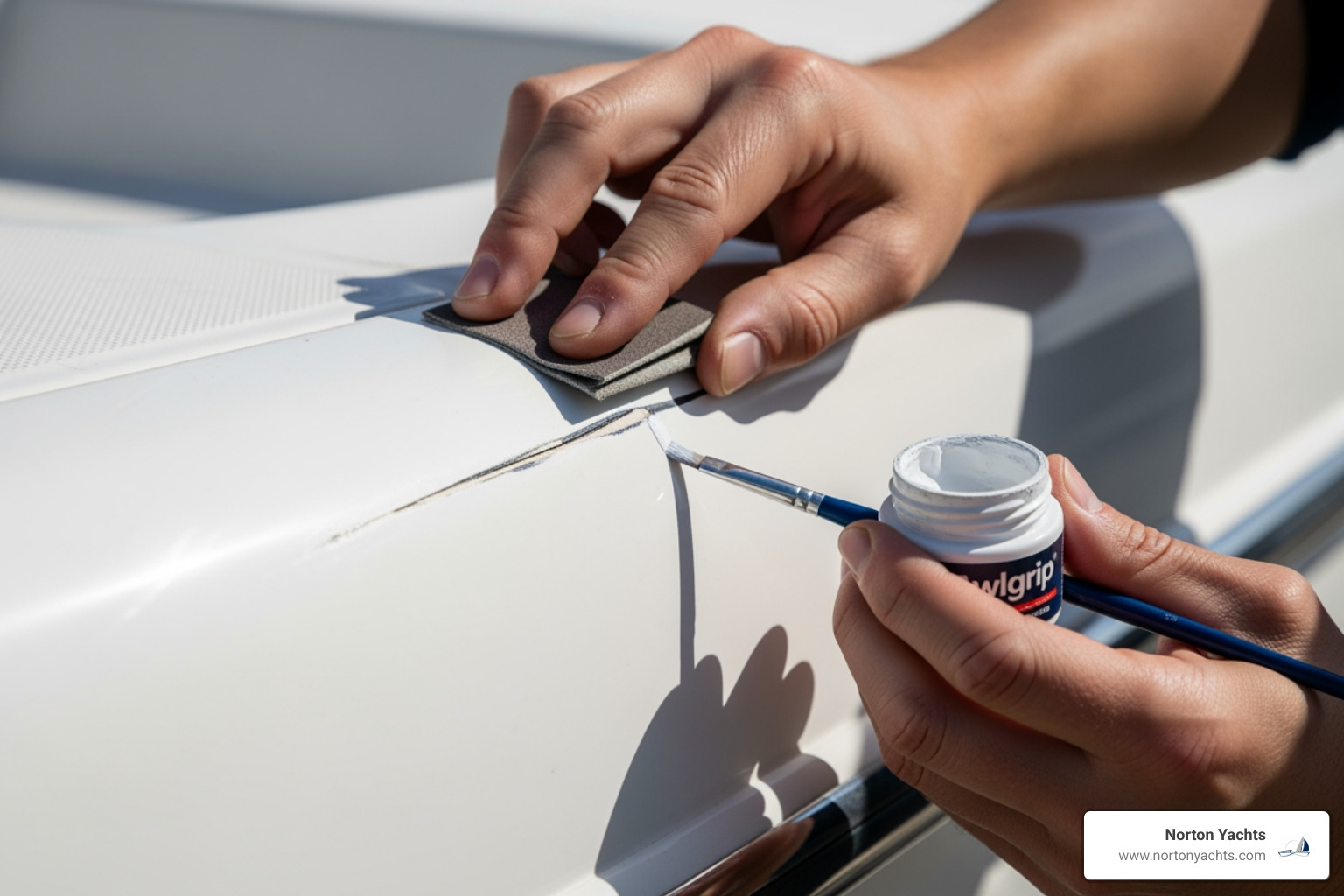
Minor scuffs and light scratches are those visible marks that haven’t penetrated deep enough to expose the primer or fiberglass. They’re typically surface-level imperfections where your fingernail doesn’t catch hard. These are the most DIY-friendly tasks. Often, these can be effectively addressed with careful polishing. If the hull is faded, buffing the entire area with a cutting compound can restore the color beneath the faded layer, bringing back much of the original luster.
For ongoing protection and to address very mild scuffs, we often recommend products like Awlcare Protective Polymer Sealer. Awlcare 73240 is a hand-applied, non-abrasive synthetic polymer sealer that helps remove mild stains, water spots, and diesel soot while increasing resistance to environmental pollutants. It leaves a non-yellowing, protective coating, and importantly, it should always be applied and buffed by hand, never with a machine, to maintain the integrity of your Awlgrip finish.
Deeper Gouges and Chips
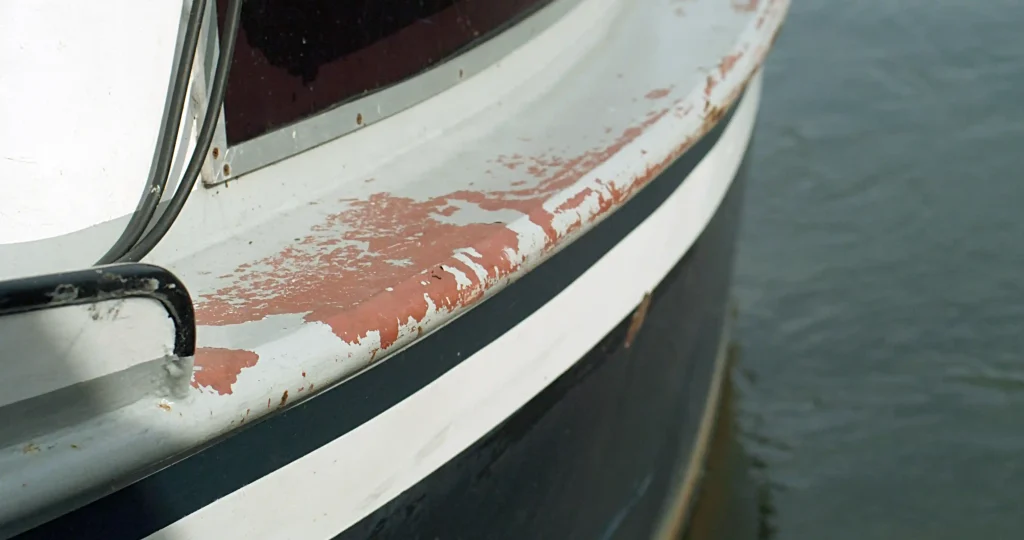
When you’ve got a deeper gouge or chip, meaning the white primer or even the fiberglass is visible, we’re talking about a more involved repair. These aren’t just cosmetic; they’re potential entry points for moisture. “Gouges that go deep into, or through, the gelcoat should be primed before applying topcoat.” This kind of damage requires filling and fairing to restore the hull’s integrity and smooth surface before any paint can be applied.
The potential for water intrusion here is significant, especially on wooden hulls where deep scratches can lead to rot. For fiberglass, moisture can lead to blisters. While a more complex repair, address promptly to prevent further damage. For significant damage or if you’re unsure about the extent, it’s always wise to consult with our experts. We handle all types of fiberglass repairs, ensuring structural integrity and a seamless finish. More info about our fiberglass services.
The Step-by-Step Guide to Flawless Awlgrip Scratch Repair
Now that we’ve assessed the damage, let’s roll up our sleeves. Tackling Awlgrip scratch repair yourself can be incredibly rewarding, but it demands precision and patience. We’re aiming for a repair that looks good from a boat length away, even if it’s not absolutely invisible up close.
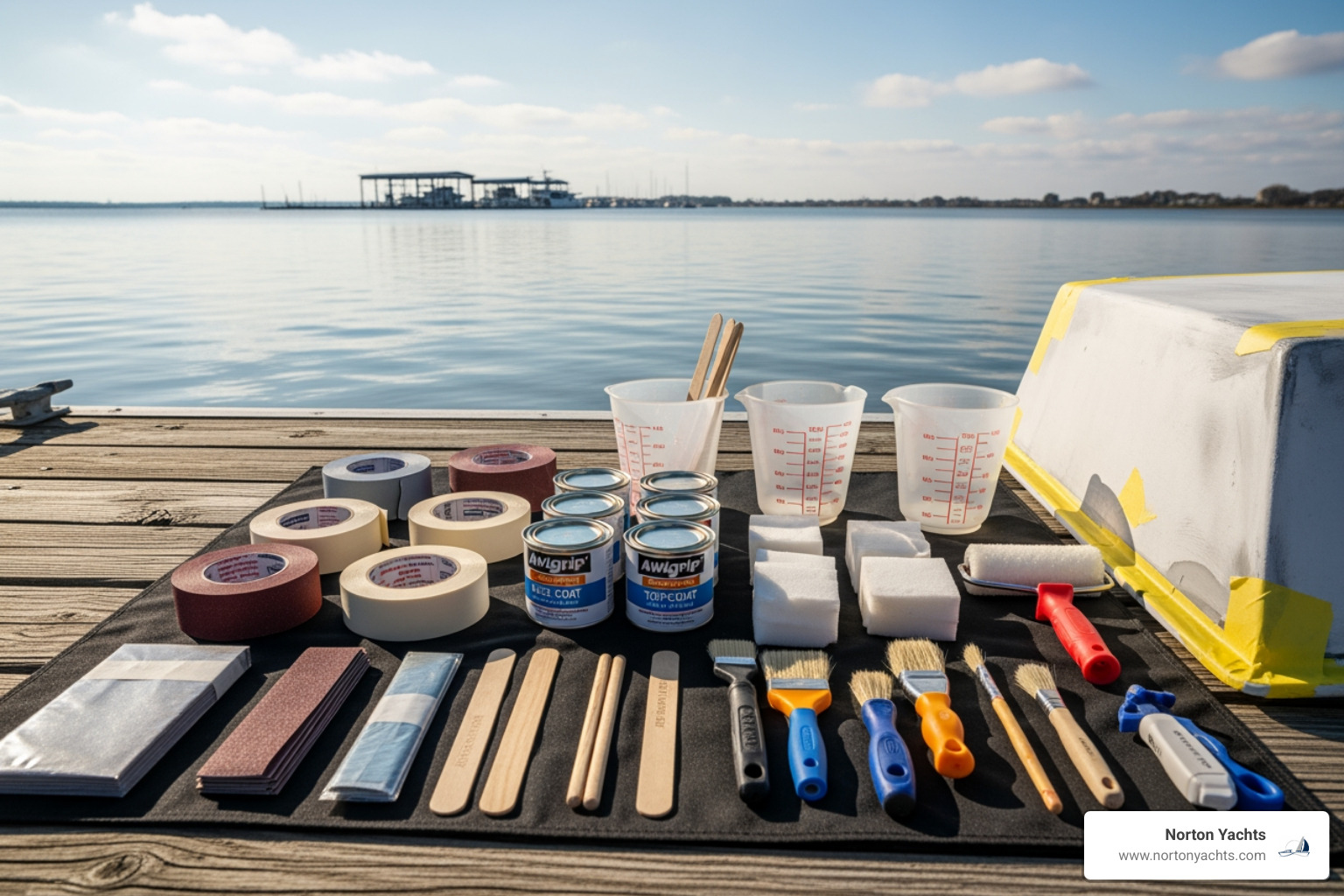
First and foremost, safety always comes first. When working with marine paints and solvents, especially in our often breezy Deltaville environment, always use appropriate Personal Protective Equipment (PPE), including respirators, gloves, and eye protection. Ensure you’re working in a well-ventilated area, ideally outdoors, as many of these products produce hazardous fumes. And finally, patience is key. Rushing any step can compromise the entire repair.
Essential Prep Work for Awlgrip Scratch Repair
Proper preparation is the bedrock of any successful paint job, and Awlgrip scratch repair is no exception. This isn’t just about making the repair look good; it’s about ensuring adhesion and longevity, especially given the harsh marine environment of the Chesapeake Bay.
- Cleaning the Area: Begin by thoroughly cleaning the damaged area. We use Awlwash and fresh water to remove salt, grime, and any loose contaminants. This is crucial before sanding, as you don’t want to sand dirt into the surface.
- Degreasing with Solvent: For heavier grease and grime, especially on traditional Awlgrip topcoat, solvents like Awlprep T0008, toluene, lacquer thinner, or M.E.K. can be used. For Awlcraft 2000 and Awlgrip HDT, milder solvents such as mineral spirits or xylene are often sufficient.
- Two-Cloth Method: When using solvents, always employ the two-cloth method. Apply the solvent with one soft, clean cloth, and immediately wipe it off with a second clean, dry cloth. This prevents the solvent from drying on the surface and redepositing contaminants.
- Taping Off the Repair Zone: Lay painter’s tape about an inch beyond the damaged area. “Tape well outside the damaged area, ensuring the surrounding paint stays untouched.” This protects the surrounding paint and gives you a clean boundary to work within.
- Sanding Techniques: Now for the critical part: sanding. The goal is to feather the edges of the repair area so it blends seamlessly with the surrounding finish. For small repairs (less than 6 inches), we recommend sanding approximately five times the size of the damaged area.
- Using the Right Sandpaper Grits: Start with 220-grit paper to knock down any rough spots or raised edges around the scratch. Then, progress to 320-grit to smooth the transition. The aim is to make the edge disappear to the touch before you even open a paint can. For Awlgrip HDT, the manufacturer recommends a more precise progression: 400-grit for the initial repair area, 800-grit for a second, wider area, and 1500-grit for the outermost perimeter to blend into the undamaged paint. Remember to clean off all dust between grits.
Application: Filling, Color Matching, and Painting
With the prep work complete, we move to the application phase, which involves filling, color matching, and finally, painting.
- Filling Deep Gouges: If your scratch is a deeper gouge that exposed primer or fiberglass, it will need to be filled before painting. We typically use an epoxy filler for deeper damage or a color-matched gelcoat paste for smaller nicks, especially on gelcoat surfaces. Shape the gouge into a ‘V’ to create strong bonding edges, apply the filler, and then fair it flush with the surrounding surface.
- Color Matching Challenges on Older Paint: This is where things get tricky, especially on older boats that have seen years of Virginia sun. The original paint code won’t be a perfect match due to fading. Color matching Awlgrip is often described as “a bit of art thrown in” and “a black art.”
- Taking a Sample for Matching: For the best results, a professional would take a physical sample from your boat to match the faded color precisely. If you’re attempting a DIY fix, you might purchase the original color and adjust it with small amounts of other pigments. Be prepared to settle for “pretty close.”
- Mixing Awlgrip for Touch-Ups: For very small scratches and dings, the recommended procedure involves mixing “2 parts of color base with 1 part AWL-CAT(r)#3 Brushing Converter (H3002).” This specific ratio is designed for brush application. For small repairs, reducer or primer may not be needed.
- Using a Fine Artist’s Brush for Dings: For precise application on tiny spots, use a fine artist’s brush to re-establish the color and seal the substrate. Keep a clean rag soaked with M.E.K. or Acetone nearby to wipe off any excess paint while it’s still wet. Apply multiple thin coats rather than one thick one.
- Roll-and-Tip Method for Larger Areas: For larger repairs, the roll-and-tip method is a popular technique for DIYers. Apply a thin, even coat with a roller, then immediately “tip” it with a clean, high-quality brush to pop any bubbles and level the finish. Repeat this process until you’ve built up sufficient coverage, allowing proper flash-off times between coats.
- Applying Thin Coats: Regardless of the application method, applying multiple thin coats is always better than one thick coat. This ensures proper curing, minimizes runs, and allows for better blending.
For those working with newer Awlgrip HDT coatings, the repair process is more specific and involves a clear coat and a special blender for seamless results. For a detailed process on newer finishes, see the manufacturer’s guide.
Blending and Finishing Your Awlgrip Scratch Repair
This is the art of the invisible blend, the final hurdle in making your Awlgrip scratch repair truly disappear. For traditional Awlgrip, this stage is particularly challenging, but with Awlcraft 2000 and Awlgrip HDT, it’s more achievable.
- Wet Sanding with Fine Grits: Once the touch-up paint has cured (drying times can vary based on temperature and humidity, so consult your product’s technical data sheet), we begin wet sanding. Use very fine grits, typically 1000-grit to 1500-grit, or even finer “Japanese paper” sandpaper, which some pros find superior for blending. The goal is to carefully level any raised paint and feather the edges of your repair into the surrounding existing finish.
- Polishing Compounds: After wet sanding, polishing compounds come into play. For Awlcraft 2000 and Awlgrip HDT, which are designed to be buffed, you can use products like 3M Finesse-It. Apply with a soft cloth by hand or with a variable speed buffer on a low setting, taking extreme care, especially near corners, to avoid burning through the paint.
- Buffing Limitations of Traditional Awlgrip: Here’s a critical distinction: “Awlgrip does not recommend buffing the surface to ‘blend’ the touch-up area and the old finish.” This is because traditional Awlgrip’s gloss is integral to the paint itself, not a separate clear coat that can be polished. Buffing can quickly flatten the finish, leaving a dull spot that’s worse than the original scratch. If you have traditional Awlgrip, focus on meticulous sanding and a good polymer sealer for blending rather than aggressive buffing.
- Achieving a Uniform Gloss: The aim is to achieve a uniform gloss that matches the surrounding area. This often requires working a wider area around the repair, gently feathering the gloss with increasingly finer compounds.
- Removing the Masking Tape Carefully: Once you’re satisfied with the blend and the surface is clean and dry, carefully remove the masking tape. Pull it slowly and at an angle to avoid lifting any fresh paint.
When to Call the Professionals at Our Deltaville Boatyard
While many minor Awlgrip scratch repair jobs are within the field of a skilled DIYer, there are definitely times when it’s advisable to call in the professionals. Recognizing your limits isn’t a sign of weakness; it’s a smart decision that protects your investment and ensures a superior result.
Here at Norton Yachts, our team has over 75 years of combined experience working with Awlgrip finishes on vessels across the Chesapeake Bay. We understand the nuances of these highly technical coatings and have the specialized equipment and controlled environment necessary for truly flawless results.
- Large-Scale Damage: If you’re dealing with extensive damage, such as large areas of paint stripping off, or a significant portion of the hull requiring repair, it’s often more efficient and effective to have a professional handle it. “For significant damage, consider painting the complete side of the boat rather than attempting a blend.”
- Cracking or Crazed Fiberglass: “Seriously cracked or crazed fiberglass should be professionally repaired.” These issues often indicate deeper structural problems that go beyond a simple paint touch-up and require expert assessment and repair to prevent catastrophic failure.
- Perfect Color Matching on Custom Colors: As we discussed, color matching a faded hull is an art form. For custom colors or dark hues that show every imperfection, achieving an invisible blend on an aged surface is incredibly difficult for a DIYer. A professional painter has access to spectrophotometers and custom tinting systems to precisely match your boat’s unique color profile. They can take a physical sample from your boat and create a custom tint that will blend seamlessly, even on a sun-drenched hull from the Chesapeake Bay.
- When You Need a Flawless, Boat-Show Finish: If you’re preparing your yacht for sale, a boat show, or simply demand an absolutely pristine finish, professional expertise is indispensable. Our certified Awlgrip applicators work in controlled environments, free from dust and humidity fluctuations, ensuring a mirror-like gloss that’s virtually impossible to achieve in a typical DIY setting.
- Norton Yachts’ Professional Painters: Our team of experts are adept at “Awlgrip scratch repair” and full repaints. We have the experience, the tools, and the dedication to deliver a finish that will make your boat truly shine. From the initial assessment to the final buff, we ensure every step is executed to the highest standard. Visit our Boat Service Center to see the range of services we offer.
Frequently Asked Questions about Awlgrip Repair
Can you buff or wax a traditional Awlgrip finish?
This is one of the most common questions we hear at the dock, and it’s a critical one. For traditional Awlgrip, the answer is generally no to both buffing and waxing.
Traditional Awlgrip gets its mirror-like gloss from the paint’s unique chemistry, not from a separate clear coat that can be polished like automotive finishes. If you try to buff traditional Awlgrip, you risk “burning” through this top layer, flattening the finish and creating a dull spot that’s worse than the original imperfection. Awlgrip specifically “does not recommend buffing the surface to ‘blend’ the touch-up area and the old finish.”
Regarding waxing, it’s also not recommended for traditional Awlgrip. Traditional waxes tend to break down rapidly in the harsh marine environment, offering little lasting protection. Worse, they can yellow over time, attract dirt, and even trap moisture, potentially masking underlying issues or compromising the finish. Instead of wax, we strongly advocate for a polymer sealer like Awlcare 73240. Awlcare is a non-abrasive, non-yellowing, non-building product that can be applied by hand to remove mild stains and protect the surface without compromising the paint. It’s designed to improve and protect your Awlgrip finish without the pitfalls of traditional waxes. Learn more about proper maintenance.
How do I get a perfect color match on a faded hull?
Achieving a perfect color match on a faded hull is arguably the most challenging aspect of Awlgrip scratch repair, especially here in the Chesapeake Bay where the sun can be relentless. The unfortunate truth is that your original paint code, while a good starting point, will not be a perfect match for paint that has been exposed to years of UV radiation and environmental elements. The paint fades, often unevenly, and dirt and grime can become embedded, altering the perceived color.
This is where professional expertise truly shines. Our experienced painters understand that color matching “is a bit of art thrown in” and can be “a black art.” They don’t just rely on paint codes. Instead, they will:
- Take a physical sample: A small, inconspicuous piece of your boat’s existing paint is taken from the repair area.
- Use a spectrophotometer: This advanced tool analyzes the exact color, including undertones and metallic flakes if present, generating a precise formula.
- Custom tinting: Using the data from the spectrophotometer, our team can then custom tint new Awlgrip paint, carefully adjusting pigments to create a blend that seamlessly integrates with your aged hull. This level of precision is virtually impossible to achieve in a DIY setting and is invaluable for maintaining the aesthetic integrity of your vessel. While Awlgrip states “Custom colors available: No” for their standard repair products, the capability for custom color creation by skilled professionals is indeed available.
What’s the difference between repairing Awlgrip and Awlcraft 2000?
Understanding the distinction between Awlgrip and Awlcraft 2000 is fundamental to any Awlgrip scratch repair strategy, as their chemistries dictate very different repair approaches.
- Traditional Awlgrip: This is a hard, two-part polyurethane paint system renowned for its exceptional durability and long-lasting gloss. However, its hardness is also its Achilles’ heel when it comes to repairs. Traditional Awlgrip is “horribly hard to fix” and “difficult to blend and buff.” Its inherent shine means it’s not designed to be color sanded and polished like automotive paints. Any attempts to buff it can quickly flatten the surface, making repairs more visible. This means for traditional Awlgrip, meticulous prep, precise application, and careful feathering are paramount, with buffing generally avoided.
- Awlcraft 2000: In contrast, Awlcraft 2000 is an acrylic urethane paint system. It’s a “different system from Awlgrip” and is “generally considered much more repairable.” Awlcraft 2000 is softer and designed to be color sanded and buffed, much like automotive paint. This characteristic makes it significantly easier to touch up and blend seamlessly into an existing finish. If your boat has Awlcraft 2000, minor scratches can often be wet sanded and polished to a near-invisible repair.
Knowing which finish you have is critical to the repair strategy. Always check your boat’s paint records or consult with our experts if you’re unsure.
Protect Your Investment with Expert Awlgrip Services
A proper Awlgrip scratch repair is more than just cosmetic; it protects your boat’s value and integrity against the harsh realities of the marine environment. While following these steps can help you tackle minor dock rash and surface imperfections, achieving a truly flawless finish often requires professional expertise.
From a small, undetectable touch-up on a custom color to a full repaint that revitalizes your entire vessel, our team at Norton Yachts in Deltaville, VA, serving Chesapeake Bay boaters since 1948, has the experience and specialized equipment to ensure a flawless result every time. We understand the unique challenges of painting in the Chesapeake Bay region and are committed to delivering the highest quality finish for your yacht. Trust your vessel to the Chesapeake Bay’s Awlgrip experts. Ready for a perfect finish? Call us at (804) 776-9211 or schedule an appointment with our service team today.