March 6, 2026 | Miscellaneous
Why Every Chesapeake Bay Boat Owner Should Know Fiberglass Repair Basics
Fiberglass boat repair is a fundamental skill for maintaining your vessel’s structural integrity and protecting your investment. Whether you’re dealing with minor gelcoat scratches or more serious hull damage, understanding the repair process helps you make informed decisions about DIY fixes versus professional restoration. For expert support, call (804) 776-9211.
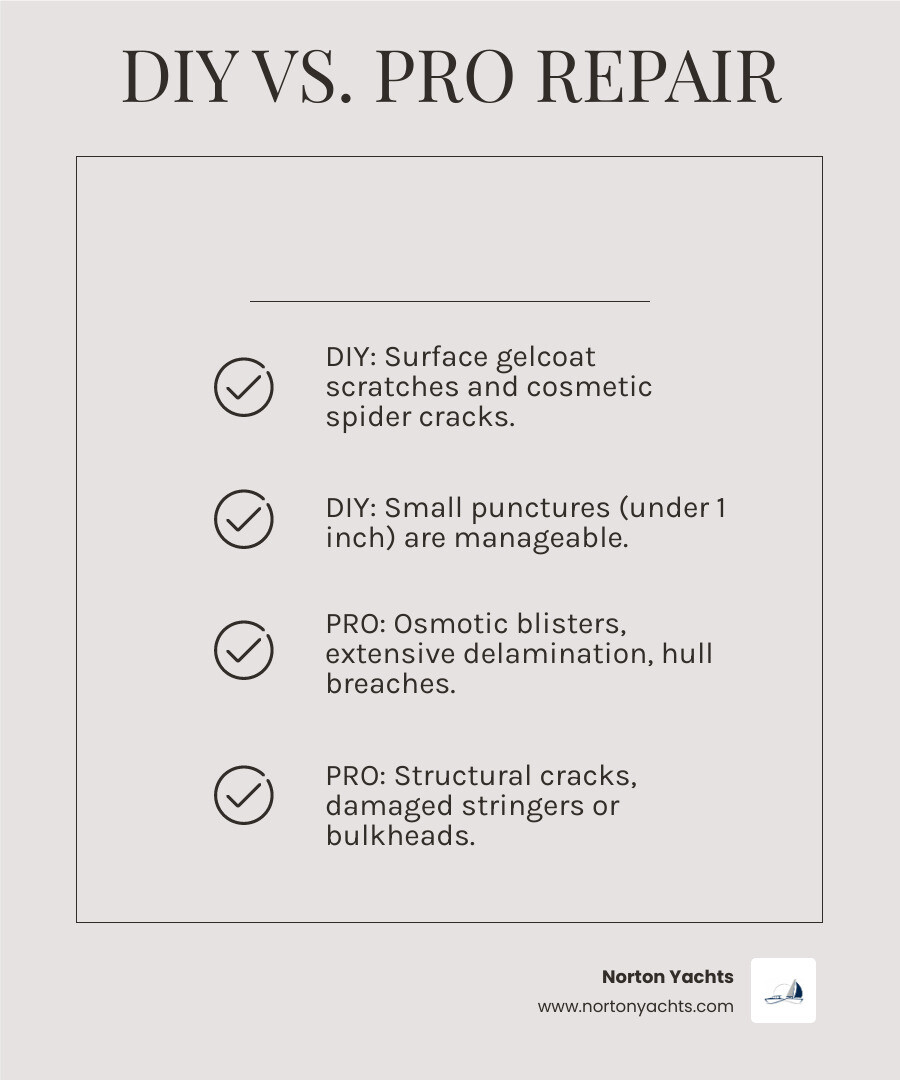
Quick Reference: When to DIY vs. When to Call a Pro
| Damage Type | DIY-Friendly | Professional Recommended |
|---|---|---|
| Surface gelcoat scratches | ✓ | |
| Spider cracks (cosmetic only) | ✓ | |
| Small punctures (<1 inch) | ✓ | |
| Osmotic blisters | ✓ | |
| Structural cracks | ✓ | |
| Delaminated stringers/bulkheads | ✓ | |
| Hull breaches | ✓ |
Over 80% of recreational boats today are built with fiberglass composite construction, making it the dominant material in marine manufacturing. That popularity doesn’t mean these hulls are indestructible—far from it. The brackish waters of the Chesapeake Bay create unique challenges for fiberglass vessels, from osmotic blistering below the waterline to UV-induced gelcoat crazing above.
Understanding the basics of fiberglass repair helps you:
- Identify damage early, before minor issues become major structural problems
- Determine which repairs you can tackle yourself with basic tools
- Know when to bring your boat to professionals for structural work
- Maintain your vessel’s resale value through proper restoration
The good news? Many common fiberglass repairs are well within reach of handy boat owners. Small cracks, minor abrasions, and surface-level damage can often be fixed with the right materials and techniques. More complex repairs—like widespread delamination, wet cores, or damage affecting structural members—require professional expertise and specialized equipment.
At Norton Yachts’ Deltaville facility, we’ve repaired everything from minor gelcoat chips on weekend cruisers to complete hull restorations on classic Chesapeake Bay deadrise workboats. The techniques remain consistent whether you’re patching a small ding or preparing a hull for professional Awlgrip refinishing.
This guide walks you through the complete fiberglass repair process, from identifying different types of damage to executing professional-grade repairs. We’ll cover surface preparation, proper resin application, structural patching techniques, and finishing methods that restore both strength and appearance.
I’m Kendall Webre, and through my work at Norton Yachts, I’ve overseen countless fiberglass boat repair projects ranging from minor cosmetic fixes to complex structural restorations on vessels throughout the Chesapeake Bay region. This hands-on experience with diverse hull types and damage scenarios informs the practical, regionally-specific guidance you’ll find throughout this article.
Understanding Common Fiberglass Damage in the Chesapeake
Even the most carefully maintained vessels can suffer damage. In the Chesapeake Bay, our unique environment—from seasonal temperature fluctuations to the brackish water—can accelerate certain types of wear and tear on fiberglass hulls. Understanding these common issues is the first step in effective fiberglass boat repair.
Here are the most frequent types of fiberglass boat damage we encounter:
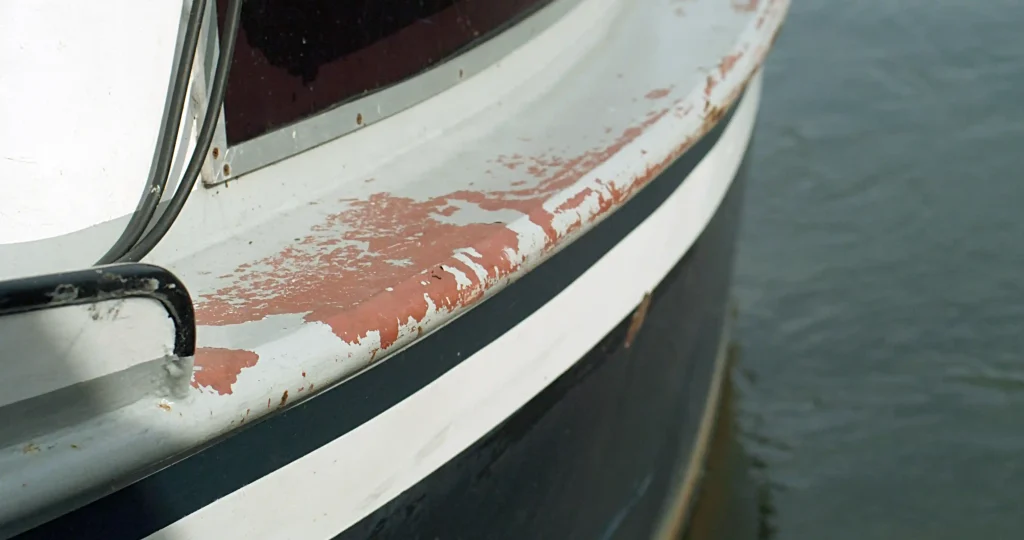
- Hairline Cracks: Often cosmetic, these fine lines usually appear in the gelcoat, especially in high-stress areas like around cleats or stanchions. They can be a precursor to deeper issues if ignored.
- Spider Cracks (Crazing): These are a network of fine cracks, usually in the gelcoat, resembling a spiderweb. They’re typically caused by localized flexing or impact, or simply by the aging and shrinking of the gelcoat.
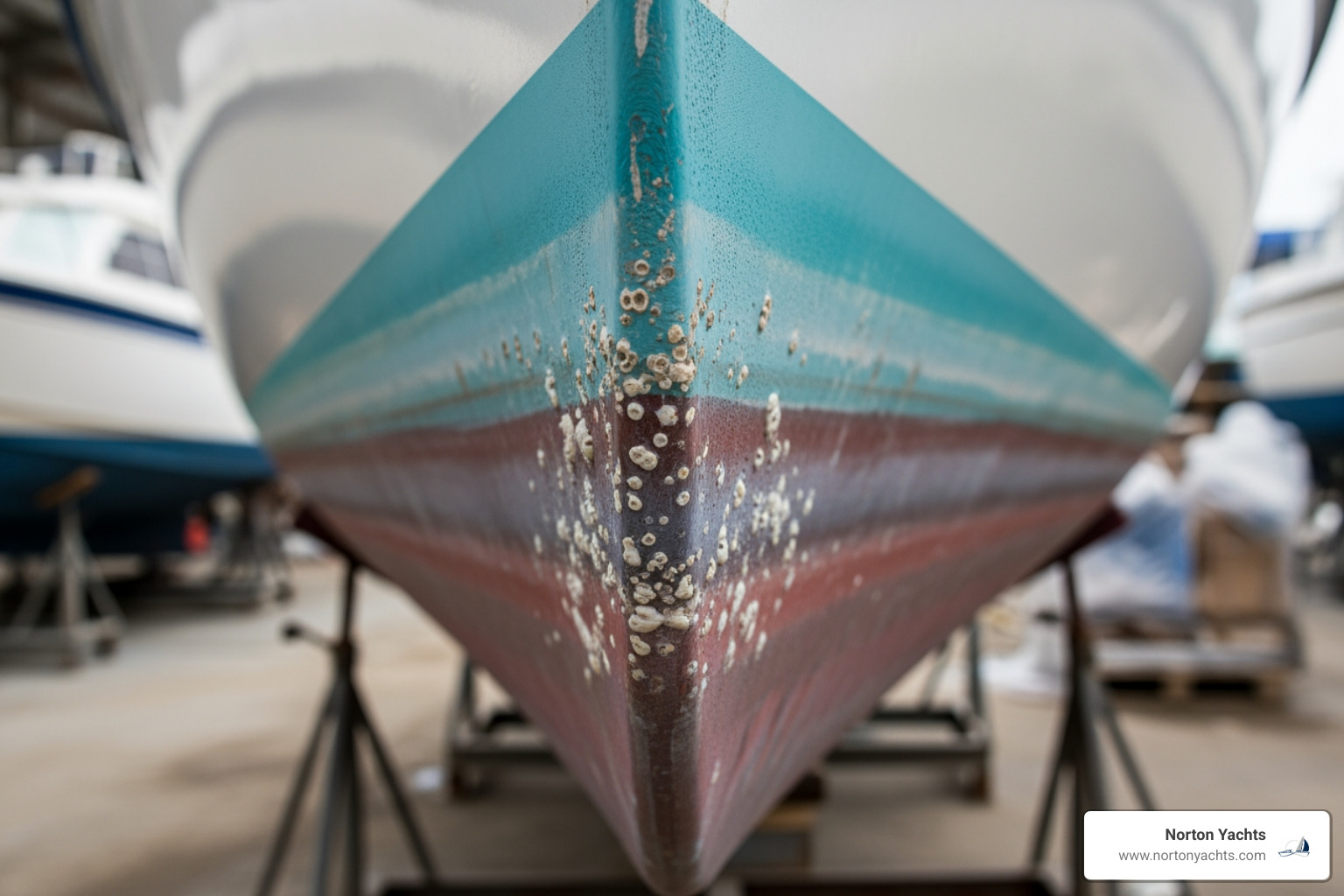
- Osmotic Blisters: A prevalent issue for boats kept in the water, particularly in the brackish Chesapeake Bay. Osmotic blistering (gelcoat blisters) occurs when water permeates the gelcoat and reacts with soluble materials within the laminate, creating acidic pockets that swell and form blisters. If not addressed early, these can require extensive repair. The global marine coatings market, valued at USD 3.5 billion in 2023, is projected to reach USD 5.1 billion by 2033, indicating a growing demand for solutions to issues like blistering.
- Delamination: This is a more serious structural issue where the layers of fiberglass laminate, or the fiberglass skin from the core material, begin to separate. It can be caused by impact, moisture intrusion, or manufacturing defects. You might identify delamination using the “coin tap test”—tapping the affected area with a coin and listening for a dull or hollow sound compared to the solid thud of healthy laminate. Delamination can seriously compromise your boat’s structural integrity, especially in a Fiberglass Composite hull.
- Impact Punctures/Holes: Accidents happen. Collisions with docks, submerged objects, or even a misplaced tool drop can result in holes or punctures. These range from small dings to significant breaches.
- Gouges & Abrasions: Scrapes against pilings, groundings, or general wear can cause gouges that expose the underlying fiberglass laminate, leaving it vulnerable to water intrusion.
- Stringer Rot: Stringers are internal structural supports that run the length of the hull. Often, these contain wood cores that, if exposed to moisture, can rot. This significantly weakens the hull’s structure and can lead to flexing and cracking.
- Warping: Less common, but sometimes panels can warp due to prolonged exposure to heat or uneven stress.
- Fatigue & Flex Cracks: Constant flexing, especially in areas like the transom or keel, can lead to cracks that indicate structural fatigue.
The key to successful fiberglass boat repair is accurate damage assessment. A small surface crack might just need a gelcoat touch-up, but a crack accompanied by delamination could indicate a serious structural problem requiring professional intervention.
Essential Tools and Safety Precautions
Before you even think about mixing resin, you need to gather your tools and, more importantly, prioritize safety. Working with fiberglass and resins involves chemicals and fine dust, so proper precautions are non-negotiable.
Essential Tools and Materials:
- Fiberglass Cloth/Mat: We recommend having a variety on hand. Chopped strand mat is good for bulk and filling, while woven roving or biaxial cloth offers superior strength for structural repairs.
- Resin and Hardener:
- Epoxy Resin: For structural repairs, epoxy is generally superior. It has excellent adhesive properties, minimal shrinkage (less than 1% vs 5-8% for polyester), and creates a stronger moisture barrier. Brands like WEST SYSTEM are often recommended for their reliability and instructional manuals.
- Polyester Resin: More common and cost-effective for cosmetic repairs or when replacing polyester laminate. It’s often used with gelcoat.
- Vinylester Resin: Offers a good balance between polyester and epoxy, with better moisture resistance and strength than polyester.
- Catalyst (for Polyester/Vinylester): Ensure you have the correct hardener for your resin type.
- Fillers: Adhesive fillers (e.g., colloidal silica) for thickening resin, and fairing fillers (e.g., microballoons) for creating a smooth, sandable surface.
- Gelcoat Repair Kit: For cosmetic surface finishes.
- Acetone & Tack Cloth: Crucial for cleaning and degreasing surfaces.
- Sandpaper: A range of grits from 80-grit (for aggressive grinding and shaping) to 600-grit or even 2000-grit (for fine finishing of gelcoat).
- Application Tools: Small disposable paintbrushes, rollers, plastic spreaders, mixing sticks, and syringes.
- Mixing Containers: Be sure to get ones with volume measurements on the side for accurate mixing.
- Orbital Sander & Grinder: An orbital sander with 80-grit discs is essential for surface prep. An angle grinder with a grinding disc is useful for removing damaged material and creating bevels.
DIY fiberglass boat repair kits, like the West System Fiberglass Boat Repair Kit, typically range from $50 to $100, offering a cost-effective solution for smaller damages. These kits often contain everything you need for basic repairs, such as eight packets of WEST SYSTEM 105 Resin and 205 Hardener, fiberglass fabric, adhesive filler, fairing filler, glue brushes, mixing pots, a mixing stick, an application syringe, and three pairs of protective gloves.
Crucial Safety Precautions:
Working with fiberglass and resins is “nasty nasty stuff,” as one seasoned DIYer put it. It generates fine dust and involves chemicals that can irritate skin, eyes, and lungs.
- Ventilation is Key: Always work in a well-ventilated area. If indoors, use fans to create airflow. If outdoors, choose a calm day.
- Personal Protective Equipment (PPE):
- Respirator: A high-quality respirator with organic vapor cartridges is essential when mixing resins, sanding, or grinding. Don’t skip this! You can find suitable Safety Gear and Respirators online.
- Gloves: Chemical-resistant gloves (nitrile or latex) are a must to protect your hands from resins and solvents.
- Safety Glasses/Goggles: Protect your eyes from airborne particles and splashes.
- Coveralls/Old Clothes: Wear long sleeves and pants, or disposable coveralls, to prevent skin contact with resin and fiberglass fibers.
- Cleanliness: Have plenty of rags and mineral spirits (for uncatalyzed resin cleanup) on hand. Clean up spills immediately.
- Fire Safety: Keep a fire extinguisher nearby. Resins and solvents are flammable.
- Read Instructions: Always follow the manufacturer’s instructions for your specific resin and catalyst, especially regarding mixing ratios and cure times. Consult resources like the Resin Curing Instructions for best practices.
Step-by-Step Guide to Structural Fiberglass boat repair
Whether you’re patching a small hole or tackling a larger crack, the fundamental principles of fiberglass boat repair remain the same. Our team at Norton Yachts applies these same meticulous steps whether we’re working on a Saffier Daysailer or a Jeanneau Yacht.
1. Damage Assessment: Begin by thoroughly examining the damage. Use the coin tap test to identify any hidden delamination. Determine if the damage is cosmetic (gelcoat only) or structural (into the laminate layers). For structural repairs, we often recommend epoxy resin due to its superior strength and adhesion compared to polyester.
TABLE: Comparing Epoxy vs. Polyester Resin Properties
| Property | Epoxy Resin | Polyester Resin |
|---|---|---|
| Shrinkage | Low (less than 1%) | High (5-8%) |
| Adhesion | Excellent to various materials (stronger) | Good to fiberglass, weaker secondary bonds |
| Moisture Barrier | Superior, good for below waterline | Moderate, prone to osmosis |
| Flexibility | More flexible, less brittle | More brittle, less impact resistant |
| Working Time | Generally longer, adjustable | Shorter, less adjustable |
| Cost | Higher | Lower |
| Odor | Low | Strong |
| Application | Structural, general repair, encapsulating | Cosmetic, non-structural, original boat building |
Preparing the Surface for Fiberglass boat repair
Proper surface preparation is paramount for a strong, lasting fiberglass boat repair. This isn’t just about making it look good; it’s about ensuring the new material bonds seamlessly with the old.
- Clean the Area: Start by cleaning the damaged area thoroughly with soap and water, then follow with an acetone wipe. This removes wax, grease, and other contaminants that could inhibit adhesion. For optimal bonding, the surface must be impeccably clean and dry.
- Remove Damaged Material: Use an orbital sander or angle grinder to remove any loose, damaged, or delaminated fiberglass. Grind down to solid, undamaged laminate.
- Create a Bevel: For any structural repair, you’ll need to create a tapered edge, or “bevel,” around the damaged area. A 12:1 bevel ratio is the industry standard for optimal strength. This means for every 1/4 inch of laminate thickness, you’ll extend the grind out 3 inches. This significantly increases the surface area for the new resin and fiberglass to bond, distributing stress over a larger area and preventing hard spots. For example, a 1/4-inch thick hull would require a 3-inch wide bevel.
- Sand the Surface: Sand the entire repair area, including the bevel, with 80-grit sandpaper. This creates a rough profile, or “tooth,” that the new resin can grip onto. Ensure there are no shiny spots; the surface should be dull and uniform.
- Final Clean: Wipe down the sanded area again with acetone and a clean tack cloth to remove all sanding dust.
Best Practices for Fiberglass boat repair and Finishing
Once the surface is prepped, it’s time to apply the fiberglass and resin. This is where precision and patience pay off.
- Cut and Fit Fiberglass Patches: Cut multiple layers of fiberglass cloth or mat. For structural repairs, use progressively smaller patches. The largest patch should extend beyond the beveled area by at least 2 inches, and each subsequent patch should be slightly smaller than the one beneath it. This creates a gradual transition of strength. For smaller holes, you can mix chopped fiberglass flake with catalyzed resin to create a thick paste for backfilling.
- Mix Resin and Hardener: Accurately measure and mix your resin and hardener according to the manufacturer’s instructions. Mixing ratios are critical for proper curing. Mix in small batches, especially with polyester or vinylester, as they have shorter pot lives. Stir thoroughly for at least 60 seconds, scraping the sides and bottom of the mixing container. If working in colder temperatures, you might need to adjust the catalyst ratio slightly or warm the resin, but always follow guidelines precisely—over-catalyzing can make resin brittle.
- Apply Resin (Wet-Out Method): Apply a thin layer of mixed resin to the prepared, beveled surface. Then, lay your largest fiberglass patch onto the wet resin. Using a brush or roller, “wet out” the fiberglass completely, ensuring full saturation and no dry spots or air bubbles. Air bubbles are weak points!
- Layer Patches: Continue layering the progressively smaller patches, wetting out each layer thoroughly as you go. Work from the largest patch to the smallest. For vertical repairs, thickened resin or even a light spray adhesive can help hold patches in place as they cure.
- Squeegee Excess Resin: Once all layers are applied, use a plastic spreader to squeegee out any excess resin, working from the center outwards. This ensures a good fiber-to-resin ratio, which is crucial for strength.
- Cure Time: Allow the resin to cure completely. This can take hours or even days, depending on the resin type, temperature, and humidity. Do not rush this step. The repair should be hard and non-tacky before proceeding.
- Fair and Sand: Once cured, the repair area will likely be uneven. Begin sanding with 80-grit paper to knock down high spots. Apply fairing compound to fill any low spots or imperfections. Fairing compound is a mix of resin and lightweight fillers that is easy to sand. Apply in thin layers, allowing each to cure, then sand again. Repeat this process, using progressively finer grits (180, 220, 320, etc.), until the repair is smooth and flush with the surrounding hull. This meticulous fairing is essential, especially if you’re aiming for a professional finish like Awlgrip. Our Boat Service Center specializes in achieving these flawlessly smooth surfaces.
Professional Finishing: Gelcoat and Fairing
Once the structural fiberglass boat repair is complete and the area is properly faired, the final cosmetic steps of gelcoat application and polishing transform a raw patch into a seamless part of your boat. This is where the repair truly goes “from ding to dazzling.”
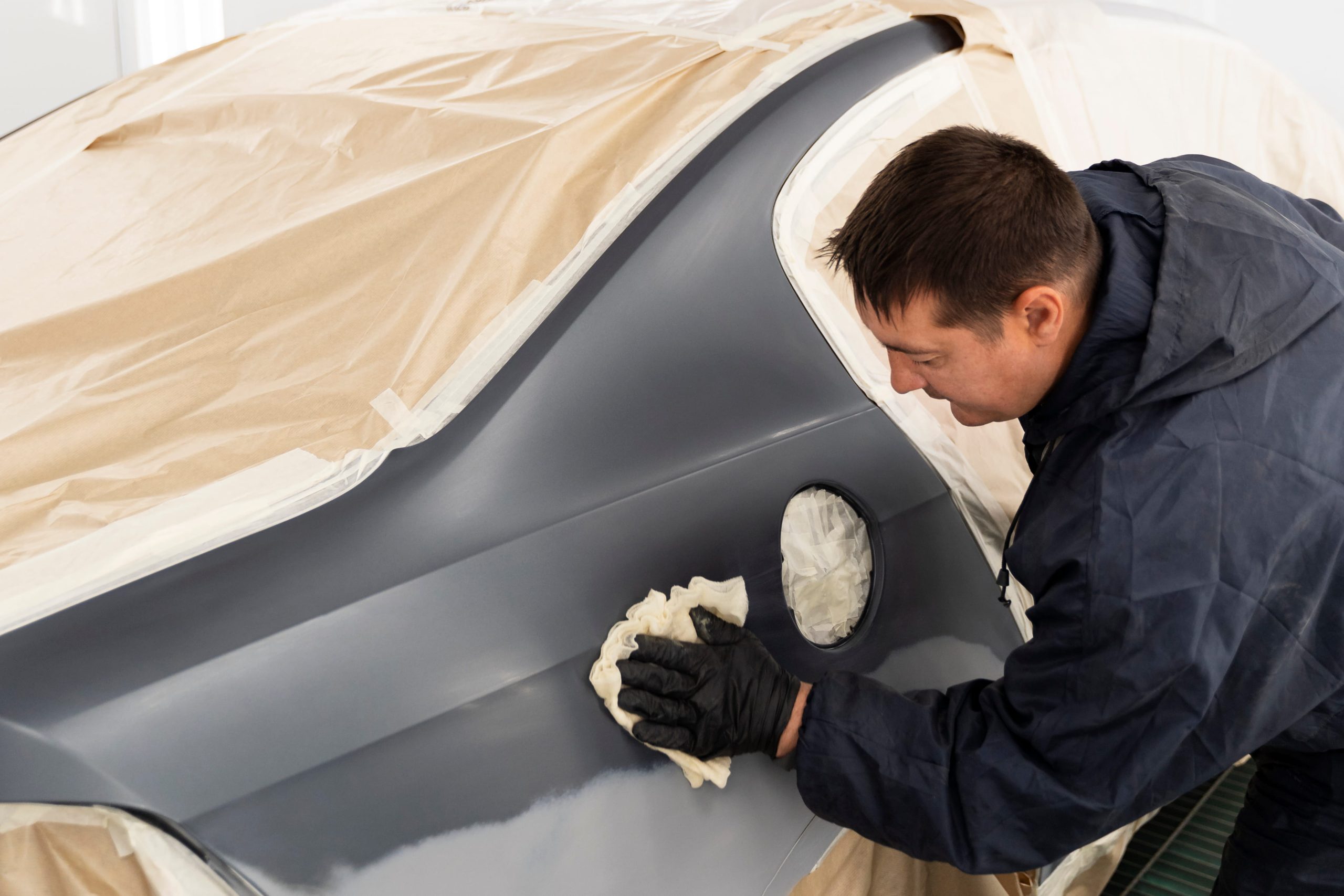
- Final Fairing: After your primary fiberglass repair has cured, the fairing process begins in earnest. Using fairing boards and longboarding techniques, apply thin layers of fairing compound (a resin mixed with lightweight microballoons) to gradually build up and shape the repair area. Sand with progressively finer grits, starting around 80-grit to shape, then moving to 180, 220, and even 320-grit for a truly smooth surface. The goal is a surface that is perfectly flush with the surrounding hull, with no dips or humps. This level of finish is critical, particularly before a high-gloss paint job.
- Gelcoat Application (If Needed):
- Clean: Clean the faired surface thoroughly with acetone.
- Color Matching: Gelcoat can be tricky to match, especially on older boats where the original gelcoat may have faded. Purchase a gelcoat repair kit or individual gelcoat paste and pigments. Mix small batches of gelcoat with pigment until you achieve the closest match possible. Test on an inconspicuous area or a piece of scrap material.
- Catalyst: Add the appropriate amount of catalyst (MEKP for polyester gelcoat) as per the manufacturer’s instructions. Too much will cure too fast and be brittle; too little won’t cure properly.
- Apply: Apply the gelcoat with a putty knife or specialized gelcoat spray gun. Apply slightly thicker than the surrounding area, as it will shrink slightly during curing.
- Release Film: For a smooth, tack-free cure, cover the wet gelcoat with a piece of clear plastic release film (Mylar or PVA film). This excludes air, allowing the gelcoat to cure fully.
- Cure: Allow ample time for the gelcoat to cure.
- Wet Sanding: Once fully cured, remove the release film. The gelcoat will likely have a slight texture. Wet sand the gelcoat, starting with 400-grit, then moving to 600, 800, 1000, 1500, and finally 2000-grit. The goal is to remove all sanding marks and achieve a uniform, dull finish.
- Polish: Finish the gelcoat repair by using a marine polishing compound, followed by a finer polishing compound, and finally a high-quality marine wax or sealant. This will bring back the shine and provide UV protection.
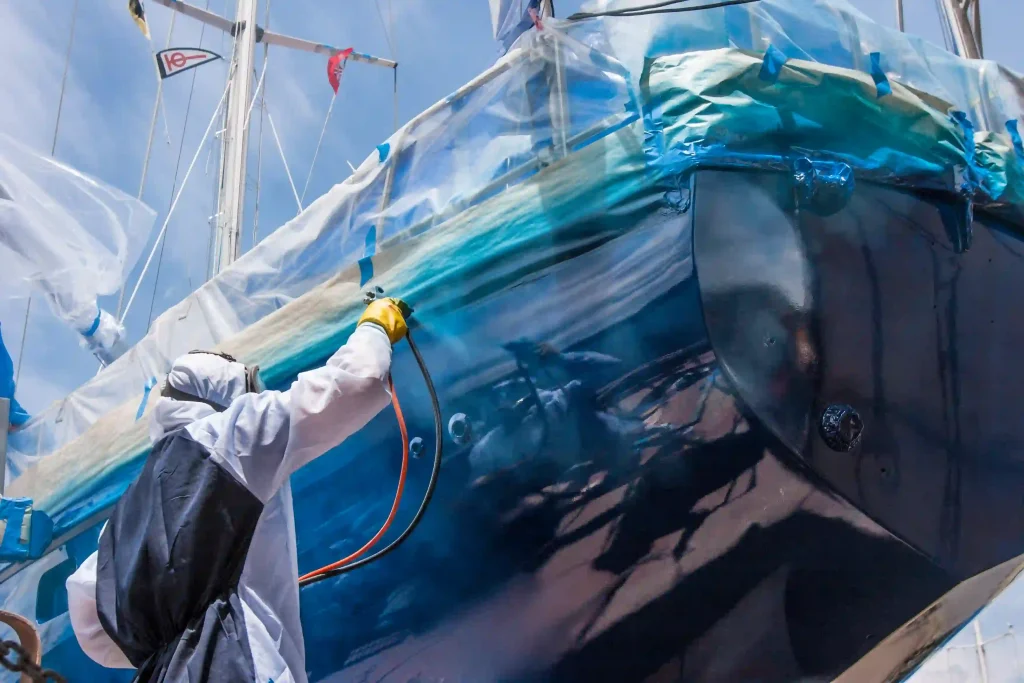
- Paint Finish (Alternative to Gelcoat): For larger repairs, or if your boat is already painted, a paint finish might be more appropriate. High-quality marine paints, like those we apply in our Awlgrip Painting Services, offer excellent durability and a beautiful finish. The fairing process is even more critical here, as paint will highlight any imperfections. Light colors, especially white, are often recommended as they reflect UV and infrared radiation better.
A beautifully finished repair is a testament to careful work. Whether you’re preparing for a season on the Chesapeake or putting your boat into Winter Boat Service, a smooth, durable finish protects your investment.
Frequently Asked Questions about Fiberglass Repair
Can I use epoxy over polyester resin?
Yes, you absolutely can use epoxy over cured polyester resin. In fact, for many structural fiberglass boat repair applications, we prefer it. Epoxy forms a superior bond to polyester and has much lower shrinkage, creating a stronger, more durable repair. However, you generally cannot use polyester resin over epoxy, as polyester typically won’t bond well to epoxy. Always ensure the polyester is fully cured, clean, and properly sanded before applying epoxy.
How do I identify delamination in my deck?
Identifying delamination in your deck, particularly in cored decks, is crucial to prevent further structural damage. The most common method is the “coin tap test.”
- Clean the Area: Ensure the deck is clean and dry.
- Tap Systematically: Take a coin (a quarter works well) and tap it firmly, but not forcefully, across the suspected area and surrounding healthy areas.
- Listen for Sound Changes: Listen for the sound. A healthy, well-bonded deck will produce a sharp, crisp, consistent “thud” or “click.” Delaminated areas will often produce a dull, hollow, or “dead” sound.
- Mark Areas: Use a marker to outline any areas that produce a hollow sound. These indicate potential delamination. You can also look for visual cues like soft spots when walking on the deck, or slight depressions in the surface. If you suspect extensive delamination, it’s wise to consult with professionals at our Boat Service Center.
When is a hull crack considered structural?
Distinguishing between a cosmetic gelcoat crack and a structural hull crack is vital.
- Cosmetic Cracks: These are usually hairline or spider cracks confined to the gelcoat layer. They don’t penetrate the underlying fiberglass laminate and don’t compromise the hull’s integrity. They’re often caused by minor impacts, flexing, or gelcoat aging.
- Structural Cracks: A crack is considered structural if it extends through the gelcoat and into the underlying fiberglass laminate. Signs of a structural crack include:
- Visibility on both sides of the hull: If you can see the crack from both the inside and outside, it’s structural.
- Flexing: If the area around the crack feels soft or flexes when pressed.
- Water intrusion: If the crack is leaking water.
- Location: Cracks in high-stress areas (keel, transom, around stringers, near through-hulls) are more likely to be structural.
- Length and Depth: Longer, wider, or deeper cracks are generally structural.
- Delamination: If the crack is accompanied by delamination, it’s definitely structural.
For any crack that you suspect is structural, or if you’re unsure, it’s always best to have it inspected by a qualified marine professional. Repairing structural damage incorrectly can lead to catastrophic failure. Our team in Deltaville has extensive experience diagnosing and repairing all types of hull damage.
Conclusion
Mastering fiberglass boat repair is a rewarding skill that empowers you to maintain your vessel and extend its lifespan. From tackling minor cosmetic dings to understanding the intricacies of structural reinforcements, the principles we’ve discussed will serve you well on the waters of the Chesapeake Bay and beyond.
While many smaller repairs are well within the grasp of a diligent boat owner, knowing when to call in the experts is equally important. For complex issues like widespread osmotic blistering, significant hull breaches, or compromised stringers and bulkheads, professional intervention ensures the long-term safety and integrity of your boat. The average cost of a professional fiberglass boat repair can range from $50 to $150 per hour, with complex repairs potentially costing thousands of dollars, but this investment protects your vessel’s value and your peace of mind.
At Norton Yachts, our legacy is built on a deep understanding of marine craftsmanship and a commitment to our fellow Chesapeake Bay boaters, serving Chesapeake Bay boaters since 1948. Whether you’re seeking a routine check-up, a complete structural restoration, or preparing for Commissioning Your Boat With Norton Yachts after a major refit, our team in Deltaville, VA, is equipped with the expertise and facilities to handle it all. We pride ourselves on delivering not just repairs, but structural restorations that stand the test of time, ensuring your vessel is safe, sound, and looking its best for every adventure.
Don’t let a ding keep you from dazzling on the water. If you’re facing a repair that feels beyond your skill set, or simply prefer the assurance of expert hands, we invite you to experience our Deltaville craftsmanship firsthand.
Visit our Boat Service Center today or call (804) 776-9211 to discuss your fiberglass boat repair needs and ensure your vessel is always Chesapeake Bay ready.